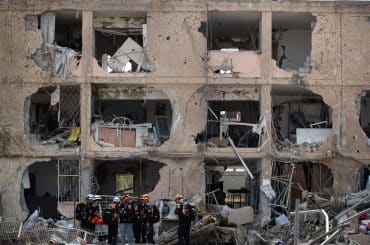
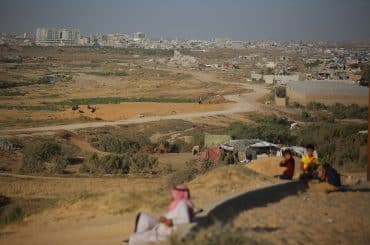
Since the beginning of its assault, Israel has attempted to justify the destruction of Gaza by comparing the operation to the US decimation of Iraq. The opening aerial bombardment of Gaza brought comparisons to the US "shock & awe" campaign. In a Ha'aretz article titled "IAF strike on Gaza is Israel's version of 'shock and awe'," Amos Harel wrote, "Like the U.S. assault on Iraq . . . little to no weight was
apparently devoted to the question of harming innocent civilians."
Sadly this rhetoric has also been adopted by the Israeli "peace camp." Yossi Alpher, an independent security analyst and co-founder of bitterlemons.org, was asked about civilian deaths and the humanitarian crisis in a Q & A on the Americans for Peace Now website. His response:
All this happened 7,000 miles away from the US, and needless to say no rockets were fired from Fallujah at American civilians for the previous eight years. Fallujah was quickly rebuilt and became a model for successful counter-terrorism operations in Iraq. You don't have to support the US occupation of Iraq to appreciate the challenges involved and the relatively successful way the IDF is dealing with them.
Has Fallujah really become that standard bearer of legality, let alone morality, in warfare? For the left, no less? Does Alpher forget that there were well documented war crimes committed by the US in Fallujah? These crimes include the US illegally used white phosphorus during the attacks – a practice Israel is replicating now.
I have to admit I would take the same tack if I wanted to defend Israel's attack on Gaza. The violence and death the US has visited on Iraq far exceeds anything Israel is doing in Gaza. The fact that this level of destruction and death has barely raised a cry in the US is a shame we all share. One of the implicit messages communicated in this silence is that these actions are acceptable. This also is one of the horrible legacies of the Iraq war. And our earlier silence regarding atrocities carried out by the US has paved the way for those wanting to justify war crimes today and in the future.