

[Editor's note: Today is Al-Quds Day, an international day of solidarity with the Palestinian people that is held annually on the last Friday of Ramadan.]
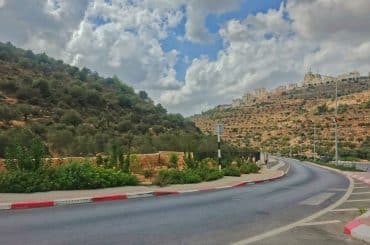
Al Quds - Jerusalem: The city of martyrs; the occupied city. A city painted a deep shade of crimson with the blood of the oppressed. A city occupied far longer than I have walked this earth; far long than my father has existed.
This city - I have never seen. Its air - I have never breathed. Its roads - I have never traveled.
I am a stranger at Jerusalem's gate; I listen to the wailing passerby clutching the remnants of his home between scarred hands, his screams muffled under the background of a demolition. I hear a mother attempting to wash the blood off the ashen bodies of her children with bitter, scathing tears - the deafening sound of bullets boldly echoing within the confines of the occupiers jungle.
I am a stranger at Jerusalem's gate; My eyes follow an army of worshipers kneeling on occupied ground, impregnated with their supplication, as they raise heavy hands up towards the sky. I watch a rampage emerging in the 'holy land' as a barrage of soldiers lay siege upon Al Aqsa, defiling sacred territory with a curtain of America-brand tear-gas canisters and grenades.
Ya Quds, Ya Qiblat as-Saleheen/ Oh Jerusalem, Oh Focus of the Righteous.
You are the perfume of the occupied territories, you are the fragrance worn around the necks of our women accompanied by a string of rocks from which our children use to throw in the face of occupation soldiers; precious pearls in their soft, dauntless hands.
Ya Quds/ Oh Jerusalem.
The thorns of conquest line your streets; our open wounds - inkwells, the gravestones of our martyrs - parchment.
What does Israel fear in the shouting of your name by the occupied youth? What does Israel fear in the acquisition of your stones?
They rejoiced at our abortion from your treasured womb; we cling to your soil as we yearn to feel our mothers touch, we cry to have you wrap us in your arms - even in death.
Jerusalem: This city - I have never seen. Its air - I have never breathed. Its roads - I have never traveled.
Bury me in your arms o' Jerusalem. If I cannot have you in this life then give me 6 feet of earth wherein I can sleep close to your chest, listening to beating of your heart instead of the drums of war.
Ya Ummi/Oh Mother
I cannot bear to be away from you, an orphan child.
Oh Jerusalem: I am the stranger at your gate, I am the student at your chamber, I am the worshiper at your feet.
Roqayah Chamseddine is a Lebanese-American humanitarian activist. She is a an undergraduate student majoring in Political Science/Pre-Law and Journalism. She was a member of the Gaza Freedom March last December in Cairo.
This poem brought a double-tear to my eye when I read it out loud and substituted the words ‘Israel’ for the word ‘Rome’.
De profundis.
More tears for you and all of us, Taxi:
link to youtube.com
The translation for the benefit of non-Arabic speakers:
Jerusalem, Flower of Cities
Sung by Fairuz
For you, city of prayer, I pray.
For you, brightest of homes, flower of cities
Jerusalem, city of prayer, I pray.
Our eyes travel to you every day
wandering towards
the places of worship
embracing the old churches
and wiping away the sadness
from the mosques.
Night of glory, path of those
who passed to the sky
our eyes travel to you every day
and I pray…
The child in the manger
and his mother Maryam
two faces, crying, crying…
for those who have been outcast
for children without homes
for those who have fought
and died in doorways.
And peace has died, in the land of peace
and justice has fallen
justice has fallen
justice has fallen, like ash.
When the city of Jerusalem fell, love retreated,
and in the heart of the world, war lived.
the child in the manger
and his mother Maryam
two faces crying
and I pray…
The blinding anger is coming
and I am all belief
the blinding anger is coming
and I shall pass through sadness
From every direction coming,
with the steeds of night coming,
like the face of God, All-seeing
Coming, coming, coming..
The doors of our city will not be locked
for I am going to pray
and I will knock on the doors
and I will open these doors
and you will wash
O river of Jordan
my face, with holy waters
and you will erase
O river of Jordan
The tracks of the soldiers boots.
From every direction, coming,
with the steeds of night, coming,
like the face of God, all-seeing
coming, coming, coming
To defeat the face of power.
This home is ours
and Jerusalem is ours
and with our hands we will return
the brightness of Jerusalem
with our hands,
For Jerusalem, peace
for Jerusalem, peace
coming,
for Jerusalem, peace
coming,
coming,
coming.
Dome of The Rock
Jerusalem,
First Intifada,
one Friday noon
with great care a visitor slowly makes his way up the narrow, winding alleyways inside the Damascus Gate that lead to the shrine above. Determined though he is to get to the top, on account of heat exhaustion (overheating, palpitations, weakness, dizziness), a punishingly hot sun is turning what should have been an easy walk into a serious challenge. Somehow the visitor makes it to the plateau upon which, behold, the Dome of The Rock. Exhausted though he is, the magnificence of this shrine is undeniable. Surprisingly (better, almost incongruously) considering its importance to Islam, the site is near empty of people, a half-dozen at most, with one of whom, a young Palestinian, the visitor shares a few minutes. “Where’s everyone?” “All roads leading here have been blocked.” “Why?” “The Intifada”, quickly following up with “Why are you here?” “As a Jew who supports justice for Palestine.” “I don’t believe it.” “Why not.” “No Jew sides with us.” The brief conversation ends when another Palestinian asks the visitor if he needs a guide. Still dazed from the heat, the visitor accepts the offer. The guide directs the visitor to a wash basin, where both go through the hand washing and taking off of shoes purifiction ritual that prepares the believer for prayer. Noticing that the visitor is unsteady on his feet, the guide takes his arm and leads him into the sacred shrine. Except for these two men, the shrine is empty. Despite being dazed and groggy the visitor is alert enough to appreciate the grandeur and beauty of what’s before him, the many marble columns, the gorgeous rugs. Then, from the guide, “Over here”, as he leads the visitor to a part of the mosque where there’s this mystifying, unidentified irregular white surface*. A canvas seperates the visitor from whatever this mysterious surface, seemingly incongruous as it is within this otherwise ornate and harmonious setting. From the guide, “Put your hand over here.” The visitor reaches through an opening in the canvas. “Feel that indentation? “Yes.” “You have your hand on the footprint of Mohammed.” “And suddenly I got a shock like when one puts a finger into a light socket”. Instantaneously, too, grogginess and weakness are gone and he’s completely alert. The visitor attributes the”finger in a light socket” feeling to having been overcome with emotion upon hearing his hand was in the footprint of Mohammed. Yes, the thought does occur to him that, perhaps, this instantaneous recovery from heat exhaustion might have been a miracle, but being an atheist, he dismisses it. He also learns that the footprint of Mohammed story has been disproved. Several years later, at a Sufi gathering, chants, hymns & such, he tells the story to a Sufi sheik. “What was that {jokingly}, Mohammed talking to me” “No, it was Allah.”
*the mysterious white surface turns out to be the rock from which Mohammed is said to have ascended to heaven
Touching.
Eloquent prose.
———————————————————————–
==================================================
In a one state, bi-national model, Jerusalem should be an international city, independent like the Vatican.
Actually, that was what the UN decided for Jerusalem in the original Partition Plan. Of course, Israel, who famously “accepted” the UN resolution when “those Arabs” “rejected” it, rather infamously, invaded it with militants and split that baby faster than you could say “King Solomon’s ghost!”
Here is an amazing version by Marcel Khalifeh
link to youtube.com
It’s Oh Mother by Darwish.
Very nice song by Khalife, Jimby; Ommi (My Mother) was written by the late Mahmoud Darwich, the great Palestinian poet that died in 2008. Darwish was of course writing about the Palestinian nationhood and resistance and used the motherhood theme to get it by the Israeli censors:
I yearn for my mother’s bread
My mother’s coffee,
My mother’s touch
And childhood grows inside me
Day upon breast of day
And I love my life because
If I died
I’d feel ashamed because of my mother’s tears
Take me (mother), if one day I return,
As a veil for your lashes
And cover my bones with grass
Baptised by the purity of your heel
And fasten my bonds
With a lock made of your hair
With a piece of thread that trails in the train of your dress
Maybe I’d become a god
A god I’d become
If I touched the depths of your heart
Put me, if I return,
As fuel in your cooking stove,
As a clothes line on your rooftop
For I have lost resolve
Without your daily prayer
I have grown decrepit: Give me back the stars of childhood
That I may join
The young birds
On the return route
To the nest of your waiting (Darwish, 1996)
Taken from a good piece on Darwish and the lierature of the resistance from:
link to ceasefiremagazine.co.uk
literature of the resistance, of course; sorry for the typo. More on this literature of the resistance from Ceasefire Magazine:
“… At the time of its publication, the Israeli government imposed onerous rules on Arabic-language literary production. Publishing was limited and went through Israeli censorship channels; those who did manage to publish sometimes received funding from Zionist organizations which imposed their own ideological imperatives on the context of the writing. In fact, most publications were not allowed to talk about Palestine and the theme of homeland.
Zionist organizations also encouraged Palestinian writers who were desperate to publish their works in Arabic to promote Zionism as an acceptable social phenomenon. In this political environment, poetry was the medium to express the feelings of resentment because it could spread easier than any other printed literature.
Love poetry was a key element in creating the literature of resistance…”
link to youtube.com
AlQuds Demo London 2010