Here’s how President Obama states the nuclear paradox:
The risk of a nuclear confrontation between nations has gone down, but the risk of a nuclear attack has gone up.
Here’s how I define it:
Hypothetical nuclear threats provoke more fear than real nuclear threats.
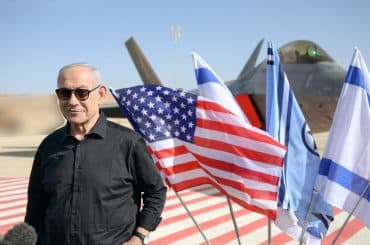
Nowhere is this paradox more evident than in Tel Aviv and Tehran.
Which city is currently in greater jeopardy of nuclear annihilation? Tehran.
Which city’s residents are repeatedly being told by their political leaders they should be afraid of nuclear annihilation? Tel Aviv’s.
So, to return to Obama’s assessment, when he says the risk of nuclear confrontation between nations has gone down, he’s saying something that’s both obvious and deceptive. What’s obvious is that the Cold War risk of a nuclear war between nuclear-armed states has diminished, but what he purposefully did not say is that the risk of any nuclear-armed state actually using its nuclear weapons has gone down.
The risk that Israel could use tactical nuclear weapons to destroy Iran’s nuclear facilities is real. I don’t believe that Israel is likely to do so because its current leadership — despite its willingness to engage in hyperbolic rhetoric — probably recognizes that the regional and global impact of the first use of nuclear weapons in warfare since 1945 would seal Israel’s fate as a pariah state.
Still, the risk that Israel might use nuclear weapons is indisputably greater than the risk of nuclear weapons being used by any organization or state that is not currently armed with such weapons.
The risk of nuclear terrorism should not be dismissed, but as Brian Michael Jenkins notes, it’s important to distinguish between nuclear terrorism and nuclear terror. In 2008 he wrote:
Will terrorists go nuclear? It is a question that worried public officials and frightened citizens have been asking for decades. It is no less of a worry today, as we ponder the seventh anniversary of 9/11.
Might Iran’s nuclear weapons ambitions lead eventually to arming Hizbollah or Hamas with nuclear weapons? Might a financially desperate North Korea sell the wherewithal for nuclear weapons to terrorist buyers? Might a political upheaval in always turbulent Pakistan put a nuclear weapon in the hands of extremists? Could there, ultimately, be a nuclear 9/11?
We have to take the long-shot possibility of nuclear terrorism seriously, but we must not allow ourselves to be terrorized by it.
Nuclear terrorism and nuclear terror reside in different domains. Nuclear terrorism is about a serious threat — the possibility that terrorists might somehow obtain and detonate a nuclear weapon — while nuclear terror is about the anticipation of that event. Nuclear terrorism is about terrorists’ capabilities, while nuclear terror is about imagination.
Fear is not free. Fear can pave the way for circumventing established procedures for the collection of intelligence, for attempts to operate outside the courts, and perhaps for torture. Distinguished scholars discuss the durability of the U.S. Constitution in the face of nuclear terrorism.
Frightened populations are intolerant. Frightened people worry incessantly about subversion from within. They worry about substandard zeal. Frightened people look for visible displays to confirm unity of belief–lapel pin patriotism.
Fear creates its own orthodoxy. It demands unquestioning obeisance to a determined order of apprehension.
During the Cold War an all-out nuclear exchange would have meant planetary suicide. Today, we face one tyrant in North Korea with a handful of nuclear weapons, an aspirant in Iran enthralled by first-use fantasies, and a terrorist organization with an effective propaganda machine-dangerous, vexing, but not the end of the world, not the end of the nation, not the end of a single city.
Undoubtedly, a terrorist nuclear explosion of any size would have a huge psychological impact on America. But whether it would lead to social anarchy would depend heavily on the attitudes of the nation’s citizens and the behavior and communications of its leadership.
We may not be able to prevent an act of nuclear terrorism. But we can avoid destroying our democracy as a consequence of nuclear terrorism.
Whether or not we as citizens yield to nuclear terror is our decision.
John Mueller from Ohio State University’s department of political science wrote last year:
The evidence of al-Qaeda’s desire to go atomic, and about its progress in accomplishing this exceedingly difficult task, is remarkably skimpy, if not completely negligible. The scariest stuff — a decade’s worth of loose nuke rumor — seems to have no substance whatever. For the most part, terrorists seem to be heeding the advice found in an al-Qaeda laptop seized in Pakistan: “Make use of that which is available … rather than waste valuable time becoming despondent over that which is not within your reach.”
As Mueller and Mark G. Stewart note in an article in the current edition of Foreign Affairs, if America’s counterterrorism policy was actually based on objective risk assessment, we’d understand that the risk al Qaeda poses to each American is about the same as the risk posed by kitchen appliances.
As a hazard to human life in the United States, or in virtually any country outside of a war zone, terrorism under present conditions presents a threat that is hardly existential. Applying widely accepted criteria established after much research by regulators and decision-makers, the risks from terrorism are low enough to be deemed acceptable. Overall, vastly more lives could have been saved if counterterrorism funds had instead been spent on combating hazards that present unacceptable risks.
This elemental observation is unlikely to change anything, however. The cumulative increased cost of counterterrorism for the United States alone since 9/11 — the federal, state, local, and private expenditures as well as the opportunity costs (but not the expenditures on the wars in Iraq or Afghanistan) — is approaching $1 trillion. However dubious and wasteful, this enterprise has been internalized, becoming, in Washington parlance, a “self-licking ice cream cone,” and it will likely last as long as terrorism does. Since terrorism, like crime, can never be fully expunged, the United States seems to be in for a long and expensive siege.
This article is cross-posted at Woodward's site, War in Context.

Just 24 hours to make history
From: Jewish Voice for Peace (info@jewishvoiceforpeace.org)
Sent: Tue 4/13/10 7:44 PM
Join JVP, Archbishop Desmond Tutu, Noam Chomsky, Naomi Klein, Judith Butler, and Bibi Netanyahu’s sister-in-law, Ofra Ben Artzi, as well as Israeli peace groups like the Shministim, Gush Shalom, and the Coalition of Women for Peace and help make history at the University of California at Berkeley by sending a letter of support for divestment now.
On March 18, UC Berkeley’s student senate voted 16 to 4 to divest from General Electric and United Technologies because of their role in harming civilians as part of Israel’s illegal occupation and the attack on Gaza.
A week later, the Senate president vetoed the bill despite a massive outpouring of support for divestment.
But the final decision will be made tomorrow, Wednesday April 14 at 7pm PST, when the veto can be overturned with just 14 votes.
The bill’s opponents have been waging a fierce campaign of misinformation, including a closed door meeting with the Israeli Consulate General where student senators were actually told that massive Jewish criticism of Israeli human rights violations is a cultural pathology. The senators have also been flooded with letters and we’ve now heard that Alan Dershowitz may be on campus.
That’s why we’re asking you to email the UC Berkeley senators to let them know why you support divestment and why they should overturn the veto.
TO SEND E-MAILS – link to salsa.democracyinaction.org
Thanks Dickerson – I just emailed by support.
Ditto, Dickerson- I just emailed my support.
Excellent article, thanks for posting this.
I’m really getting tired of analysts hyping up a nuclear armed Al-Qaeda.
We’re talking about a few dozen guys holed up in the caves of no mans land armed with AK-47s and the occasional grenade launcher…
Somehow these people who rely on personal couriers and carrier pigeons to deliver vital messages are going to be able to obtain and somehow maintain a nuclear device.
Do these analysts even realize the kind of infrastructure needed to not just produce a nuclear weapon but to actually maintain one? Its not like you can just “raid” a nuclear arms depot, make off with a bunch of weapons, store them somewhere and finally detonate them.
I’d be more afraid of these guys getting their hands on a more conventional weapon like the MOAB than waste our time wondering what would happen if some terrorists magically got their hands on a nuclear weapon (a countries most heavily guarded, secure, and difficult to maintain possession).
Just because Al-Qaeda would “like” to have a nuclear weapon does not mean that they have the ability to get one. We’re talking about a group of people that relied on hijacking an airplane and crashing it into their designated targets. We’re talking about a group that is so desperate that they have to resort to suicidal missions. I highly doubt Al-Qaeda would have flown airplanes into the WTC and Pentagon if they had a missile system capable of doing the same thing.
Remember, suicide tactics are a sign of desperation. The Japanese didn’t begin relying on Kamikazi pilots until they were on the verge of defeat, nor did the Germans begin experimenting with anti-aircraft missiles that relied on a human pilot to literally sit in the cockpit and guide them to their target until they too were on the verge of defeat.
Likewise, Al-Qaeda is a group that relies on suicide attacks in a vain attempt to bridge the military gap. Only a few months ago one of their operatives stuck a bomb in his ass in a failed attempt to detonate a Saudi minister.
Yet somehow, this same group is supposed to be able to pull off a nuclear attack on Washington…
Give me a break.
Brian Michael Jenkins, who has been studying terrorism for 40 years and is considered the reigning US expert on the topic, said the following in testimony presented before the Senate Homeland Security and Governmental Affairs Committee on November 19, 2009.
http://www.rand.org/pubs/testimonies/2009/RAND_CT336.pdf
Well done, James Bradley. And your supplmental comment too, MRW.
I wish more Americans read such; couch potatotes just hear the ususal
fear-spreading from TV news “experts” and congress people on this issue.
Pingback: Proposal targets of nuclear terrorism – Los Angeles Times | World News - International Headlines,Breaking News, U.S., World, Weather, Business, Health, Entertainment, Sports, Politics, Travel, Science, Technology and Local
RE: “The risk that Israel could use tactical nuclear weapons to destroy Iran’s nuclear facilities is real.” – Woodward
FROM IRA GLUNTS 04/10/10: “…According to the Federation of American Scientists website*, it has been reported that “fearing defeat in the October 1973 Yom Kippur War, the Israelis assembled 13 twenty-kiloton atomic bombs.” The fact that Israel may have seriously considered a nuclear strike in 1973 first became known to the general public in Seymour Hersh’s 1993 book, The Samson Option. If my memory serves me, Hersh claimed that Israel loaded the nukes on missiles and aimed them…”
* Federation of American Scientists website – link to fas.org
SOURCE – link to antiwar.com
Israel using tactical nukes nowaday, with all the variables being so different from ’73, would be a fatal mistake to Israel, welcomed by many.
At best, they stand to lose their holacaust begging bowl instantly and forever.
Kissinger told Nixon the risk was very real that Israel was going to use
nukes; this prompted Nixon to do the second largest US airlift OP in its history, only this time the US didn’t send to Berlin food stuffs and drop candybars, we sent to Israel huge quantities of ammo, shells, tanks, and jets–enough to more than offset the USSR’s aiding the Arab forces fighting
Israel. We basically saved Israel’s ass. In return we got the Arab Oil Embargo. Anyone remember those days at the gas pump? Remember the lack of news coverage of this connection? Most Americans waiting in line at the pumps had no clue why the Arabs were denying us oil.
“we sent to Israel huge quantities of ammo, shells, tanks, and jets–enough to more than offset the USSR’s aiding the Arab forces fighting
Israel. ”
To get the arms there quickly, the U.S. had to take them from NATO bases. This was actually a breach of the terms of the NATO treaty, and pissed off the other members mightily. To protect Israel, a chunk of the defences against the USSR (still deemed a threat in those days) were given up.
Yep, RoHa, you are right. Just one more example of the US putting Israel’s interests first.
Pingback: Nuclear agreement hailed as step forward – USA Today : World online news
Pingback: Introduction to Nuclear Engineering (3rd Edition) | A Review Of … | Nuclear Engineering Addict
Obama weasels on Israel nukes but then openly calls for them to sign NPT. link to ynetnews.com
It is disgusting to see how Obama weasels and waffles and evades any substantive questions about Israel.
Still, as Juan Cole points out today link to juancole.com
Obama’s hands are essentially tied as long as Congress is sucking on the teat of AIPAC.
Obama’s strategy is to ‘educate’ Americans step by step (after years of dumbing down by other presidents), before he puts his full case on the table.
He needs a clear move towards peace by both sides before he can put this issue on the table.
You’d better believe it that S. Arabia are daily chewing his ears off on both the Israeli nukes and Iran’s probable desires for nuclear weapons.
Obama doesn’t have time for all these steps. 2 1/2 years.
And that’s if he’s lucky and Republicans don’t take significant majorities in both houses of Congress in the upcoming elections. Refresh my memory, how many seats does it take to trigger a politically motivated impeachment proceeding?
Simple majority. AIPAC can bring that on without breaking a sweat.
Rahm described Obama as more like Bush 1, than Bush 2. More of a realist, than an idealist in foreign policy. Of course the idealist, Shrub, got 2 terms, not 1.( Enough to wreck the economy and get us into two wars we’ve been fighting ever since, plus the dimunition of the US Constitution’s basic citizen rights.)
link to politico.com
But not like Clinton, eh? Or, God forbid, Carter?
No wonder Obama stands up so straight and tall. What else are you going to do with a knife point in your back?
Pingback: Nations Commit to Strengthen Nuclear Security | Travel Tips | Great Travel Tips for Tourists !