Archive

October 2014

Browsing
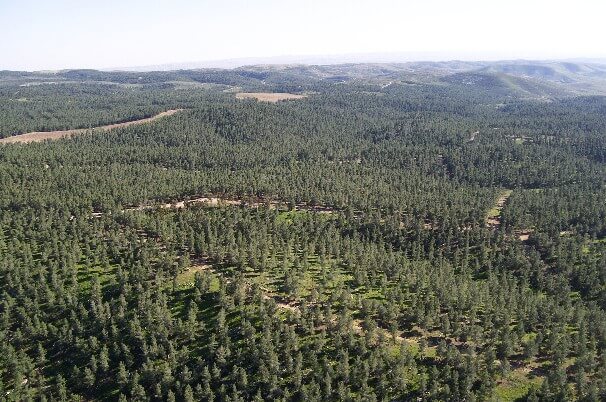
Pine trees in the Yatir Forest which is being used to displace the Bedouin residents of the unrecognized village of Atir. The original caption on the photo from the website israeltoday.co.il read, "Since the formation of the State of Israel, tree planters have been busy creating forests in the holy land, which was a barren wasteland for centuries."

The policy of ethnic cleansing ever since 1948, and in particular since 1967, is a consensual issue in Israel and thus leaves very little hope for peace and reconciliation. This strategy is marketed differently domestically and externally: It is based on the need to ‘preserve Jewish identity’ to the Israeli public and abroad as ‘Israel’s need for security’. These concepts are used widely across the political spectrum in Israel and provide the ambiguous framework for the Israeli ‘national consensus’. They also underpin the political instruments which deny the rights of the indigenous people of Palestine and to bring about its goal of maintaining a Jewish majority. The problem with Israel thus is not a policy here or there, but its overall strategy that has not changed.
Palestinians leaders will likely table a United Nations Security Council resolution calling for an Israeli deadline to set borders based on the pre-June 1967 line until after fall mid-term elections in the United States. Haartez’s Barak Ravid reports this week that while Palestinians have stalled, Secretary of State John Kerry is trying to prevent the initiative all together. As a last-ditch effort to stop the Palestinian plan, Kerry has sought to reprise his direct talks that collapsed earlier this year. Israeli officials abandoned that effort after the announcement of a Palestinian unity government and there are no signs they are interested in restarting talks.

The United States didn’t create Iraqi sectarianism. The latter always brewed beneath the surface. However, sectarianism and other manifestations of identity politics in Iraq were always overpowered by a dominant sense of Iraqi nationalism, which was violently destroyed and ripped apart by US firepower starting March 2003. But what the American truly founded in Iraq was Sunni militancy, a concept that has, till recently been alien to the Middle East. What makes ISIS an essential sectarian phenomenon with extremely violent consequences is that it was born into an exceptionally sectarian environment, and could only operate within the existing rules.

Steven Salaita’s book “Israel’s Dead Soul” (2011) merits serious attention and ultimately effusive praise. It contains five critical essays that not only offer brilliant insight into the cultural and ideological practices of Zionism in both Israel and the United States, but implicitly explain why his conscientious efforts would be denigrated and rejected by the ostensibly liberal aspects of this culture at the University of Illinois Urbana-Champaign.

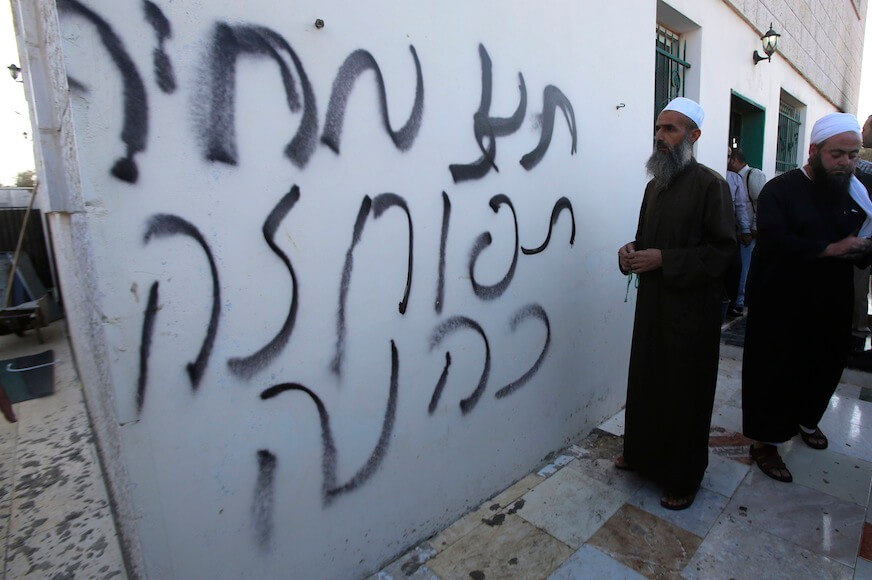
Reuters reports: “A mosque [Abu Baker al-Saddiq] was set alight in a suspected arson attack in the occupied West Bank on Tuesday and the name of an Israeli vigilante group called ‘price tag’ was found scribbled on an outside wall, Palestinian officials and witnesses said. Israeli President Reuven Rivlin condemned the incident in ‘Aqraba, a village east of Nablus, and urged Israel’s police chief to head an investigation adding that the case ‘should be treated as terrorism.'”

Professor Max Weiss says a member of the Jewish Agency vetoed his invitation to speak on a panel about Gaza at Princeton University. He writes, “Apparently this preemptive act of exclusion was carried out on entirely political grounds. This strikes me as an attempt to stifle the exchange of views on an important, if contentious, issue of concern to many in the Princeton University community — an egregious violation of our community’s values.”