Archive

March 2017

Browsing

Millions breathed a deep sigh of relief last week, when it was announced that the FBI, in coordination with police forces in New Zealand, Australia, and Israel, arrested Michael Kaydar, a 19-year old man with dual Israeli-American citizenship, who was behind the majority of the bomb threats made to Jewish community centers around the U.S. The threats were a hoax and, in typical official lingo, the “motive remains unclear.” The hoaxes, by resurfacing and foregrounding anti-Semitism, widened the net of those caught in the justified fear of white nationalism. They also had a totally unintended effect, as they brought threatened and marginalized communities closer together, to face the greater enemy.

Kamal Nayfeh, 55, was an out-of-towner waiting to hug goodbye his daughter who lives in Washington DC, in the moments before he was beaten by members of the Jewish Defense League (JDL), outside of a policy conference of the American Israel Public Affairs Committee (AIPAC). Nayfeh and his daughter, who witnessed the attack, talk to Mondoweiss’s Allison Deger about the event and its aftermath. “I’ve been seeing a trend towards violence and all of those violent group are re-emerging. The country is so divided, and all of those groups that never had a voice are popping out and showing their hate,” Nayfeh says.

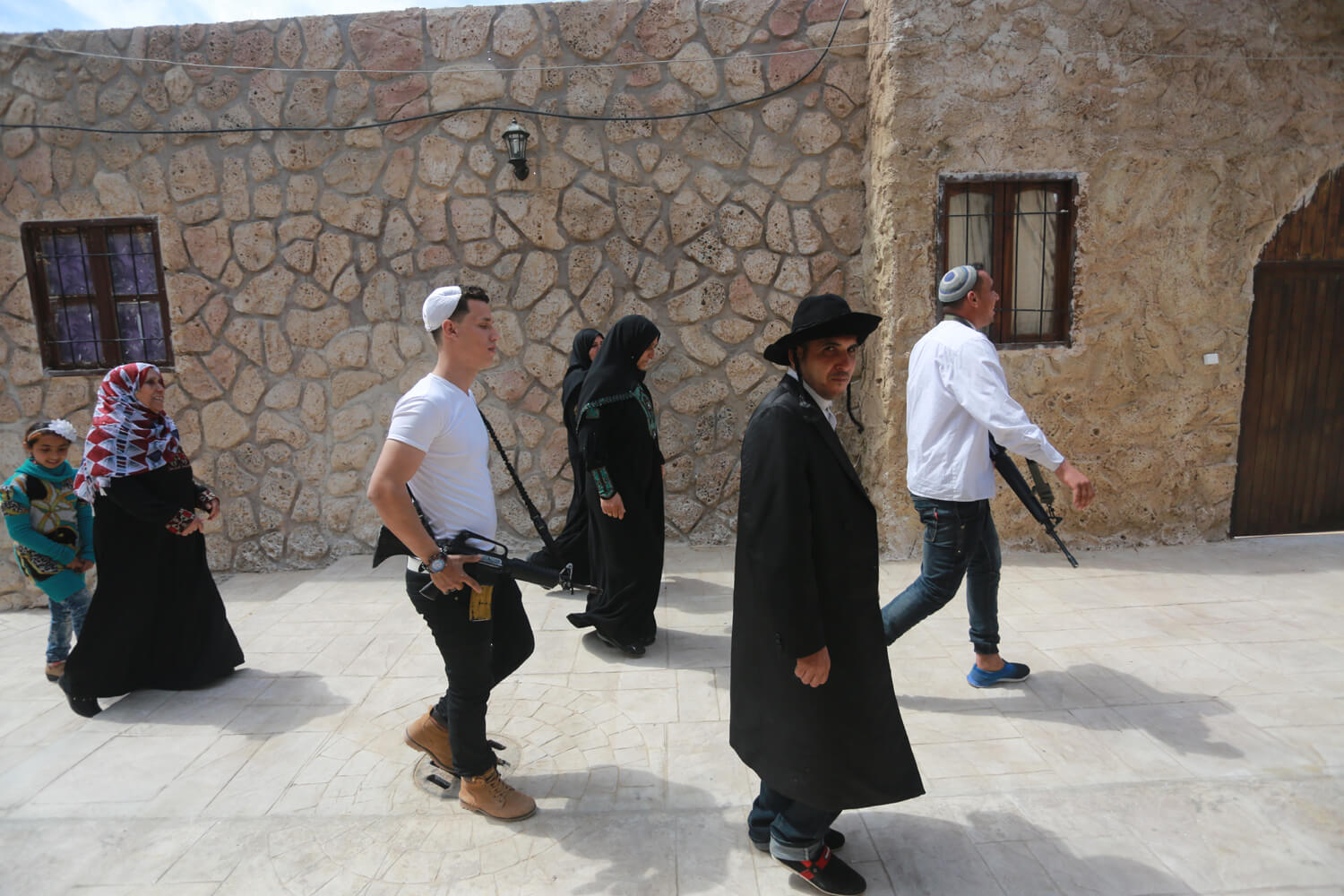
Amid the quiet of Gaza’s white sand dunes that cover the grounds of Israeli settlements evacuated more than a decade ago, Palestinian actors playing ultra-orthodox Israelis get in a fight. They are shooting the dramatic series “Heaven’s Gate” on the Hamas-owned Al Aqsa TV network, which will premiere this summer during Ramadan. The show is filming in Gaza, but the show is set in Jerusalem, and the city has been recreated inside of the besieged strip. This is as close to visiting the holy city as any of the actors have come.

There is no middle ground; you’re either with Israel or against it these days, as J Street, the liberal Zionist group, found out yesterday. Jeremy Ben-Ami of J Street says it was shocking when the Jewish establishment allowed a speaker to call his group “anti-Semitic” at a UN summit against BDS. But the same event smeared Bassem Tamimi, the leader of nonviolent resistance in Nabi Saleh in occupied Palestine, without protest from J Street.

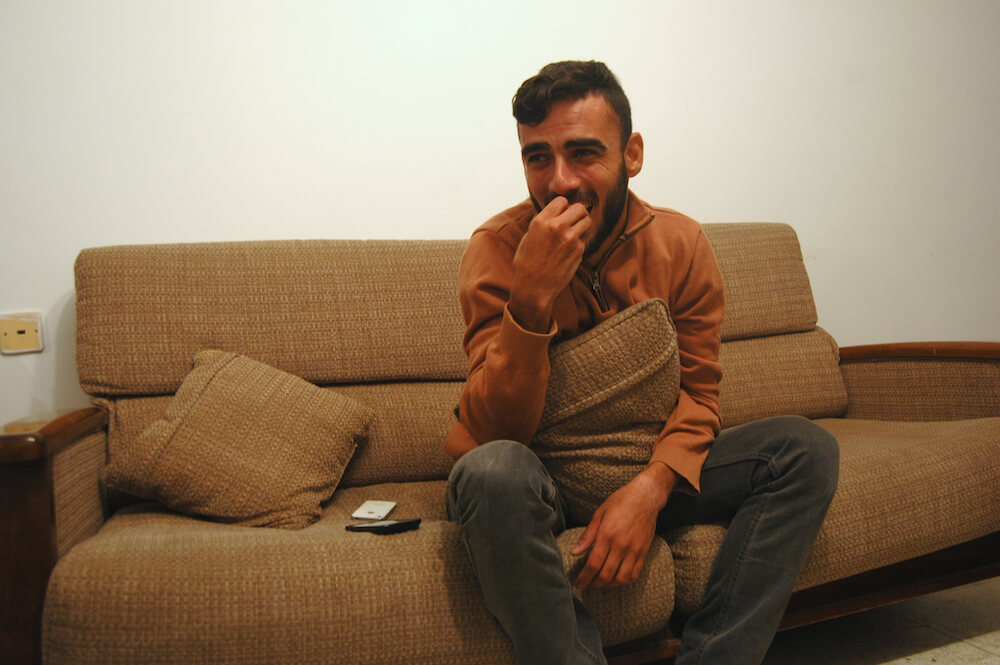
Palestinian university student Kifah Quzmar, in his final year studying business administration at Bir Zeit University, launched a hunger strike on Sunday, March 26 in Ashkelon prison, where he is held shackled and remains under interrogation after 22 days of imprisonment. Quzmar, a popular, well-known student, was seized by Israeli occupation forces on March 7 at the Karameh/Allenby crossing from Jordan as he returned from travel. After denying that he was in their custody for several days, he was then denied access to a lawyer for 19 days.

A 55-year old Palestinian-American instructor at a community college in North Carolina was brutally beaten by members of the Jewish Defense League (JDL) while walking by the AIPAC conference in Washington DC on Sunday, according to a video and statement released by the Institute for Middle East Understanding (IMEU). The man was identified as Kamal Nayfeh. The JDL affiliates “punched and kicked him and hit him in the face with flag poles, leaving him with cuts and bruises all over his face and body,” said the IMEU statement. Photos were taken of Nayfeh after the and beatings show his face bloodied and bruised.

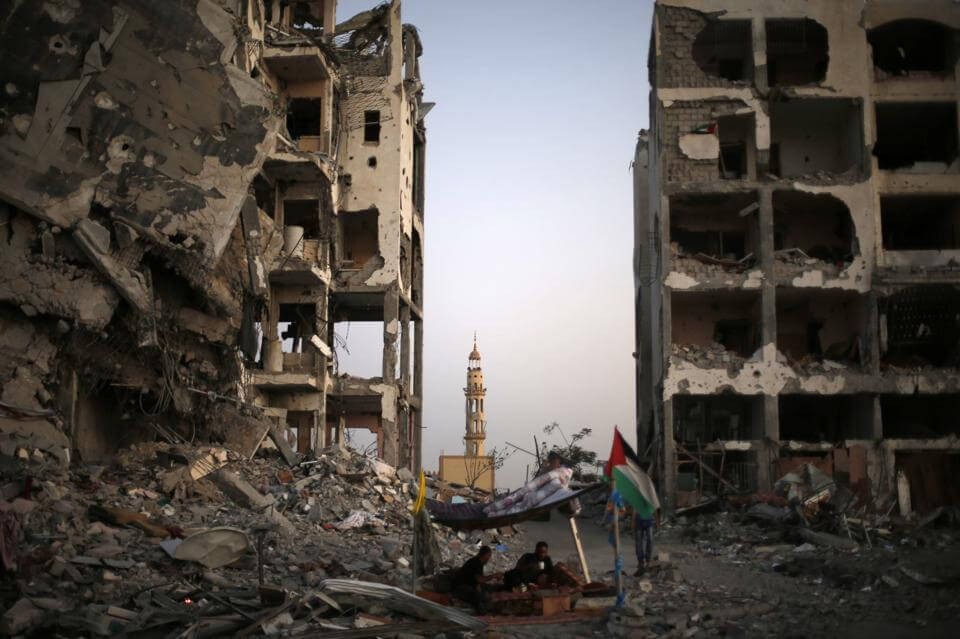
On Friday night, Mazen Fuqaha, a senior leader of Hamas’ military wing, the al-Qassam Brigades was gunned down in the Tell al-Hama neighborhood. Gaza’s ministry of interior said in a statement the weapon was a pistol with a silencer, a sure sign of a professional hit and a first in Gaza since Israeli forces withdrew from the Strip. Ahmed Alnouq writes Palestinians in Gaza are wondering if another war is about to break out between Hamas and Israel after two months of an uptick in tensions. Salwa, a law student at Al-Azhar University said she fears war is indeed at Gaza’s door, “I wish I will die before it starts. During war, I psychologically die many times a day.”

In her one-woman show “Where Can I Find Someone Like You, Ali,” Raeda Taha recounts her life as the “daughter of a martyr.” On May 8, 1972, Taha’s father, Ali Taha, and three other armed Palestinians were killed during a botched airplane hijacking. Taha was 7 at the time. So began her life as the daughter of a Palestinian “shaheed” (“martyr” in English)—a term that signifies a special place in Palestinian society. Taha provided her audiences with a touching, at times heart-breaking but never sentimental, glimpse into the lives of Palestinians who have lost family members at the hands of the Israeli military.