Palestinian students attend their final classes before graduation following the reopening of the Palestine Technical University in al-Aroub, north of the West Bank city of Hebron, on June 8, 2020. (Photo: Mosab Shawer/APA Images)
The Latest:
- 870 confirmed Palestinian COVID-19 cases; 5 deaths
- The Palestinians cases breakdown: 195 from East Jerusalem; 603 from the West Bank; and 72 from Gaza
- 19,894 confirmed COVID-19 cases in Israel; 303 deaths
A spike in cases
Yumna Patel reports that three months after the first case of COVID-19 was discovered in the West Bank, a new wave of the virus is hitting Palestine, even stronger than the first time around:
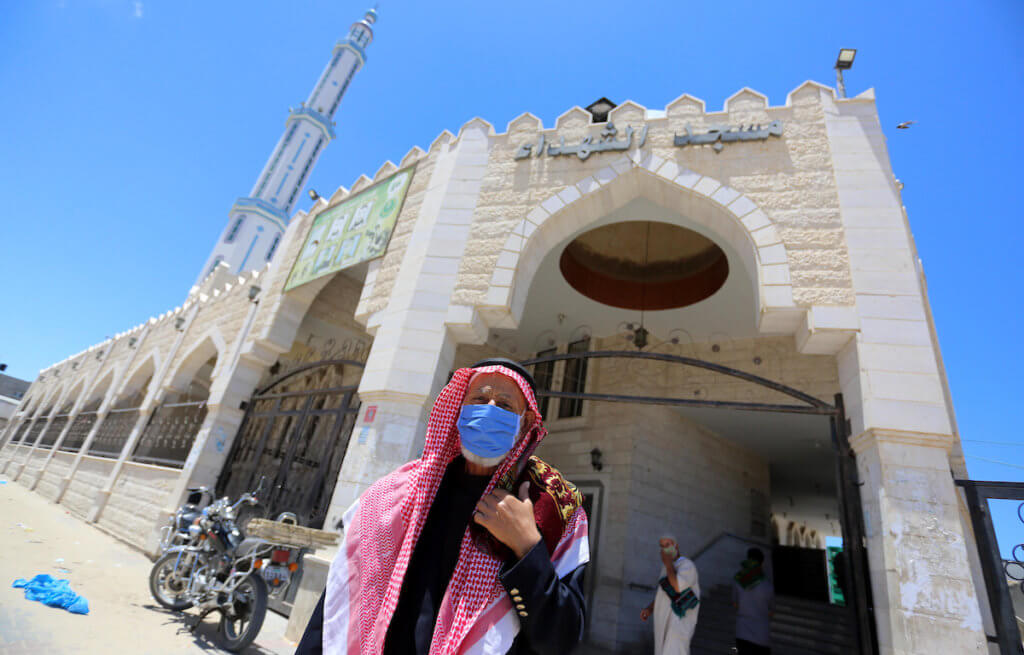
Over the past 48 hours, more than 100 cases of the virus have been confirmed in the occupied West Bank, East Jerusalem, and Gaza Strip — and that number continues to rise. The current number of active cases in those three territories, as of Friday evening, was 271.
On Thursday alone, 50 new cases were reported, with more than 90% in the southern West bank district of Hebron. It was the first time in weeks that the Ministry of Health recorded COVID-19 cases in the double digits.
On Friday, there were at least 70 new cases reported. By Friday evening that number continued to grow.
Patel says the Palestinian Authority’s response has been much different this time versus when the virus first appeared:
The government’s laid back approach to the virus this time around is a drastic departure from its aggressive containment efforts the first time around.
While the government is under an immense amount of pressure to keep the economy open this time around, one can’t help but wonder, is it worth the cost of thousands of people getting sick, the healthcare system most certainly collapsing, and so many more people dying?
Gaza’s pandemic damage will last long after the virus
Yves Daccord, the outgoing head of the International Committee of the Red Cross sat down with Haaretz for an interview on a range of issues he has overseen during his tenure at the helm of the largest humanitarian organization in the world. He was the director-general for the last ten years. When the conversation turned to Gaza and the impacts of COVID-19, Daccord warned recovery depends on more than just public health and he said Israel bears that responsibility.
From Daccord:
“The long-term ramifications of the coronavirus should be taken into account. The population in Gaza is at high risk on paper and I think also in reality…since they have a low level of health access and are contained in a small territory. As far as we know, COVID-19 hasn’t hit there as hard as we were worried it would, but we should be very careful talking about COVID-19 when it comes to a territory like Gaza. The Israeli authorities [are responsible for] this territory as well when it comes to international law, so they need to look into that very carefully.”
This mirrors what we are seeing and hearing from health officials in Gaza. While the besieged territory never experienced a spike in infections and known cases were restricted to isolation centers, the overpopulation in Gaza means the risk level is going to remain high for a long time. As a reminder 2 million people are squeezed into 140 square miles. That’s about the size of Las Vegas, but three times the population.
As the economy continues to reopen, plans are in the works for long-term quarantine centers.
According to the UN, Gaza is constructing 350 individual rooms in a new quarantine center. Once completed, the site is expected to take over those that are still in government-run isolation. In last Friday’s edition of this newsletter we reported that there were still 1,500 Palestinians holed up in hotels and schools. This week there are around 350 at seven quarantine centers (there were originally 16 operational quarantine centers).
Marooned in Jerusalem after an organ transplant
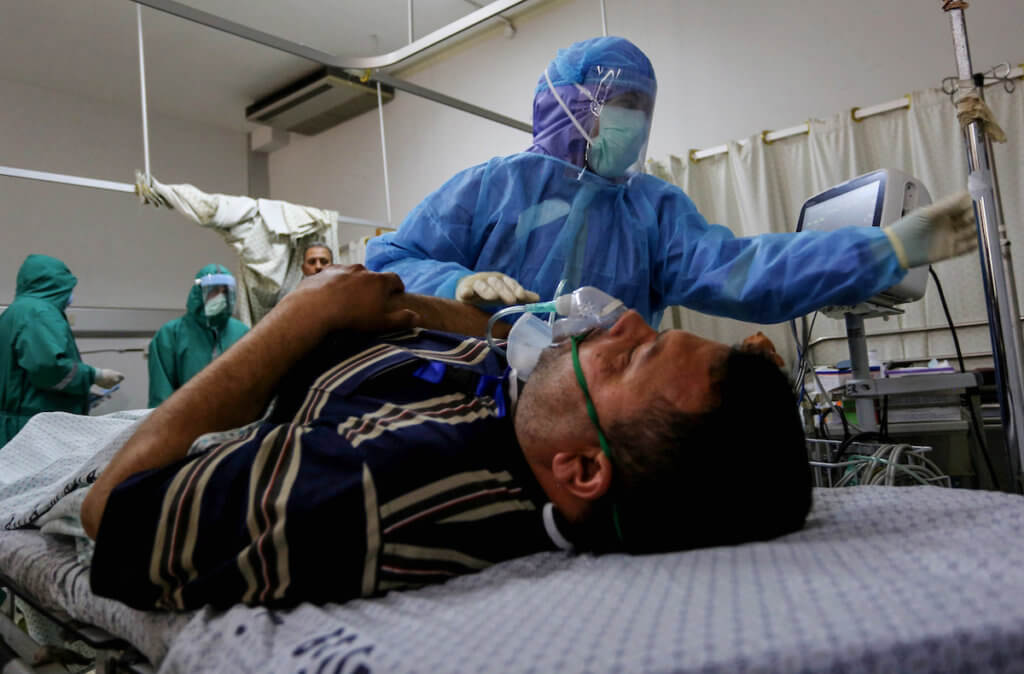
One additional hardship has also befallen Gaza over the last two weeks. Palestinians in Gaza have urgently reached out to Physicians for Human Rights-Israel asking for emergency medical intervention, including those who are post-op, in critical condition and marooned inside of Israel.
Let’s untangle this: on the sidelines of the coronavirus pandemic Israel plans to annex parts of the West Bank on July 1. In the countdown, the Palestinian Authority said it will cut ties with Israel and no longer abide by any joint agreements. Now that a little time has passed we can see one tragic consequence of this policy is the most critically ill Palestinians are being left to fend for themselves.
The PA is no longer paying the hospital bills for Palestinians who are already in Israel undergoing operations, including organ transplants. Similarly, Palestinians in Gaza, often cancer patients who were expecting to travel to Israel for treatment, can no longer exit for chemotherapy and surgery. The PA has stopped responding to their humanitarian permit requests.
This is an abrupt change. While we’ve talked about closed borders as of recent, generally that has been true but for a small number of Palestinians, roughly 100 patients for the month of April (usually no less than 1,500 patients exit Gaza each month) there still continuous movement in and out of Gaza for treatment in Israeli hospitals. For a first time, that has now completely stopped.
From Physicians for Human Rights-Israel, patients impacted included”
“an eight-month-old baby with a heart condition from the Gaza Strip who has been unable to travel for treatment at Sheba Hospital because the Palestinian Civilian Affairs Committee refuses to forward an exit permit application for him and a 24-year-old woman from the Gaza Strip who requires ongoing treatment for orthopedic issues and whose application for a permit was denied by the Palestinian coordination.”
“We are on the brink of medical chaos. Right now, hundreds are affected. Thousands will be affected soon,” PHR-I said.

‘I forked out about $5,000 for my party’
For a bit of bright news, wedding halls are reopening in Gaza. After scores of couples repeatedly pushed back the date of their nuptials, marriage ceremonies and the parties that follow stated back up this week—albeit with an added accessory, the face mask.
Stay safe, stay distant, and don’t stop wearing your mask. We’ll see you next week!