
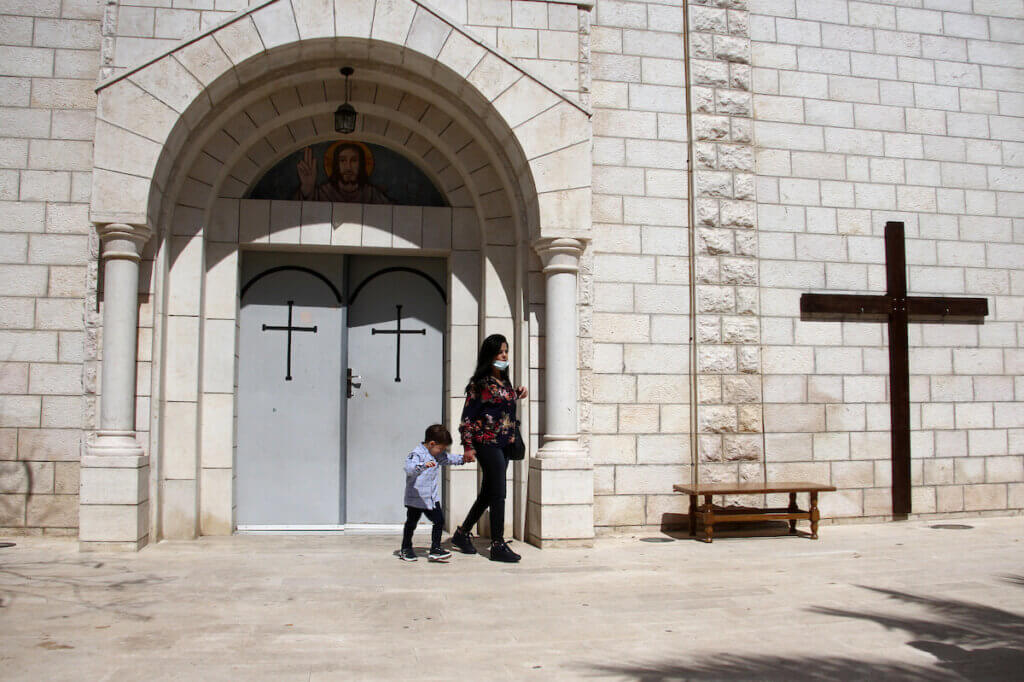
The largest official Protestant association of churches released in late October “Focus: Palestine,” a digital textbook that places the Israeli occupation of Palestine in historical, political, and theological contexts. The compilation is divided into three sections – Voices and Lenses, Theologies, Ideologies, and Resistance, and Systems of Sin and the Jerusalem Microcosm and is published by the World Communion of Reformed Churches, which represents 232 denominations and 100 million members.
“While we centered the resource on Palestinian voices and experiences, we took a deep dive into exploring the websites and theological statements of WCRC churches around the world,” said Katherine Cunningham. The resource was co-authored by Cunningham and Noushin Darya Framke.
Michael Lynk, United Nations Special Rapporteur for the Situation of Human Rights in the occupied Palestinian territory, keynoted the October launch. “No change is going to come to the present status,” he declared, “unless and until there are loud voices coming from civil society, including faith-based organizations, to demand its end and to demand political and diplomatic leaders place this as one of the more important issues on the international agenda.”
When later asked to comment further, Lynk said, “The ‘Focus: Palestine’ handbook is an outstanding guide to understanding the struggle for justice in Israel and Palestine. In clear, vivid and truthful language, it informs the reader about the long cry for hope from Palestinians, the commitment by many churches to stand beside those Palestinians and Israelis searching for equality, reconciliation and a shared future together, and it names the barriers – such as settler colonialism, impunity and an acquisitive occupation – that stand in the way of a compassionate peace.”
South African Dutch Reformed Church cleric and anti-apartheid activist Allan Boesak spoke during the launch. “For the church in South Africa, joining the struggle against apartheid on political as well as theological grounds became a question of faith,” he said. “If you are not in this on the right side, you are betraying the gospel of Jesus Christ. You cannot ignore the suffering and death of Palestinians and then claim to be baptized in the name of Jesus Christ.”
During the event, Munther Isaac, the academic dean of Bethlehem Bible College and pastor of Bethlehem’s Evangelical Lutheran Christmas Church, was asked, “Why should the church be concerned?” He offered five reasons: the obvious injustice in the land; an injustice that is happening, in large part, in the name of the Bible; the church’s already destructive involvement through the political/theological activism of Christian Zionism; the tenuous future of Christian presence in the Holy Land; and, he said, “finding a just solution to the end of the occupation will have a positive impact on the region.”
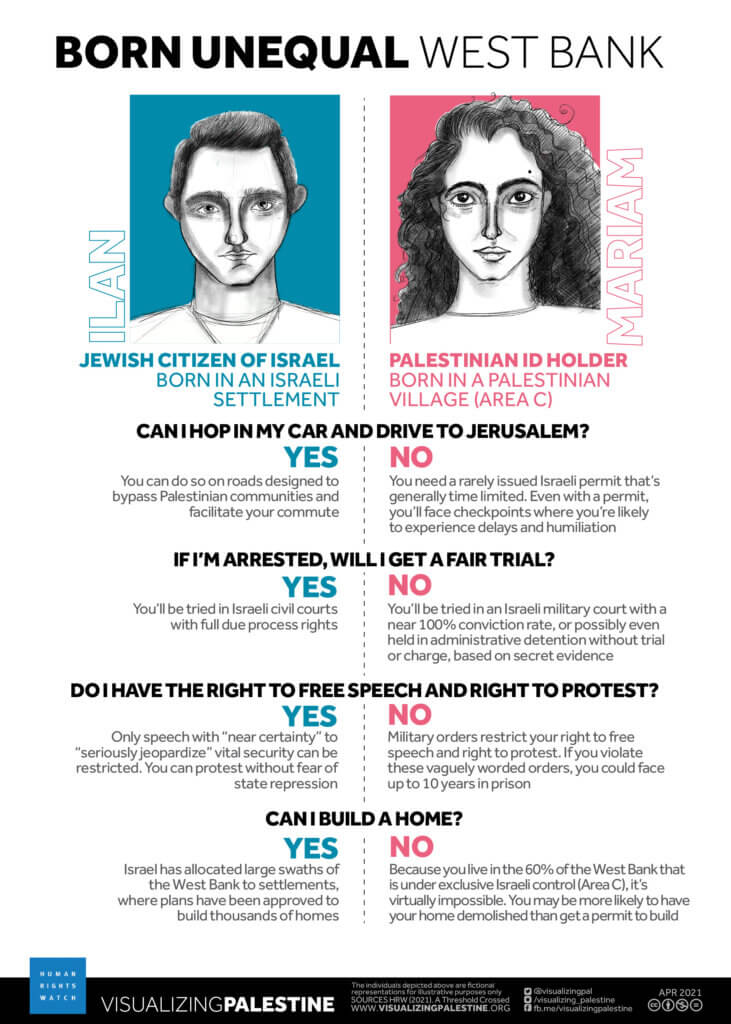
Powerful images are interspersed throughout the document, along with links to over a dozen videos and graphics provided by Visual Palestine, turning the book, one pastor observed, into something just short of a work of art. Users of the resource will hear leading Palestinian Christian theologians and engage with their writings. “Focus: Palestine” discusses the groundbreaking 2021 reports from the Israeli human rights group B’Tselem and Human Rights Watch which found Israel practices apartheid.
“I am so sorry that the Bible, the same book that I read and study every day, that brings life to many people, is bringing pain and suffering to the people of Palestine,” Dario Barolin, an executive of WCRC’s Latin America division, said. He cautioned, “It is very problematic for religions to support injustice. As Waldensians [one of the WCRC’s member denominations], we have learned to never use our faith to justify the use of power or oppression.”
Ranjan Solomon, a human rights activist in India, spoke of the value that “Focus: Palestine” will bring to human rights movements around the world. He said it “It will help church people everywhere discern the injustices in their own lands and commit to do far more to transform the church into an instrument of justice.”
“The handbook is badly needed in Germany and would be a revolution as far as ecclesial material on Palestine-Israel is concerned,” said Ulrich Duchrow, a professor and co-moderator of the Kairos Palestine Solidarity Network in Germany. Hoping that the book will be translated into German, he added, “Focus: Palestine” is grounded in biblical theology, international law and human rights, clearly naming the reality of the people in Palestine-Israel, not trying to be ‘neutral’ as many churches do, particularly in Germany.”
“In our [long-standing] commitment to justice, the World Communion of Reformed Churches seeks to set a standard for global church study and activism,” said Philip Vinod Peacock, an executive with the WCRC. “Focus: Palestine” is a comprehensive resource to lift up the cries of the Palestinian people to draw attention to the abuses and atrocities that are faced by Palestinians on a daily basis.”
1 of 2
Just received – Desperate Canadian Zionists run from the ugly truth:
UBC postpones Fedayin Film Screening due to Zionist pressure || Dec. 3 — Online event for Political Prisoner Solidarity || Dec. 5 – Liberation Cafe in Vancouver (samidoun.net)
University of British Columbia postpones Fedayin Film Screening due to Zionist pressure
https://apis.mail.yahoo.com/ws/v3/mailboxes/@-.id==VjN-6hg2X6z2oAgcUQR5USTIPn4DgGidw6j0pLQf4pXqzqN_xCmAZ8AsLmIiTjSn9ZatOstHGQ2SvOzuBlPC52QM-g/messages/@-.id==APimhnw4a9c8Yal1-ASfmOs6rSw/content/parts/@-.id==2/thumbnail?appid=YMailNorrin&downloadWhenThumbnailFails=true&pid=2
“The Palestinian Youth Movement-Vancouver, SPHR UBC, and Samidoun Palestinian Prisoner Network – Vancouver planned a film showing of Fedayin: Georges Abdallah’s Fight for Thursday, December 2nd, but it was postponed by the university administration on Wednesday, December 1 after a complaint was made about the film by an external, national right-wing Zionist organization.
“While the university says that it is conducting a ‘risk assessment’ for ‘security and safety’ on campus, the reality is that its actions mean that a film presenting the Palestinian narrative, and the life and struggle of Georges Abdallah, is not being shown tonight on campus because an official of a Zionist organization sent an email opposing the political content of a film. This film has been screened in multiple venues and university campuses across Canada and around the world and has been selected by multiple prestigious film festivals for screening. UBC is the only venue where such an incident of silencing and suppression has occurred.
“During the May 2021 uprisings in Palestine and abroad, academics, labour unions, artists, musicians, journalists, and the international community published statements in support of Palestinian liberation and against the Israeli settler colonial regime. For too long, institutions have been succumbing to Zionist pressure and censoring Palestinian speech. No external Zionist pressure should take importance over the community and Palestinian organizers. (cont’d)
.
2 of 2
“This is a clear threat to academic freedom and an example of discrimination and anti-Palestinian racism. External pressure from a national lobby organization is treated as if it is a higher priority than the well-being of students on campus, particularly Palestinian students and allies of Palestine. University officials did not reach out to Palestinian students and inquire about their well-being or need for support after being targeted by a national right-wing lobby group. Instead, they postponed the film screening to ‘determine risk.’
“We expect that the University of British Columbia will expeditiously complete its risk assessment review and that we will soon announce a new date for the screening. We further expect the university to live up to its obligations to its students and as a centre for higher learning by appropriately dismissing these complaints made by a lobby organization that does not want the Palestinian histories to be told at UBC.
“In addition, we expect that the administration provide support to Palestinian students on campus and facilitate the screening of ‘Fedayin’ rather than allowing anti-Palestinian racism to delay, suppress and silence our expression. We will announce the new date for the film at UBC as soon as possible, and we will not stop organizing.
“We encourage organizations to screen the film in your local areas, campuses and communities in order to hear the narrative that Zionist lobby groups want to silence: that is, the narrative of the Palestinian people – denied their humanity for over 73 years of ethnic cleansing, yet continuing to struggle for justice, freedom and liberation.
“The university taking 30 days to complete a risk assessment is a statement in itself. They chose to listen to Zionist pressure instead of allowing the film screening to proceed and discuss it with the organizers involved.”