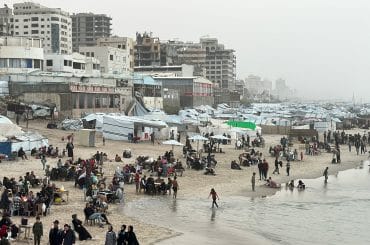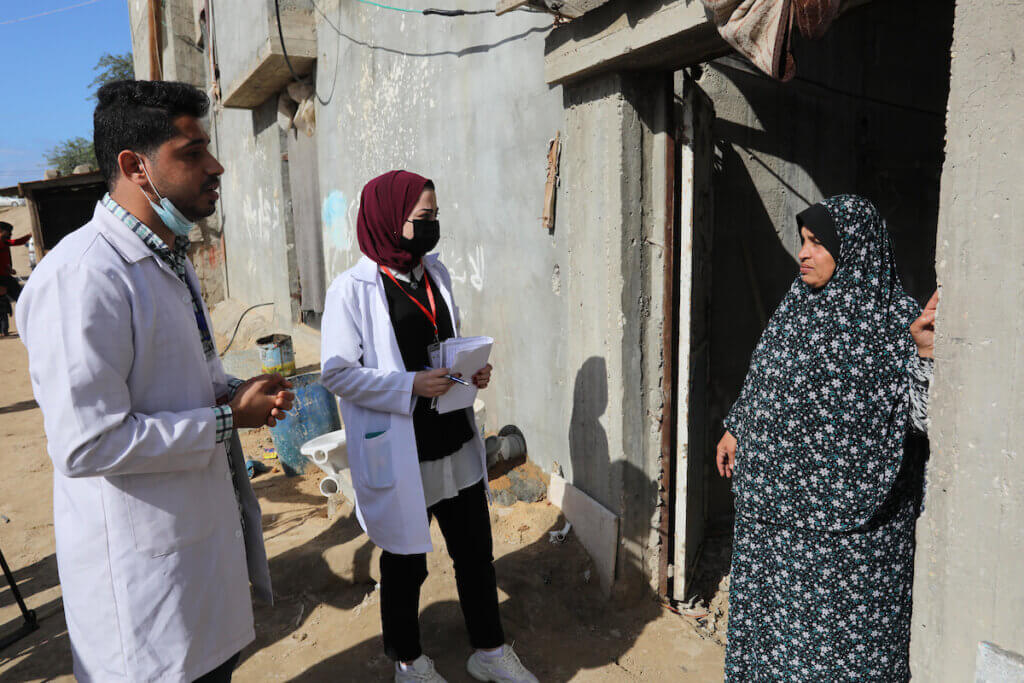
Palestinians take part in a campaign to encourage people to get vaccinated against the coronavirus in Gaza City on December 2, 2021. (Photo: Ashraf Amra/APA Images)
The Latest:
- 461,467 Palestinians tested positive for COVID-19; 453,392 recoveries; 4,810 deaths
- Of those who tested positive 243,648 live in the West Bank and 187,463 live in the West Bank
- 1,344,668 Israelis tested positive for COVID-19; 1,331,063 recoveries; 8,199 deaths
Palestinians have reimposed a state of emergency that will bar some businesses from opening, as both Israel and Jordan limited travelers from entering over the weekend in an attempt to prevent the spread of the omicron variant, thought to be more contagious than earlier mutations.
On Sunday Jordan forbid entry for tourists from South Africa, Lesotho, Zimbabwe, Mozambique, Namibia, Eswatini, and Botswana. Returning Jordanian citizens will receive a PCR test at the airport and then front the cost for government-mandated quarantine for two weeks.
That same day Israel took a more aggressive approach and prohibited the entry of all tourists for 14 days.
While the omicron variant has not yet been detected among Palestinians, two cases were reported in Israel last week. The World Health Organization said on Wednesday the variant had reached 24 countries.
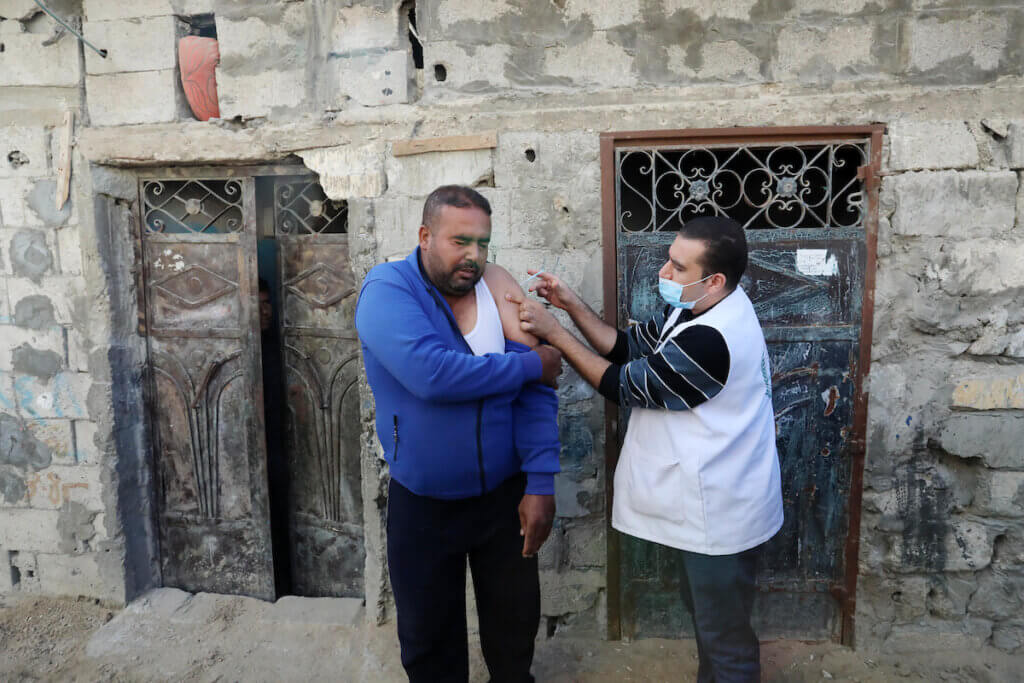
Healthcare workers vaccinate Palestinians at their homes in Gaza City on December 2, 2021. (Photo: Ashraf Amra/APA Images)
Palestinian campaign to vaccinate stalled
The arrival of the variant comes as the Palestinian vaccination campaign has stalled. For weeks that vaccination rate has hovered around 50% for the target population, meaning persons 18 and older.
Around mid-August, only 20% of Palestinians in the West Bank and Gaza had received at least one dose, according to data from the World Health Organization. A drive over the next month that vaccinated over 8,000 per day led to a 47% vaccination rate by September. That 27% leap was not carried over into November, when the vaccination rate trudged from 52% to 57% of the target population.
The overall rate of new infections has slightly declined since the 3rd wave (for Gaza) and the 4th wave (for the West Bank) peak in new cases in mid-September, but that has coincided with a drop-off in testing and quality of testing.
According to a weekly epidemiological report from the WHO, of the current COVID-19 tests, only 15% are PCR tests, the rest are the less accurate rapid tests. In 2020 Palestinians almost exclusively used PCR tests, but after a limit in access to restocks in April, health officials began relying on the antigen test.
Gaza currently accounts for around 65% of all Palestinian cases. ICUs are at 20% capacity and in the West Bank at 50% capacity.