Ukraine
This newsletter is usually devoted to how Israel and Palestine intersect with U.S. policy, but it feels like a mistake if we don’t begin with the horrible situation in Ukraine. I’ve gathered some analysis outside of the mainstream media that I have found interesting.
Ted Galen Carpenter is in Responsible Statecraft writing about how the U.S. might arm resistance fighters:
U.S. and Western officials are grappling with the embarrassing fact that they oversold their backing for Kyiv and now face the reality that Putin has called their bluff with an invasion and occupation of at least some of Ukraine’s territory. Consequently, they are scrambling for an option that would go beyond merely implementing more economic sanctions — a move that might hurt the global economy as much as it would inflict pain on Russia. The current front-runner for a more robust response is a scheme to fund and arm Ukrainian fighters to mount a resistance to a Russian occupation. Indeed, there are news reports that CIA operatives already are busily training Ukrainian paramilitary units.
It is a spectacularly bad idea. Assisting guerrillas to maim and kill Russian soldiers might well create an irreparable breach between Russia and the West. The new cold war already is chilly enough without adding to the dangerous tensions.
Dr. Ira Helfand, the former president of International Physicians for the Prevention of Nuclear War, was on Democracy Now! talking about the possibilities of a nuclear altercation:
A war between the United States and Russia would be a worldwide climate disaster. Hundreds of millions — perhaps as much as 150 million tons of soot would be put into the upper atmosphere, blocking out the sun, dropping temperatures across the planet an average of 18 degrees Fahrenheit. In the interior regions of North America and Eurasia, temperatures would drop 45 to 50 degrees Fahrenheit. We haven’t seen temperatures on this planet that cold since the last ice age. And under these conditions, the ecosystems which have evolved in the last 10,000 years would collapse, food production would stop, and the vast majority of the human race would starve to death. This is what we’re facing. And this is the danger we’re going to be facing as long as we allow nuclear weapons to exist.
Patrick Cockburn compares Putin’s attack to Saddam Hussein’s invasion of Kuwait.
Katrina vanden Heuvel writes about the invasion in The Nation:
What is needed is not a rush to arms and to hawkish bluster but a return to intense negotiations—at the UN, at the Organization for Security and Co-operation in Europe, and among the signatories to the Minsk Protocols. It is time to recognize that there remain options that, if pursued in good faith, could bring the current crisis to a peaceful conclusion.
We believe the crisis can and should ultimately be resolved by a declaration of Ukrainian neutrality and the withdrawal of Russian forces from the Donbas. To that end, we applaud the restraint shown by both France and Germany, and are particularly supportive of President Emmanuel Macron’s efforts to end the crisis. NATO or the OSCE might valuably take the initiative to open negotiations on creating a resilient new security architecture in Europe, one that engages Russia rather than threatens it, and reassures its neighbors rather than militarizes relations. That might sensibly include an end to NATO expansion, and a return to the Conventional Forces in Europe and Intercontinental Ballistic Missile treaties.
There have been some antiwar rallies in Russia.
At the time I am typing this, Dynamo Moscow striker Fedor Smolov is the only national team player to oppose Russia’s invasion.
Three Syrian soldiers were killed by an Israeli rocket. The Intercept’s Ryan Grim on Twitter: “Whenever wars start, countries take the opportunity to fire off a few shots or pull other stuff they’d put off. Israel’s been bombing Damascus while nobody’s been looking.”
Marjorie Cohn in Truthout:
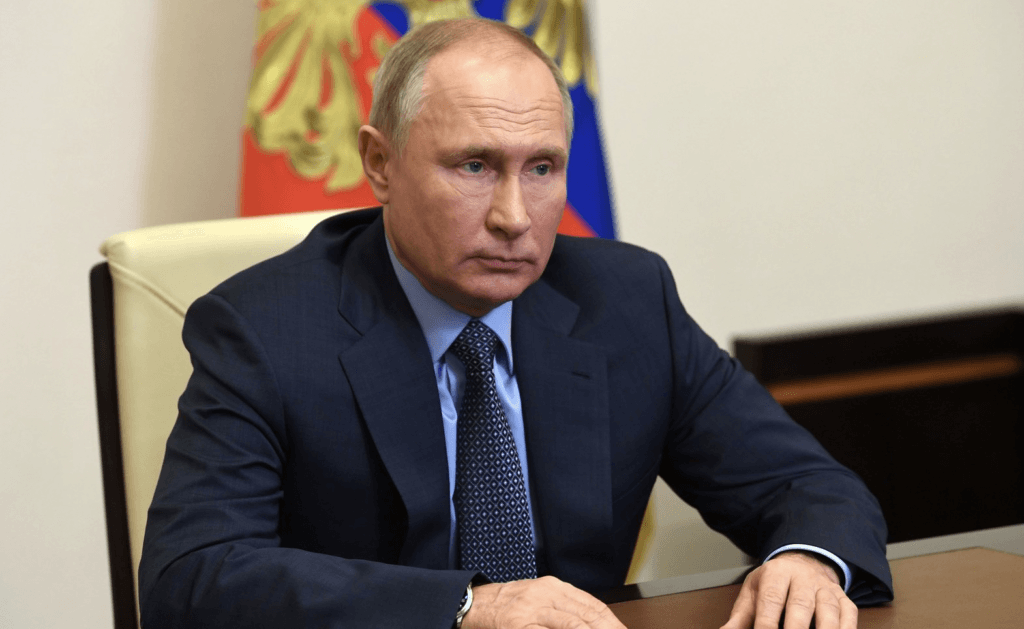
When Putin announced Russia’s recognition of the DPR and LPR in the Donbas region, he stated that if Ukraine was to join NATO, it would be a “direct threat” to Russia. The situation is “like having a knife against our throat,” Putin said, adding that Russia has “a right to take countermeasures to enhance our own security.”
This uptick in tensions is taking place in the context of a structural escalation from the U.S. that deserves more than a passing mention by the media: On February 16, The New York Times reported that the United States is building “a highly sensitive U.S. military installation” in Poland, just 100 miles from Russia’s border. The base, which is scheduled to begin operation this year, is a site from which the U.S. could deploy nuclear-armed missiles.
At The Intercept Ken Klippenstein writes about how the Saudi-Russia relationship is driving up gas prices.
UT and The IHRA
We’ve covered the IHRA’s working definition of antisemitism at the site many times so you probably know its significance, but let’s summarize it just in case. The International Holocaust Remembrance Alliance working definition antisemitism non-legally binding statement that was adopted by IHRA Plenary in 2016. Since then it has been adopted by various entities and pro-Israel advocates have pushed for it to be used within the academic world. It has been enthusiastically embraced by Democrats and Republicans. The Biden administration calls it the “gold standard” of such definitions.
It’s controversial because it includes some criticisms of Israel. In other words, it says that criticizing Israel in certain ways is antisemitic. Inevitably it has been used as a tool to muzzle pro-Palestinian sentiment.
Earlier this year students at the University of Texas mounted a challenge against the definition, a first for any U.S. school as far as I’m aware. The UT Senate of College Councils took up a resolution “to affirm the speech, actions, protests, and campaigns of students advocating for Palestine as a protected right at the University of Texas at Austin.” The same resolution condemned the IHRA working definition. “The IHRA definition of antisemitism has notoriously been harmful to the speech and rights of pro-Palestine advocates on campuses… as it falsely conflates criticisms of the State of Israel as a form of antisemitism,” it declares.
Jewish Insider reported on the immediate backlash that the effort generated among pro-Israel groups on campus. More than 2,000 students signed a petition criticizing the resolution. The petition claims that the resolution belittles Jewish student’s “lived experiences with antisemitism by claiming these instances were not about Jewish people, but rather that our advocacy to educate our peers on ways to prevent antisemitism was actually a nefarious plot to harm others.”
The resolution was set to be voted on in the coming weeks but now the Palestine Solidarity Committee, who had introduced it, is withdrawing the measure.
Very interesting bit of information in the Jewish Insider’s Daily Kickoff newsletter. It says that the decision to withdraw the resolution “came after university officials intervened and expressed concern about the bodies taking up a ‘non-university issue,’ according to a person who attended a Tuesday student government meeting where the issue was discussed.”
We’ll keep an eye on this one for sure.
Odds & Ends
? Howard Horowitz, who is one of Rep. Jamaal Bowman’s constituents, writes about the congressman withdrawing his support for the Abraham Accords.
⚖️ A U.S. court of appeals dismissed a lawsuit challenging Maryland’s anti-BDS law. You can read the ruling here.
?? A bipartisan group of House members sent Biden a letter reminding him that he needs congressional authorization before committing U.S. troops in a conflict against Russia. “The American people, through their representatives in Congress, deserve to have a say before U.S. troops are placed in harm’s way or the U.S. becomes involved in yet another foreign conflict,” it reads.
?? A faculty panel unanimously sided with Professor Rabab Abdulhadi in her grievance against San Francisco State University.
? From The Guardian:
The director of the Whitworth Art Gallery is being asked to leave his post by the University of Manchester, after a row when a statement of solidarity with Palestine’s “liberation struggle” was removed from an exhibition of works by a human rights investigations agency.
Alistair Hudson, who heads the Whitworth and Manchester Art Gallery, has been asked to leave by the university, the Guardian understands, after a series of complaints by UK Lawyers For Israel (UKLFI).
⛳ This Phil Mickelson story is truly amazing. He’s the most high-profile golfer to support Saudi Arabia’s upstart golf league, but criticized the country’s government. “We know they killed Khashoggi and have a horrible record on human rights,” said Mickelson. “They execute people over there for being gay. Knowing all of this, why would I even consider it? Because this is a once-in-a-lifetime opportunity to reshape how the PGA Tour operates.”
An NPR headline refers to these comments as “controversial.” How so? Mickelson is now losing sponsors and has released an apology, but the apology is very interesting if you parse it. Here’s media critic Adam Johnson breaking it down on Twitter:
Read this apology and a dozen reports about it and it’s strange no media outlets are pointing out that Mickelson is wording this in such away that he’s clearly apologizing TO the Saudi government for insulting them not to decent human beings for rationalizing taking Saudi blood money.
It’s a meta apology, apologizing for vague, unspecified “offense” he may or may not have caused but not specifically about what he said, or the substance what he said. The part that outrage people was his being blasé about Saudi human rights abuses. This isn’t what he’s sorry for.
Also extremely weird media outlets keep noting KPMG dropped Mickelson as its sponsor without noting KPMG is a major contractor for the Saudi state and runs security for the Saudi state owned oil firm ARAMCO
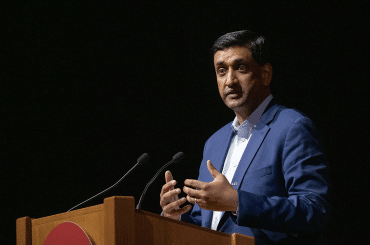
✈️ Rep. Ro Khanna (D-CA) was interviewed by Jewish Insider about his recent trip to Israel. “I thought it was a very positive trip,” said Khanna. “I was able to build relationships with many people in Israel.”
“When I get criticized, I always listen to it if people have a good point,” he continued. “I’m always open to it. But I’m not going to back away from my belief that Israel is an ally and in the importance of the U.S.-Israel relationship. That’s a conviction.”
“I am very clear where I stand. I believe that there are important economic and technological ties between Silicon Valley and Israel. I believe that the coalition government should continue to work to be as inclusive of all parts of Israeli society and that there has to be a recognition of Palestinian rights.”
? Why is John Bolton allowed on television?
⚜️ Another bill targeting companies that boycott the fossil fuel industry, modeled on anti-BDS legislation. This one is in Louisiana.
?? Israel says it “supports Kyiv’s territorial integrity and sovereignty.”
?️ The liberal Zionist group J Street has dropped its endorsement of Rep. Marie Newman (D-IL) and will back Sean Casten in that race instead. The mainstream media has begun reporting on the bribery scandal surrounding Newman recently. Mondoweiss has been covering the allegations since last April.
?? Palestine Legal has released their annual Year-in-Review:
Palestine Legal responded to 280 incidents of suppression of U.S.-based Palestine advocacy in 2021.
This represents a 31 percent increase of incidents responded to from 2020, and a 13 percent increase from pre-pandemic numbers in 2019. Additionally, we responded to 67 legal questions from activists who were concerned their rights were threatened.
“We know Israel and its allies are desperate to suppress advocacy for Palestinian freedom because they can’t win the moral argument,” said Palestine Legal director Dima Khalidi. “Israel’s repressive measures will fail because the movement will not be bullied into silence. More and more people of conscience understand that our fundamental rights are at stake if we don’t resist attacks on our movements.”
You can read the entire report here.
Stay safe out there,
Michael