Key Developments (Jan 17 – Jan 23)

- One Palestinian killed after he allegedly carried out a shooting operation at an Israeli military checkpoint in the Hebron district.
- Two Palestinians were killed in Jenin by Israeli army gunfire, including one resistance fighter, and a local teacher
- One Palestinian was killed by an Israeli settler on January 21 after an alleged stabbing attempt at an illegal settler outpost outside Ramallah.
- The Israeli army’s military police unit said it’s launching an investigation after an initial probe determined that Ahmed Kahla was “unnecessarily” shot and killed in front of his son on January 16
- Israeli forces detained at least 42 Palestinians in the West Bank and East Jerusalem, including seven children and a journalist.
- Israeli settlers set up a new illegal outpost in the village of Jorish, Nablus, sparking confrontations with locals, injuring six Palestinians.
- Israeli high court upholds demolition order on a school in Masafer Yatta, which serves 47 Palestinian children.
- Members of Prime Minister Benjamin Netanyahu’s ruling coalition call for the imminent demolition of Khan al-Ahmar
In Depth
Last week, Palestine’s martyrs spoke to one another.
It has become commonplace for the young men of Dheisheh refugee camp to write their final wills in advance, stuff it in their pockets, and go out to face the Israeli army’s regular invasions of their camp with rifle or stone. The wills they write are often short, simple, and understated.
The martyr Basil al-Araj reflected on this in his own will before he was killed by the Israeli army in a protracted shootout in 2017:
“Years have passed as I contemplated the wills of martyrs, which have always bewildered me, brief and rushed and inarticulate as they are, and failing to satisfy our questions about martyrdom.”
But we also notice another thing about these martyrs and their wills — they are speaking to one another.
Across time and space, across the divide between life and death, they do it in more ways than one: not only in their emulation of one another through their actions — their decisions to fight — but in their written wills as well.
15-year-old Adam Ayyad in Dheisheh refugee camp, killed at the start of this year, referred to the 18-year-old “Lion of Nablus,” Ibrahim al-Nabulsi, in his will:
“I want to tell all of you that martyrdom isn’t simply death, martyrdom is an honor to yourself and to the entire world. Martyrdom is the end. It’s true that your life ends, but it ends with your happiness, and I want to send this message to the entire world, like al-Nabulsi said: ‘I just wish that the people will wake up.’”
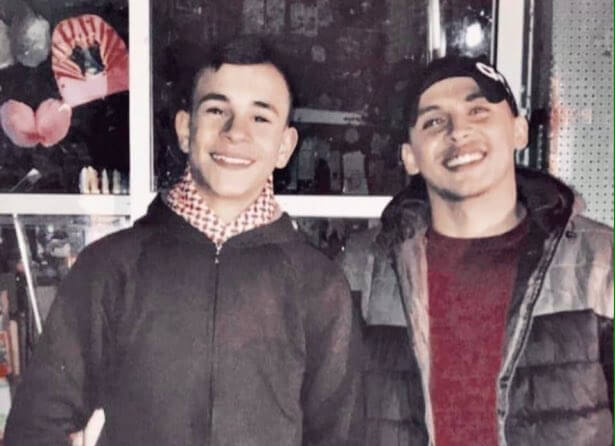
One of his friends was the slain Omar Manna, a 22-year-old baker also from Dheisheh. Omar’s death deeply affected Adam, according to Hassan Manna, a local activist in the camp who owned the bakery Adam and Omar worked at, in an interview with Mondoweiss.
He signed his own will: “the living martyr, Adam,” because his memory and his actions were carried by those who knew him or knew of him, and would carry them forward after his death.
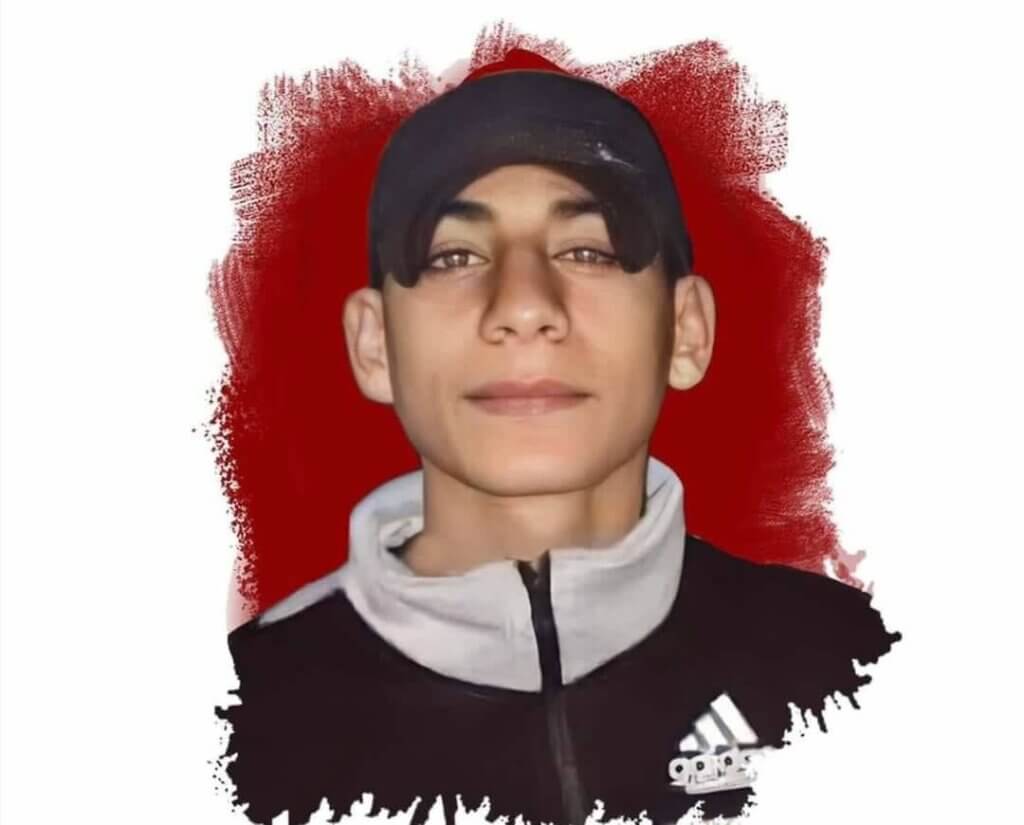
Just last week, another teenager, 14-year-old Amer Khmour, was killed in the camp during the confrontations. His will, also found in his pockets, echoed many of the same lines as Adam’s the week before, such as Nabulsi’s wish “that the people would just wake up.” But Amer’s letter took it even further, starting with the names of two martyrs: “The heroic martyr Amr al-Khmour. The heroic martyr Udai al-Tamimi. This is my will to you.”
Udai al-Tamimi, the resistance fighter from Shu’fat refugee camp who killed an Israeli soldier in October 2022 at a military checkpoint, and then evaded capture for ten days before reappearing to make his last stand, also referred to those who came before him in his own will: “I am the wanted Udai Tamimi, from the camp of martyrs, Shu’fat. My operation at Shu’fat military checkpoint was a mere drop in the roiling ocean of struggle.”

But he also spoke across time to those who would come after him. He called on the youth of today to act on his example and take up arms against the colonizer: “ I know that I will be martyred sooner or later, and I know that I did not liberate Palestine with this operation. But I carried it out with a clear objective, that the operation will move hundreds of youth to pick up the rifle after I am gone.”
Ibrahim al-Nabulsi said the same in a voice recording moments before his death: “my final will to you, on your honor: don’t let go of the rifle — on your honor.”
His comrades didn’t. Many died and didn’t get the chance to write wills of their own.
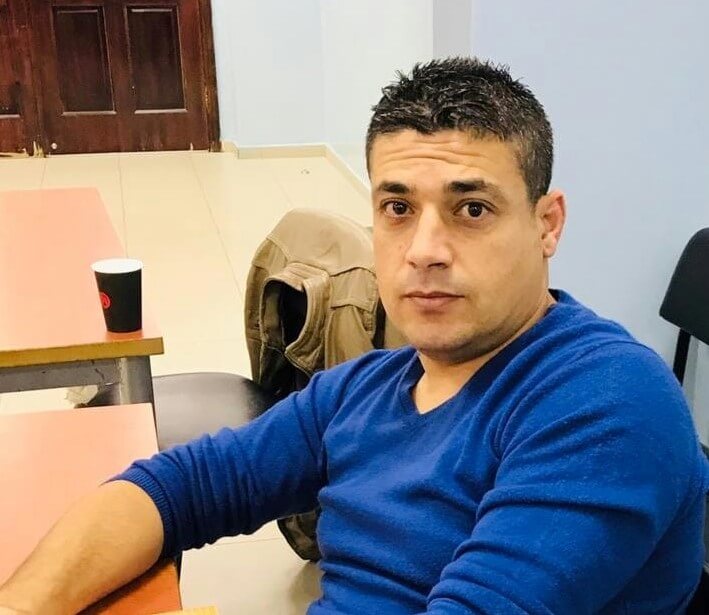
But more than that, the way that these martyrs continue to live, long after their mortal lives have expired, is through the actions of the living. Hamdi Abu Dayyeh, 40, another of last week’s martyrs on January 17, spoke as much “to the youth of Palestine” by calling on them to “rise up.”
But he also spoke in his letter to his enemies, reminding them of the trail of martyrs that preceded him and that would come after him: “Palestine gives birth to fighters, and for every name you kill, forty more will appear…Tomorrow, after you kill me, you will face a thousand other lone wolves who carry my name and the name of those who preceded me.”
These living examples are part of the reason that motivates the youth of Palestine — from 2015, when the first of the many popular waves of resistance broke out, to the present — to give up their lives in the struggle for their people’s freedom. In many cases, it is the direct act of honoring a loved one, a friend, or a comrade, but their actions reverberate much farther than their immediate social circles. With their actions, the martyrs of Palestine answered the burning questions that faced the living, but also left the living to search for themselves, as in the case of Basil al-Araj. We leave you with his final written words:
“And now, I find myself walking towards my fate, content and satisfied, I’ve found my answers. What a fool I have been! Is there anything more eloquent and articulate than the martyr’s act? I should have written this many months ago, but what stopped me is that this is your question, you the living. Why should I answer on your behalf? You must search for yourselves. As for us, the people of the grave, we search for nothing but the mercy of God.”
Important figures
- 18 Palestinians killed in 2023, including three children
- 173 Palestinians killed in West Bank and East Jerusalem alone in 2022