Key developments (July 28 – 31)

- On Monday morning, July 31, Israeli forces conducted large-scale military raids in Jenin, Hebron, Ramallah, and Tubas. Armed confrontations erupted in Jenin and lasted for hours, according to local reports. In addition to the invasions, Israeli forces conducted search-and-arrest operations with undercover special operations units. At least three dozen Palestinians were detained over the weekend, including Fathi Atoum, a senior leader of Hamas.
- Also on Monday, Palestinian Authority (PA) intelligence arrested Palestinian journalist Sami al-Sa’i from his workplace in Tulkarem, north of the West Bank.
- On Thursday, July 27, following the Israeli Flag March that took place in Jerusalem’s Old City, the Hamas-affiliated armed resistance group, the Ayyash Battalion, reported that its fighters managed to bomb the settlement of Ram Oun located in the outskirts of Jenin. In the statement, the Battalion said that “Al-Aqsa is a red line and we will not allow it to be crossed.” This came a day after the Saraya al-Quds, the armed wing of the Palestinian Islamic Jihad in Jenin, itself part of the Jenin Brigade, reported foiling two Israeli military attacks that were planned to take place against the camp’s fighters on Wednesday, July 26. On that same day, Israeli forces invaded the town of Ya’bad, 20 kilometers west of Jenin city, and confrontations ensued between the town’s youth and the Israeli army. At least one Palestinian was injured by rubber bullets.
- On Saturday morning, July 29, the PA arrested Baha’a Adnan Abu Bakr, a former political detainee held by Israel. The PA also arrested two brothers, Hamza and Hussein Hirzallah from Ya’bad, west of Jenin. The arrest of the Hirzallah brothers happened after PA forces invaded their home, destroyed the family’s belongings, and beat up their other two brothers, Hasan and Muhammad Hirzallah. Their mother had to be evacuated in an ambulance after suffering from a fall as she witnessed PA forces beat her children. The Democratic Front for the Liberation of Palestine (DFLP) condemned the PA arrests, emphasizing the timing as immediately preceding the meeting of the general secretaries of the Palestinian factions, which took place in Cairo over the weekend. The DFLP stated that these practices are typical of the PA, which continues to serve as Israel’s fig leaf and works against the Palestinian people and the resistance.
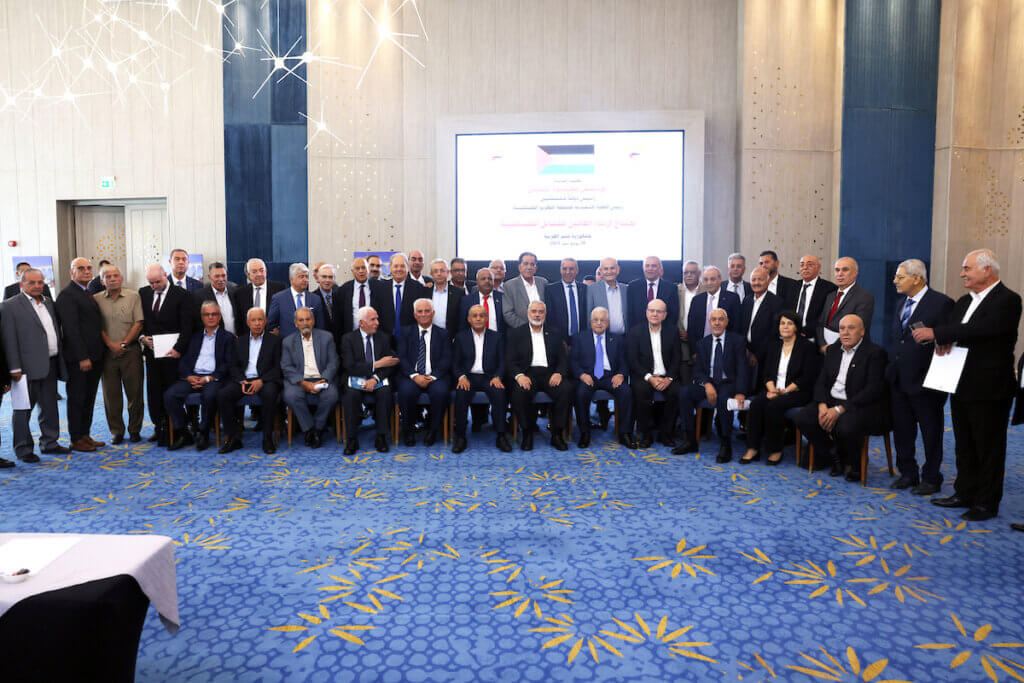
- On Sunday, July 30, Palestinian leaders from various political factions gathered in Cairo for a meeting on factional unity. The meeting was joined by acting PA president Mahmoud Abbas, the senior political Hamas leader Ismail Haniyeh, secretary general and co-founder of the Palestinian National Initiative, Mustafa Barghouti, and another two dozen representatives across Palestinian political parties and security representatives, mostly comprised of older male veterans. Abbas provided a concluding remark noting the formation of a follow-up committee with representatives from the Cairo meeting, with the objective of ending factional divisions. Yet the meeting concluded without any results or joint communique that would share conclusive action points with the Palestinian public.
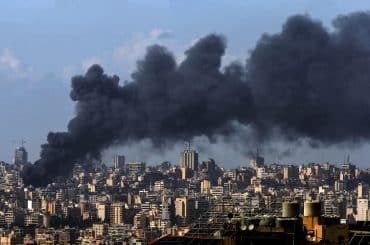
- As unity talks concluded in Cairo on July 30, armed strife in Palestinian refugee camps in Lebanon gained momentum following the assassination of Fatah leader Abu Ashraf al-Armoushi and at least four of his personal security guards in Ein al-Hilweh refugee camp in southern Lebanon. According to local reports from Ein al-Hilweh, dozens of refugee families have been displaced since Sunday as they escaped the camp, amid continued armed clashes, allegedly between Fatah forces and Jund al-Sham, an armed militant group operating out of the camp. The Palestinian Authority reported that this incident aims to weaken the security of Lebanon and that of the camps. By the following day, the death toll rose to nine in the camp. At the same time, Israeli military and security heads warned on Monday that the likelihood of an upcoming war with Lebanon has reached the highest record since the 2006 war.
In-Depth
Last week, Palestine took to the regional stage. On Sunday, most of the general secretaries of the major Palestinian political parties flew into Cairo to attend national unity talks. A day earlier, a failed assassination attempt on an “Islamist” leader in the Palestinian refugee camp of Ein al-Hilweh in southern Lebanon sparked the assassination of Fatah leader Abu Ashraf al-Armoushi and four of his security guards. Armed confrontations broke out in the camp between Fatah militants and these so-called “Islamist” groups, the affiliation and identity of which remain unclear. Most have ruled out Fatah’s usual adversary in Ein al-Hilweh, Usbat al-Ansar, and other sources claim that the groups engaged in the fighting are Jund al-Sham and Al-Shabab al-Muslim, militant groups also based in the camp. But the background to all this is that the PA’s intelligence chief, Majed Faraj, made a visit to Lebanon a week earlier. Faraj was there to pull the rug out from under Hamas and the Palestinian Islamic Jihad’s presence in southern Lebanon’s Palestinian refugee camps in an effort to check the expanding influence of the armed Palestinian resistance — responsible for launching rockets into Israel in recent months.
Faraj was supposedly there at the behest of Israel and the United States, and analysts speculate that the ongoing clashes in Ein al-Hilweh are a direct product of the PA’s recent attempts to work against the interests of the resistance in southern Lebanon. Al-Shabab al-Muslim said as much today, accusing Faraj of leading to the fighting in Ein al-Hilweh. This would make Fatah’s participation in the Cairo meeting on the same day all the more farcical — engaging in national unity talks even as it further acts to foment intra-Palestinian bloodletting. Whether the events in Ein al-Helweh are related to Faraj’s earlier visit, meant to work against Hamas and Palestinian Islamic Jihad (PIJ) interests, remains to be seen.
The PA wasn’t only working against the interests of the Palestinian resistance abroad — in the West Bank, the PA’s campaign of arrests of resistance fighters and opposition figures, many of them associated with the PIJ, has continued without interruption. Between the declaration of the Cairo talks on July 3 and the meeting last Sunday, the PA arrested over 63 Palestinians, including Palestinian resistance fighters. A day before the talks, the Israeli channel, KAN, reported that the PA had confirmed with Israeli security heads that it arrested tens of Palestinian resistance fighters from Jenin in the span of two weeks.
Unsurprisingly, the PIJ decided to boycott the talks — PIJ leader Ziyad Nakhaleh had asserted that the PIJ would participate only on the condition that its members are released from PA prisons. They were not. The Popular Front for the Liberation of Palestine (PFLP) also boycotted.
The talks in Cairo come a week following a visit by Abbas to meet Haniyeh and Turkish President Recep Tayyip Erdogan in Ankara, while the Cairo meeting was called for in the wake of the Israeli invasion of Jenin in early June. What this means is that all of these regional and diplomatic measures have risen in response to one driving force — the rise of the Palestinian armed resistance.
This means that the Palestinian resistance has developed from being a mere nuisance operating on the margins to becoming a real force on the ground, one that Palestinian political factions and regional players must contend with and respond to, to preserve their own political relevance. This doesn’t only apply to the PA but to Hamas as well. While the PIJ was largely leading the spearhead of fomenting armed resistance in Nablus, Jenin, and elsewhere in the West Bank — which Hamas was more than happy to let the PIJ do and let it take the fall if it wasn’t successful — now that the armed resistance has gained newfound legitimacy, Hamas has sought to capitalize on the resistance for political gain. That’s why the Qassam Brigades, Hamas’s military wing, have started publicly claiming responsibility for more and more resistance operations and rockets fired from Jenin towards Israeli colonies in recent months, and that’s why Haniyeh met with the factions and the PA in Cairo.
The Cairo meeting ended without any clear results. The paltry follow-up committee that was formed is unlikely to deliver anything beyond platitudes. Meanwhile, the PA continues its war against the resistance at home and its proxy war against it abroad.
Important Figures
- In 2023, Israeli forces and settlers killed 213 Palestinians, almost the same number of Palestinians killed in 2022 – up until then considered the most lethal year for Palestinians since the Second Intifada.
- Between July 3 and July 31, the PA has arrested 63 political detainees in the West Bank, most of them from Nablus, Jenin, and Hebron.
- As of July 31, the Palestinian Authority holds at least 42 Palestinian political detainees, half of whom were formerly imprisoned by Israel or are active resistance fighters. At least one of these detainees is a minor.
- Since the start of the year, Israeli military courts and prison services issued more than 1600 administrative detention orders against Palestinians, including 18 children and minors.