
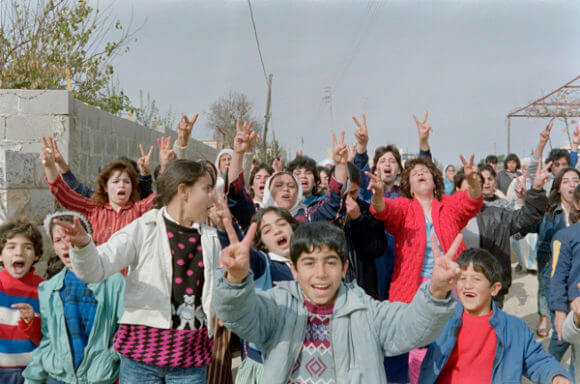
Nasser Abu Srour is one of thousands of Palestinian political prisoners held in Israeli prisons, where, especially in recent months, they are subjected to abject repression and abuse. One can only imagine what it might take to remain sane in the face of psychological and physical torture at the hands of one’s depraved Zionist jailers.
It is in this context that Abu Srour’s first book to appear in English, The Tale of a Wall (Other Press, 2024), joins a long tradition of Palestinian prison literature. However, this book is far more than a prison memoir. Rather, Abu Srour, who, in 1993, was sentenced to life without parole after a forced confession, “takes a surprising literary turn—the very prison wall depriving him of freedom becomes his companion and interlocutor.” It is within these pages, and through his remarkable, evocative prose, that the author embarks on a philosophical and interpersonal journey that spans the Nakba, the Intifada of Stones, and his own love affair, transforming the question of Palestine into a question of the human condition. The following excerpt, like the book, has been translated into English by Luke Leafgren.
– Mohammed El-Kurd
The Intifada of the Stones, 1987–1993
In the fall of 1987, I was about to turn eighteen. I had organized my priorities and felt I was on the right track. My dreams would not be constrained by those long periods of standing at the limits of my camp, churning with jealousy and anger because of what I saw on the other side. A cosmic matrix of suns, moons, and hidden galaxies was helping me to achieve my goals, some modest and others exceedingly complex. Nothing seemed too difficult for the Lord to whom my mother prayed for help in all her ways, casting upon His shoulders her heavy cares and the challenge of meeting the family’s expanding needs.
The innumerable stars and celestial bodies in the sky above proved how easy the task could be. As a child, I came to know their movements and their shifting positions, which were all so lovely to me. If I ever felt discouraged, I would simply close my eyes and deprive the heavens of every satellite that lit up its darkness. I knew my mother’s Lord could effortlessly accomplish everything in just the same way. All He had to do was exercise His compassion and employ all the letters of the alphabet for my benefit. After all, everything was possible for Him through the divine command: “Be.”

God was like the camp: a site of surrender and acceptance, an abridged alphabet, an existence outside time and place. I voluntarily served the Lord who needed only two letters to call everything into existence. The camp, however, held me in its thrall no matter how I answered the question to be or not to be. Divine care continued to manage my affairs, sometimes smoothing out a thorny path and sometimes hindering tasks I was certain would be easy. Having learned every insight I could from two parents whose strong suits did not include negotiation, I spent long hours during even longer nights bargaining with heaven. With all the cunning of one whose senses had been sharpened against the hard borders of the camp, I endeavored to persuade god to improve our conditions, or at least to adjust the terms of the deal.
I kept living my life, and it was as though no time or place existed beyond me. I did not perceive the shadow of other people trying, for their own part, to win the divine care that I had claimed for myself. Others prayed, fasted, and extolled all the holy names. They clung to the faith of obedience and devotion. They got up at the beginning, middle, and end of the night to supplement the five daily prayers with one or two more, as though to win divine approval through sheer force of numbers. Meanwhile, from my place at the border, I was content with pious words expressing trust in a merciful Lord who would save me if I succumbed—or did so repeatedly—to the pull of certain desires.
Certain of my priorities, I began pursuing them with every ounce of strength and energy I possessed. School certificates testified to my efforts and satisfied my vanity. For a time, everything seemed possible. The stars and planets aligned just as I wanted them, so close they brushed my fingertips. It was a clear sign that heaven approved of the plans I was forming for a future beyond the camp, its boundaries, and the people whose presence I took for granted. But that moment was very brief, for the camp, its boundaries, and those people took a different view of things. They possessed a divine care that cared more deeply; the elements of their cosmic matrix were better organized. The crime of snatching a desperate mouthful of bread bound those elements together into a unified society that exploded in rage and rose together in the Intifada of the Stones.
In the intifada, the camp saw a historic moment, pregnant with opportunities. If only the crisis could be managed well, all the doors that had been slammed in the camp’s face would open once again. The intifada became the hero of the folktale, except that the legend written by this new hero would supersede all others. The mythological heroes of the past would quit the stage, together with their stories that accepted diverse interpretations.
Very quickly, as though anxious about losing the chance, the camp constructed its stage. Incapable of enduring any more disappointments, it selected its roles, its heroes, and its dialogue like a seasoned professional. Displaced people took the stage, front and center, clothed in bodies that had cast off all the marginal instincts that previously defined them. Soon, in the very first scene of the play, the squares and alleyways were filled with heroes whose blood ran freely when the bullets pierced bodies during their first hurried appearance upon the stage. Nothing about these scenes reminded you of the heroes of Sparta or the defenders of Athens. We had no demigods so tired of the monotony of heaven that they descended to seek immortality through death. The temporality of pain, the spatial locality of suffering, and the finality of death dominated every scene of every act.
The walls of the theater closed in, with pictures and posters displaying elements of the legend. Young souls painted murals of a country, a revolution, and a triangular logo. They rejected a history of quarter-victories or half-defeats. They rejected the limitations of divine promises and prior judgments. These souls turned their backs on speeches that were born and grew up in a land that was no homeland. They turned their backs on the illusion of a community held together by a religion that died in the very moment it set them apart. Instead, these souls fashioned a new imagination. They united a divided people around a homeland—an idea that recalled the physicality of the body and the tangible geography of the land.
Constrained though it was, the theater contained more than enough space for all those taking part in the drama, with room to improvise and exchange roles, characters, and orations. The camp’s defining characteristic evolved from separation into union. Isolation became integration. In a remarkable, Darwinian fashion, as though searching for a mate in order to avert the evil of extinction, the walls continued to change color with painted logos and posters, adapting according to successive variations in material and spiritual conditions. By recording the memory of the place, the walls themselves became a principal actor upon the stage of events. The ability of the elite to lie and the people’s need to believe form the two essential elements in constructing any legend designed to establish the laws that subject a society to the power and legitimacy of some regime. Hammurabi of Babylon and the myth of the good king sent by Utu to provide divine guidance to the people; Nüwa, the Chinese goddess who created the ruling elite out of yellow mud and the common people out of brown mud; Purusha, the first human, according to the Hindus, from whose mouth the upper castes were created, while the lower came from his feet: all were legends upon whose lies human societies were unified through laws, rituals, and social norms. Ancient civilizations arose, filling the world with flourishing and decay, death and revival. All that god’s prophets needed to do was discredit the lies that had come before.
We needed a generation skilled in shaping new lies into a legend that would repudiate everything we previously believed: the Nakbas, the expulsions, the murders, the futile efforts, the value of submission, the counsel of fathers, the fear of mothers. We needed new lies to believe, and on the altar of their truth we would burn all the offerings we still possessed. We needed an entire generation of prophets, good at writing upon the walls, good at living through their hearts and their throats. Prophets who would die when crucified and be buried nearby so we could proclaim their lies to the people. Prophets who would dig their own graves and pray one last prayer for our souls when the earth at last became too much for them.
We needed prophets who were members of our own body. Who ate what we ate, built houses that were swept away in the same flood as our own, drank their coffee bitter like us. Prophets who did not get married—or if they did get married, then just to one wife—and if they were unfaithful, would not deny their betrayal or be jealous of their wives like the last males of the tribe had done.
We needed prophets who would turn our suffering into poems of a single line, who would turn our questions into research projects, who would turn our grandmother’s stories into alienation, and our exodus into a return. Prophets who would speak a language we understood and turn each of its letters into a cause.
We needed an intifada generation, an autumn generation, one that would drop all the fig leaves covering our nakedness and expose our shame to the shattered mirrors inside us. A generation that would grant us the best title we had ever borne: the generation of Stones.
Nasser Abu Srour
Nasser Abu Srour was arrested in 1993, accused of killing an Israeli intelligence officer and sentenced to life in prison. While incarcerated, Abu Srour completed the final semester of a bachelor’s degree in English from Bethlehem University and obtained a master’s degree in political science from Al-Quds University. The Tale of a Wall is his first book to appear in English.
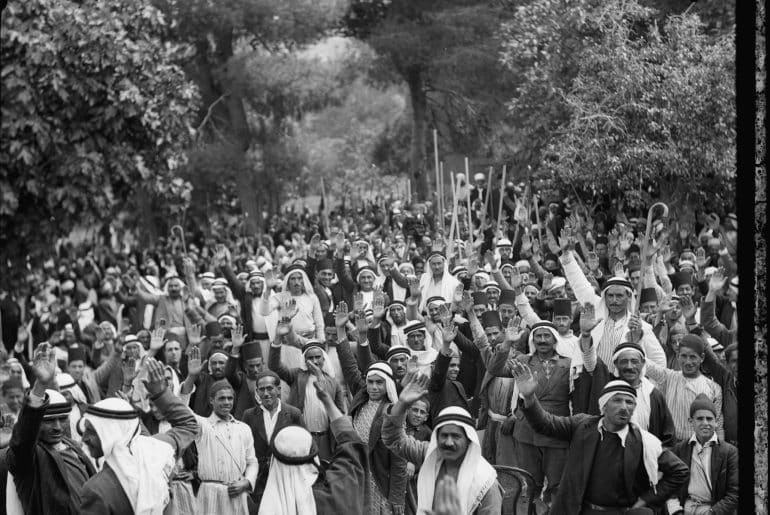

Any reading of the history of the Palestinian people for the past century holds them up as a symbol of human courage, grace, integrity, intelligence and resilience.
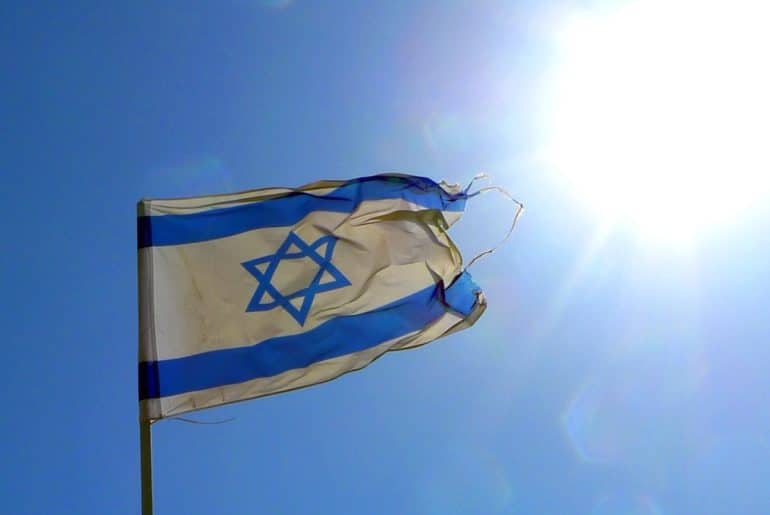
The irony is that the Palestinians were amongst the best educated, most sophisticated and most adaptable people in the Arab world and if the Zionists and Jews had not been foolish racists, they could have invaded and created a vibrant society and State where all worked together as equal citizens in ancient Palestine.