
Last Friday, the Trump administration abruptly reversed course and restored the visas for hundreds of foreign students, just weeks after terminating their legal status.
According to Inside Higher Ed, more than 1,800 students had been impacted across nearly 300 schools.
Government officials say that the decision is temporary and that they can still try to revoke the visas, but the move is definitely surprising considering how vociferously Trump has pursued his immigration agenda.
It’s hard to believe that Trump would have blinked if students hadn’t filed over 100 lawsuits in the wake of the termination news.
In an article on the crackdown’s unraveling, Politico reported that the lawsuits led to at least 54 restraining orders, as judges grew “increasingly exasperated with the administration’s refusal to explain the basis — and effect — of its moves.”
“You’re standing here today on behalf of the United States and you’re telling me that you do not know whether this plaintiff is legally in the United States? How is she supposed to know the answer to that question if you don’t?” U.S. District Judge Sparkle Sooknanan asked a Trump attorney during one of the hearings.
The student lawsuits are just one part of the mounting legal challenge to the administration’s immigration agenda.
“The whiplash-inducing turnabout was a fresh setback for the administration’s aggressive crackdown on foreign students and for President Donald Trump’s broader immigration agenda, which has been mired in legal challenges,” notes Politico. “Courts have blocked or forced the administration to reverse core policies on deportations of purported gang members, refugee admissions, legal status for hundreds of thousands of Venezuelans and other efforts to hurriedly remove immigrants from the country. Those setbacks have come at all levels of the court system and centered on the administration’s alleged efforts to sidestep due process requirements enshrined in the Constitution.”
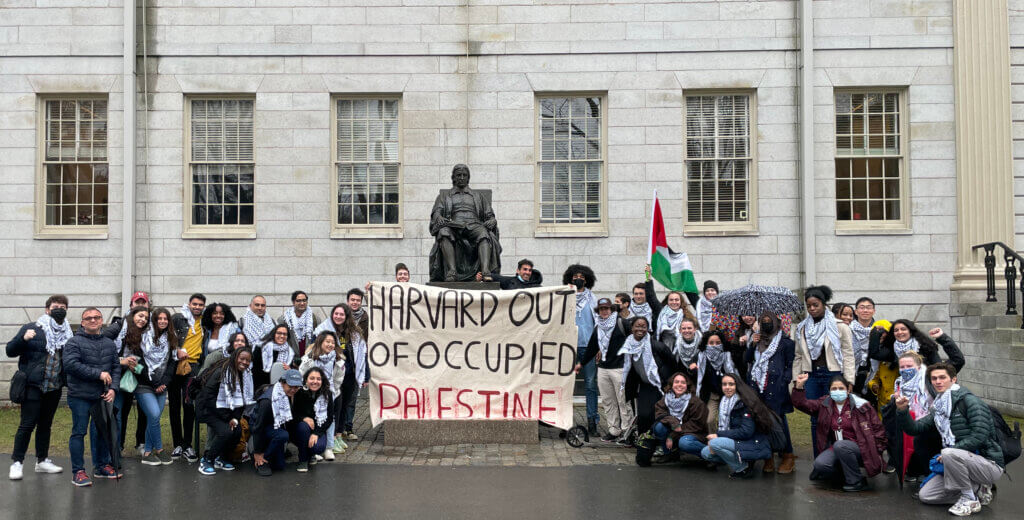
We have also seen Trump revise his strategy in relation to Harvard University. Again, this obviously doesn’t add up to an about-face, but his strategy had undeniably shifted.
Upon arriving in the White House, Trump established a Task Force to Combat Anti-Semitism for the obvious purpose of stifling student activism.
In February, the task force announced that it would visit and investigate several schools, including Harvard. Task Force head Leo Terrell didn’t mince words while explaining the basis behind these interventions.
“We’re going to bankrupt these universities. We’re going to take away every single federal dollar,” Terrell told Fox News. “If these universities do not play ball, lawyer up, because the federal government is coming after you.”
In early April, Trump floated the idea of cutting all federal funding to Harvard. Days later, the administration sent the school multiple letters detailing “pre-conditions” and “immediate next steps” the university must take in order to continuing receiving money.
“Harvard has in recent years failed to live up to both the intellectual and civil rights conditions that justify federal investment,” explained one.
The government demands included shuttering all Harvard DEI programs and rejecting international students “hostile to the American values and institutions inscribed in the U.S. Constitution and Declaration of Independence, including students supportive of terrorism or anti-Semitism.”
Rather than immediately capitulate to Trump like Columbia did, Harvard took a different route.
Harvard President Alan Garber released the letter, refused the proposal, and declared that the school would not “surrender its independence or relinquish its constitutional rights.”
Trump has reportedly reached out to the school three times since then, in an effort to “restart” talks.
The administration is also claiming that the entire battle was kicked off accidentally, as they didn’t actually mean to send Harvard the letter full of demands.
Like many Trump developments, this recent wrinkle is bizarre and impossible to take seriously. As things tend to go with this crew, it’s also beginning to sport some leaks.
“It is unclear what prompted the letter to be sent…,” reports the New York Times. “Its content was authentic, the three people said, but there were differing accounts inside the administration of how it had been mishandled. Some people at the White House believed it had been sent prematurely, according to the three people, who requested anonymity because they were not authorized to speak publicly about internal discussions. Others in the administration thought it had been meant to be circulated among the task force members rather than sent to Harvard.”
In a statement, Harvard said it wasn’t buying the idea that the letter was sent by accident. The school points out that it was “was signed by three federal officials, placed on official letterhead, was sent from the email inbox of a senior federal official.”
“It remains unclear to us exactly what, among the government’s recent words and deeds, were mistakes or what the government actually meant to do and say,” the statement continues. “But even if the letter was a mistake, the actions the government took this week have real-life consequences.”
In a recent newsletter, I pointed out that praise for Harvard should probably be tempered, as the school has already taken several steps to stifle pro-Palestine activism on campus. In a recent piece at The Nation, ‘We Don’t Have to Hand It to Harvard’, students Christopher Malley and Nathaniel Moses detail some of these inconvenient facts.
However, Harvard’s stance has generated vast support and clearly forced the administration to (at least) recalibrate its approach.
The daily horrors of this regime are certainly not on the verge of dissipating, but their designs can clearly be mucked up. This seems to be understood by much of the public, which explains the current anger toward the vast majority of Democratic lawmakers.
Updates on detained students
Mahmoud Khalil: Last week, as a result of a court filing in his case, we learned that Immigration and Customs Enforcement Homeland Security Investigations (HSI) agents did not have a warrant when they arrested Columbia University graduate Mahmoud Khalil in March.
Trump’s lawyers claimed that the agents “had exigent circumstances to conduct the warrantless arrest” as they had reason to believe Khalil “would escape before they could obtain a warrant.”
Amy Greer, an associate attorney at Dratel & Lewis and one of Khalil’s lawyers, put out the following statement:
“That night, I was on the phone with Mahmoud, Noor, and even the arresting agent. In the face of multiple agents in plain clothes who clearly intended to abduct him, and despite the fact that those agents repeatedly failed to show us a warrant, Mahmoud remained calm and complied with their orders. Today we now know why they never showed Mahmoud that warrant – they didn’t have one.”
“This is clearly yet another desperate attempt by the Trump administration to justify its unlawful arrest and detention of human rights defender Mahmoud Khalil, who is now, by the government’s own tacit admission, a political prisoner of the United States. Our team, and indeed everyone in this nation, should be fighting for Mahmoud’s freedom, and defending our collective rights to advocate for Palestinian human rights, and express opinions generally that do not conform with government policy.”
Rümeysa Öztürk: Last week, Massachusetts Senator Ed Markey and Massachusetts Representatives Jim McGovern and Ayanna Pressley traveled to a Louisiana immigration facility to meet with Rümeysa Öztürk, the Tufts University doctoral student who was detained by federal agents last month.
The congress members, who were accompanied on their trip by Reps. Troy Carter of Louisiana and Bennie Thompson of Mississippi, also met with Mahmoud Khalil.
The three Massachusetts lawmakers published a New York Times Op-Ed detailing their meeting with Öztürk.
“What we found was not just a young woman locked up without charge but also a democracy being put to the test,” it reads. “Ms. Ozturk is a graduate student, a writer and a community member who is in the United States legally on a student visa, which was revoked without apparent cause. She was walking to an iftar dinner when federal agents, some of them masked, surrounded her, detained her, refused to explain why and then forcibly removed her to an undisclosed location; it took her family roughly 24 hours to even find out where she was being held.”
“When we met Ms. Ozturk in Basile, she told us she feared for her life when she was taken off the streets of her neighborhood, not knowing who had grabbed her or where they were taking her,” the piece continues. “She said that at each step of her transit — from Massachusetts to New Hampshire to Vermont to Louisiana — her repeated requests to contact her lawyer were denied. Inside the detention center, she was inadequately fed, kept in facilities with extremely cold temperatures and denied personal necessities and religious accommodations. She suffered asthma attacks for which she lacked her prescribed medication. Despite all this — and despite being far from her loved ones — we were struck by her unwavering spirit.”
The congress members are calling on the Department of Homeland Security to release Öztürk and Khalil.
“They’ve committed no crimes, they’ve been charged with no offenses, and they’ve broken no laws. Let’s not mince words: They are political prisoners—held in detention by a government which seeks to punish them for their views and silence their speech. That is immoral and wrong,” said Representative McGovern in a recent statement.
A judge recently ordered that Öztürk be transferred back to New England, but a federal appeals court has delayed the move.
Mohsen Mahdawi: A federal judge extended an order keeping Palestinian activist and Columbia University student Mohsen Mahdawi in Vermont while the court considers his case.
Last week, Senator Peter Welch of Vermont met with Mahdawi at the facility where he’s being held.
“I’m staying positive by reassuring myself in the ability of justice and the deep belief of democracy,” said Mahdawi in a video uploaded to social media by Welch. “This is the reason I wanted to become a citizen of this country, because I believe in the principles of this country.”
Dr. Badar Khan Suri: This week, a Federal District Court in Virginia will hear a case brought by Dr. Badar Khan Suri challenging the Trump administration over his arrest and detention.
Suri, a postdoc fellow at Georgetown University who is married to a Palestinian-American U.S. citizen, was detained on March 17. The administration has never claimed that he committed a crime.
Palestine Legal report
Trump has obviously launched an unprecedented assault on the Palestine solidarity movement, but the groundwork for the crackdown was laid before he regained power.
Palestine Legal’s 2024 year-in-review, which the organization just released, covers some of those details.
The report shows that the group received more than 2,000 requests for legal support last year. That’s a 55% increase from 2023, and a 600% increase from 2022.
Roughly two-thirds of the requests were campus-related, and 580 of them were connected to university disciplinary actions, five times more than such requests from the previous year.
101 cases occurred at the K-12 level, 162 concerned terminations, 255 involved doxxing, and 107 were connected to physical violence or the threat of physical violence.
“Trump’s extreme and authoritarian tactics, including abducting and deporting international students because of their protected speech and advocacy for Palestinian rights, are a desperate attempt to silence a movement that is successfully shifting public opinion to oppose US support for Israel’s genocide against Palestinians in Gaza,” said Palestine Legal Executive Director Dima Khalidi in a statement. “The report underscores how racism against Palestinians was at the core of the widespread crackdown on student activists, and how it paved the path for Trump’s wild overreaches. But it also shows how at every turn, students and other activists have continued to defy the crackdowns to make their voices heard about an urgent moral crisis.”
Zooming Out
In a recent newsletter, I referenced a Deborah Lipstadt interview, in which the Biden administration’s antisemitism envoy said some positive things about Trump’s crackdown on student activists.
The New Yorker’s Isaac Chotiner recently interviewed Lipstadt and it’s more of the same:
Do you understand why, in the current climate, people who are advocating for an end to the war in Gaza may not want to identify themselves to the proper authorities?
Well, this current, you know, this current atmosphere is pretty difficult. But this has been going on for a long time.
I was just trying to get at the actual dynamics of who has power here.
This refusal to identify yourself—are we negotiating with students or are we negotiating with people off the street?
When you said that the people being picked up are not “heroes and martyrs,” what did you mean by that?
I mean some of the people, and I’m not going to get into any specific cases, but some of the people who have been detained or cited are people who have obstructed entrances to universities, have taken over buildings, have broken the regulations of the university. I’m not talking about speech. I’m talking about action.
Further Reading
From the Mondoweiss article Why Pro-Palestine protesters are being sent to a for-profit ICE prison in rural Louisiana:
The disappearance and detentions of pro-Palestine organizers are a direct punishment for the powerful youth-led encampments of Spring 2024. As we continue to show our power in this time period, we will contend with more repression. Over 40 anti-protest bills have been introduced in 2025 across the U.S. These laws would compound existing laws targeting protest, nonprofit organizations, mutual aid, and bail funds.
As movements rise, state repression increases. And private corporations are poised to profit. GEO Group stock price doubled after the November election.
And be sure to also check out:
- Michelle Goldberg in the New York Times: ‘I Can’t Believe Anyone Thinks Trump Actually Cares About Antisemitism’
- Drop Site News: Cisco, a Major Contributor to Israel’s Military Technology, Fired a Pro-Palestine Employee
- Yale Daily News: Yale revokes Yalies4Palestine’s club status citing protest policy violations, antisemitism concerns
- Jewish Insider: Tenney, Moskowitz reintroduce federal anti-BDS legislation
- Mondoweiss: How the creation of the ‘New Antisemitism’ was used to shield Israel and attack the Left

Further reading: Joshua Leifer writes in the New York Review of Books
A consensus has by now emerged among Israel’s leaders that the country’s army will take direct, long-term control of the Strip—and attempt to expel its inhabitants….In the early morning hours of March 18, Israel unilaterally broke the cease-fire it had agreed to with Hamas in Gaza two months earlier, launching a crushing aerial campaign across the territory. In less than twenty-four hours, Israeli warplanes killed more than four hundred people and wounded hundreds more. .. Israel’s energy ministry has cut off electricity, disabling one of the southern Strip’s main water desalination plants. The World Food Programme’s twenty-five bakeries, which provide subsidized bread across Gaza, have closed for lack of fuel and flour. Basic goods, like sugar and eggs, have become exorbitantly expensive. …Top Israeli officials, Netanyahu among them, have simultaneously committed to another goal: the mass expulsion of Gaza’s inhabitants. Earlier in March, CBS reported that US and Israeli officials had approached the governments of Sudan, Somalia, and Syria to accept Palestinians expelled from the Strip. (They received no positive responses.) Netanyahu has tasked the Mossad with finding a country that would be willing to do so….
( unfortunately you will need a subscription to get full access )
https://www.nybooks.com/online/2025/04/23/reoccupying-gaza/
“Harvard’s stance has generated vast support and clearly forced the administration to (at least) recalibrate its approach.”
____________________________________________________________
Evidence for the power of public opinion.
Steven Salaita’s Reflections on the Downward Spiral of US Empire & the Fate of the Western Academy
\
In this episode Steven Salaita will return for a conversation about two of his recent lectures/essays which touch on US imperial decline, the western academy, and the genocidal war on the Palestinian people and children of Gaza. We will also discuss the challenges of behaving ethically in a society that rewards subservience to power, and that power is based on unmitigated violence against the oppressed and dispossessed.
One piece The Meaning of Honesty in Academe was delivered as the 2025 James Baldwin Memorial Lecture at UMass Amherst on April 16th:
https://www.youtube.com/live/pWC9GlznUhk?si=_ks9NBI4x15GK4tF