

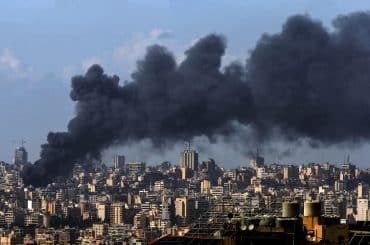
This week, Gaza’s suffering continues. Hundreds more have been killed by relentless Israeli bombardment, and millions now face starvation as food supplies are systematically targeted and destroyed while international aid is limited or blocked altogether. Israel’s government openly speaks of “conquering” Gaza, a chilling euphemism for the forced mass displacement of Palestinians. Survivors of recent bombings, like those at the European Hospital described by Tareq Hajjaj, recount scenes of absolute devastation, calling it “hell raining down.” These acts leave little doubt that Israel intends ethnic cleansing on a massive scale.
And yet, Donald Trump appears unwilling or unable to effectively bend the Israeli government to his will. On one hand, Trump’s administration engaged directly with Hamas to secure the release of dual American-Israeli citizen Edan Alexander, bypassing Israeli officials and surfacing potential tensions with Netanyahu’s government. Similarly, Trump’s direct negotiations with Iran, conducted without Israeli involvement, also show that he’s willing to move on his own without feeling constrained by the relationship with Israel, as have most of his predecessors. Naturally, politicians in Israel and the Israel lobby here in the U.S. are entering panic mode.
On the other hand, Trump’s broader foreign policy continues to contradict any indication of a meaningful shift away from support for authoritarian regimes and militarism. His administration just lifted longstanding U.S. sanctions on Syria and simultaneously approved a massive $142 billion arms deal with Saudi Arabia. These actions demonstrate Trump’s dangerously erratic and inconsistent diplomacy, driven more by his desperate longing for validation than any considered foreign policy agenda.
This week also marked Nakba Day, commemorating 77 years since the violent displacement of Palestinians began—a process of ethnic cleansing that never truly stopped. As Ahmad Ibsais poignantly reminded readers, all Israeli governments since 1948 have participated in this ongoing crime. The closure of UNRWA schools in Jerusalem, leaving over 800 Palestinian children without education, represents yet another calculated assault on Palestinian life and identity.
Lastly, we mourn the killing of our friend and colleague, Palestinian journalist Hassan Eslayeh. Hassan, whose courage and dedication illuminated countless Mondoweiss stories, was murdered by Israel in his hospital bed, exactly as he predicted. He understood deeply that Israel’s violence against journalists aims to silence the truth about the genocide unfolding before the world’s eyes. Hassan’s powerful legacy will live on through his words and the courageous journalism that continues to expose these crimes. You can read our statement here on X (Twitter).
– Dave Reed, Publisher
Must read: ‘The ground split and swallowed them’: Survivors of European Hospital bombing in Gaza recount deadly Israeli attack
Tareq Hajjaj: Survivors describe “hell raining down” on them following Israeli airstrikes on the European Hospital in Gaza. “There is nothing left of the horrors of the Day of Judgment that we have not witnessed in Gaza,” an eyewitness tells Mondoweiss.

Catch-up
🇺🇳 Qassam Muaddi: The Israeli government’s closure of six UNRWA schools in Jerusalem has left over 800 Palestinian students without school, and has thrown an entire community into limbo. Residents say it’s all part of a larger attack on Palestinian refugees.
🇮🇱 Ahmad Ibsais: The New York Times’ Tom Friedman has warned readers that the current Israeli government “is not an ally,” but on the 77th anniversary of the Nakba, we must recognize that all Israeli governments have participated in the ethnic cleansing of Palestine.
🇵🇸 Amena Al-Ashkar: They surrounded us with walls so that we thought the Nakba was forever. Instead, we forgot that the walls existed, so we could see the Palestine we’ve always dreamed of.
🇸🇦 Michael Arria: President Trump announced that he’s lifting the longstanding U.S. sanctions on Syria and agreeing to sell Saudi Arabia $142 billion in weapons.
✡️ Joseph Mogul: On May 1-4, over 2,000 activists met in Baltimore for Jewish Voice for Peace’s four-day National Members Meeting. The gathering highlighted the massive growth in the Palestine movement and the work ahead to build a united front toward liberation.
🇵🇸 Tareq Hajjaj: The Israeli army killed my colleague Hassan Eslayeh in his hospital bed. He predicted his death before it happened, because he knew journalists in Gaza are the only people in the world bearing witness to the greatest crime of our times.
✊🏽 Abraham Márquez: Twenty-five students across four California State University campuses have launched hunger strikes in solidarity with Palestine. They join a nationwide wave of protests demanding an immediate end to U.S. support for the genocide in Gaza. / Also, students at Stanford University announced they are joining the hunger strike.
🇺🇸 Qassam Muaddi: The release of Israeli-American captive Edan Alexander, following direct negotiations between the U.S. and Hamas, comes after the Trump administration had already caught Israel off guard by agreeing to halt hostilities with Yemen’s Ansar Allah.
🇵🇸 Shatha Hanaysha: I was with Shireen Abu Akleh when she was murdered on May 11, 2022. The Palestinian resistance in Jenin killed her murderer, but I find myself asking, was justice served, or did he escape accountability?
💻 Refaat Ibrahim: Google’s acquisition of Israeli software company Wiz for $32 billion shows just how much Silicon Valley is invested in Israeli tech. The problem is, almost all of Israeli tech is first developed by a genocidal army.
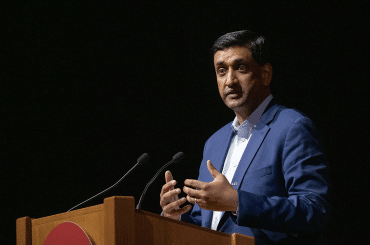
Comemmorating the 77th anniversary of the start of the Nakba, Jadaliyya Co-Editor Noura Erakat adressed the UN. During the address, Erakat highlighted the shortcomings of international law in stopping Israel’s ongoing genocide against the Palestinian people in Gaza. Click here to watch the full UN commemoration of the Nakba’s 77th anniversary.
Featuring:
Noura Erakat is a Professor of Africana Studies and the Program of Criminal Justice at Rutgers University, New Brunswick. Noura is the author of Justice for Some: Law and the Question of Palestine (Stanford University Press, 2019), which received the Palestine Book Award and the Bronze Medal for the Independent Publishers Book Award in Current Events/Foreign Affairs. She is co-founding editor of Jadaliyya and an editorial board member of the Journal of Palestine Studies as well as Human Geography. She is a co-founding board member of the DC Palestinian Film and Arts Festival. She has served as Legal Counsel for a Congressional Subcommittee in the US House of Representatives, as Legal Advocate for the Badil Resource Center for Palestinian Refugee and Residency Rights, and as national organizer of the US Campaign to End the Israeli Occupation. Noura has also produced video documentaries, including “Gaza In Context” and “Black Palestinian Solidarity.” Her writings have appeared in The Washington Post, The New York Times, the Los Angeles Review of Books, The Nation, Al Jazeera, and the Boston Review. She is a frequent commentator on CBS News, CNN, MSNBC, CBS, Fox News, the BBC, and NPR, among others. She completed non-resident fellowship of the Religious Literacy Project at Harvard Divinity School in 2021. In 2022, she was selected as a Freedom Fellow by the Marguerite Casey Foundation.
https://youtu.be/SAjmHHt8Fk4?si=MJgMK3MZftANvanr
“Trump’s administration engaged directly with Hamas to secure the release of dual American-Israeli citizen Edan Alexander, bypassing Israeli officials and surfacing potential tensions with Netanyahu’s government. Similarly, Trump’s direct negotiations with Iran, conducted without Israeli involvement, also show that he’s willing to move on his own without feeling constrained by the relationship with Israel…”
__________________________________________________
Trump has said resolving the conflict would make him the Greatest President of All Time.
Would guarantee him a Nobel.
We know Netanyahu won’t facilitate. Who will?