In photos: The ongoing Nakba of Jenin refugee camp
Jenin refugee camp was completely emptied of its residents during Israel's ethnic cleansing operation earlier this year. These are photos of life in the camp before its most recent Nakba.
Muhammad Rahayna was in his home when the army invaded Jenin. He took his family to the hospital, as many families do in Jenin in an attempt to stay safe from the army. Once the Israeli army left, they went back to the house, but 2 hours later the army returned, and Muhammad’s family didn’t have enough time to make another trip back to the hospital. In fear of the army coming into the house and attacking his children and pregnant wife, he went outside alongside ten other men, who were also looking for safety. As they were trying to escape the invasion, a drone was following them and dropped an explosive in the middle of the group. Muhammad states, “I fell down and tried to stand up but felt weird. I looked around and saw my neighbor was dead.” Five of the ten men were killed in the drone strike while Muhmamad lost both his legs and a finger from the blast. Muhammad poses for a portrait in his home. (Photo: David Lombeida)
While the future of Gaza remains uncertain with a ceasefire on the verge of collapsing, the West Bank has been undergoing a radical and violent transformation over the last two years. According to the United Nations Office for the Coordination of Humanitarian Affairs (OCHA), over 1,000 Palestinians have been killed in the occupied territory since October 7, 2023. These deaths have been accompanied by record numbers of settler violence, demolitions, and military operations, a reality that has plunged the West Bank into crisis. Known for the strong presence of its armed fighters, the camp has been a historic symbol of resistance for Palestinians in the West Bank. But the refugee camp is currently completely occupied by the Israeli army, where mass demolitions are taking place.
In January, the Israeli army launched “Operation Iron Wall” in Jenin refugee camp in order to combat Palestinian fighters in what the United Nations Relief and Works Agency (UNRWA) has described as “by far the longest and most destructive operation in the occupied West Bank since the second intifada in the 2000’s.”
The military operation then expanded into Nur Shams and Tulkarem camps, among other cities. In a recent report titled “Five Months After Iron Wall” by Doctors Without Borders, project coordinator Simona Onidi describes the situation as “not just a humanitarian emergency,” but “a man-made crisis, prolonged by design.” The operation has resulted in the forcible displacement of over 42,000 people from their homes in the northern West Bank’s refugee camps, the greatest single period of mass expulsion the West Bank has seen since the 1967 War.
I made several reporting trips to Jenin before the start of Operation Iron Wall. The images show the realities of living in Jenin: homes destroyed, resistance fighters, injured civilians, and residents mourning the loss of loved ones. Palestinians from Jenin are currently unable to return to the camp. People find themselves living in mosques, community centers outside the camp, and throughout the West Bank, as they wait to see when they can return home. The images are a glimpse of what life was like in the camp before it was completely occupied and its residents displaced.
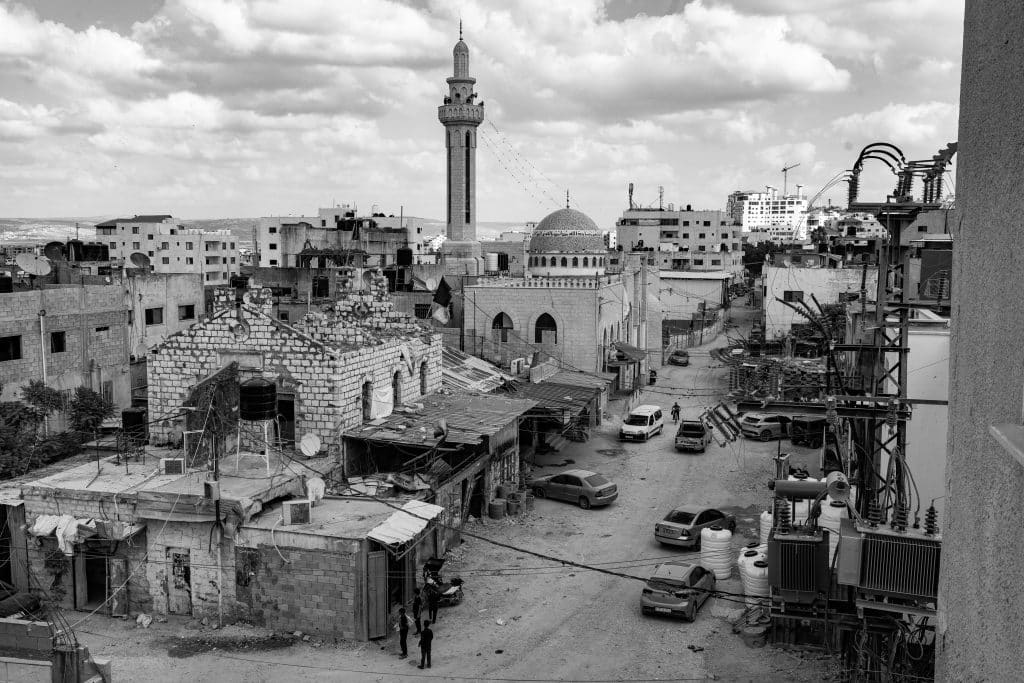
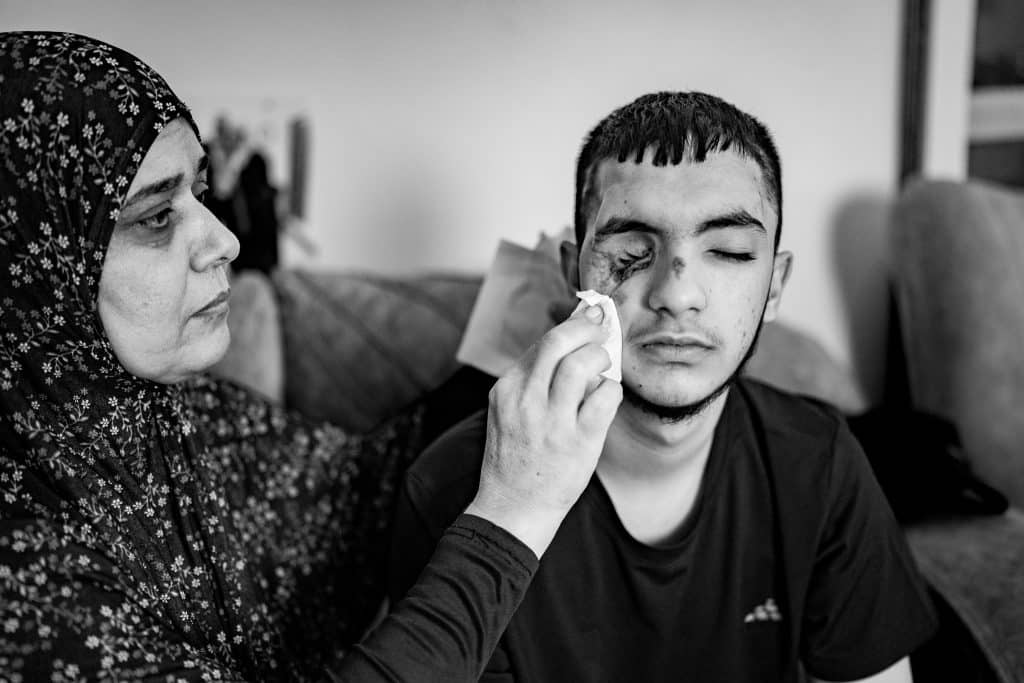
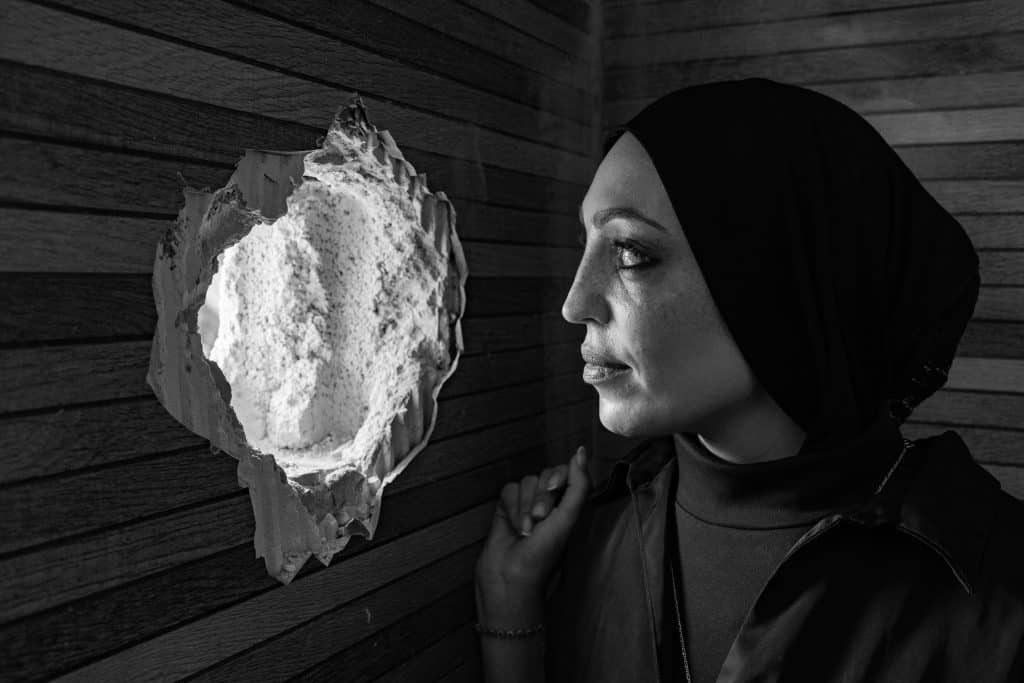
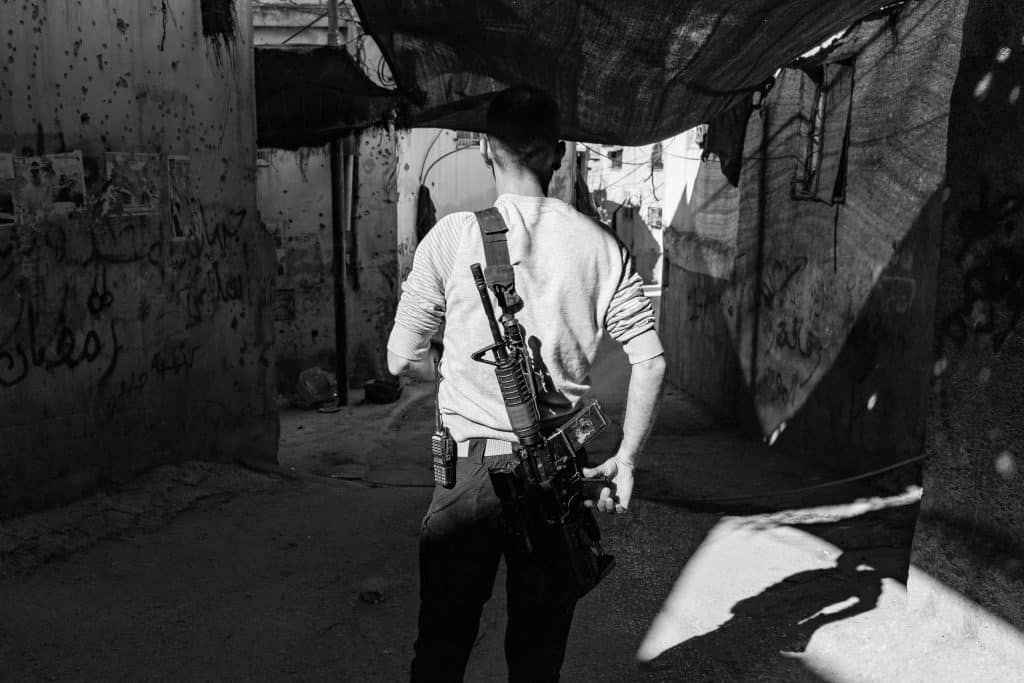
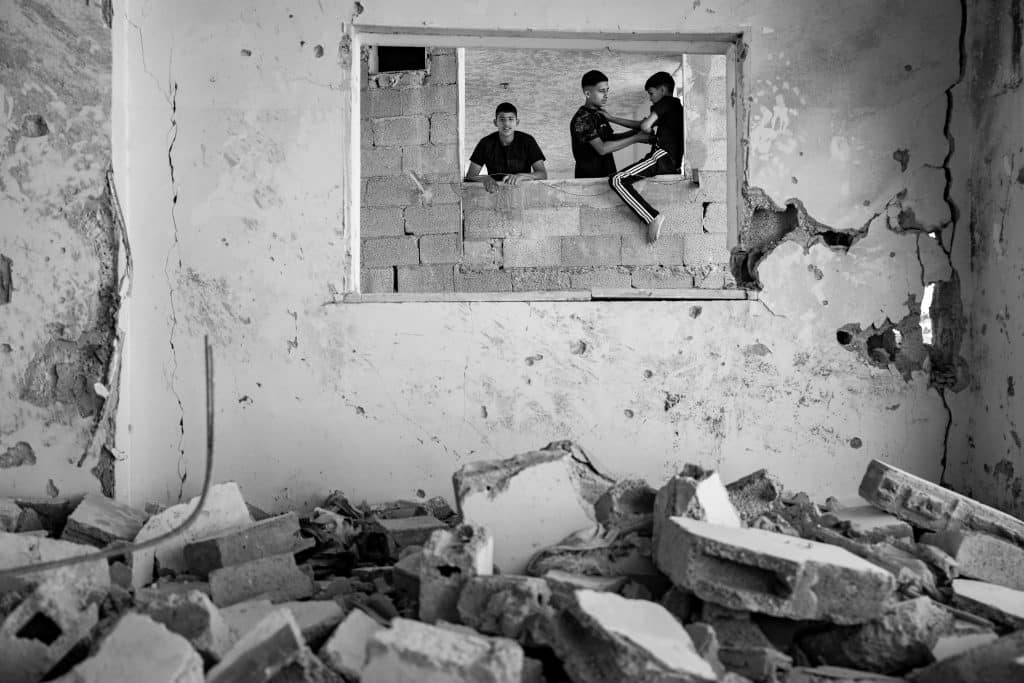
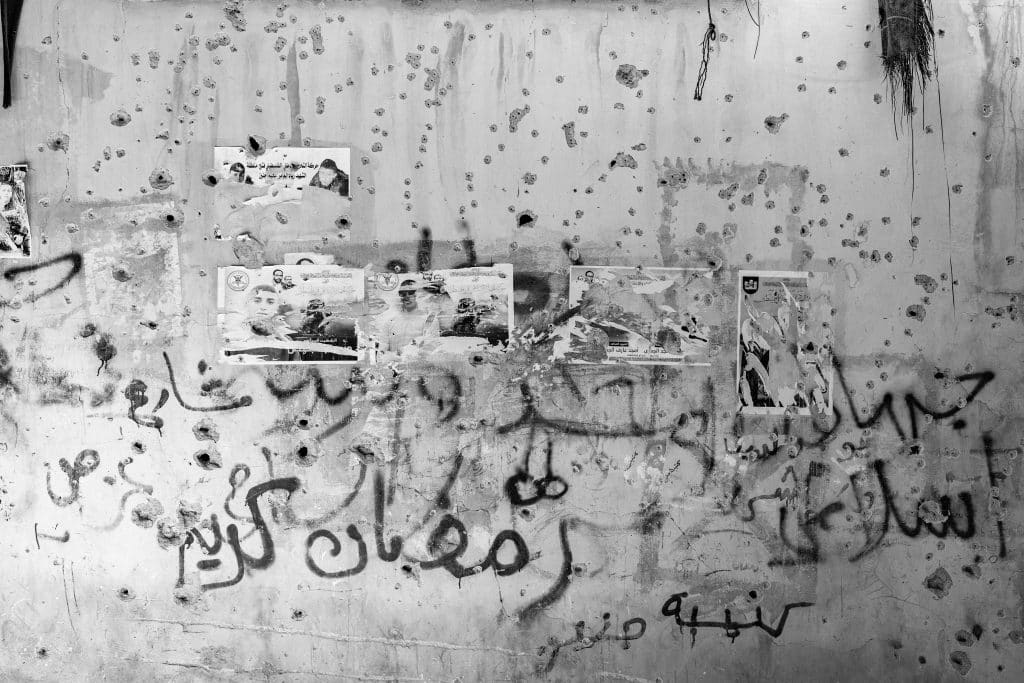
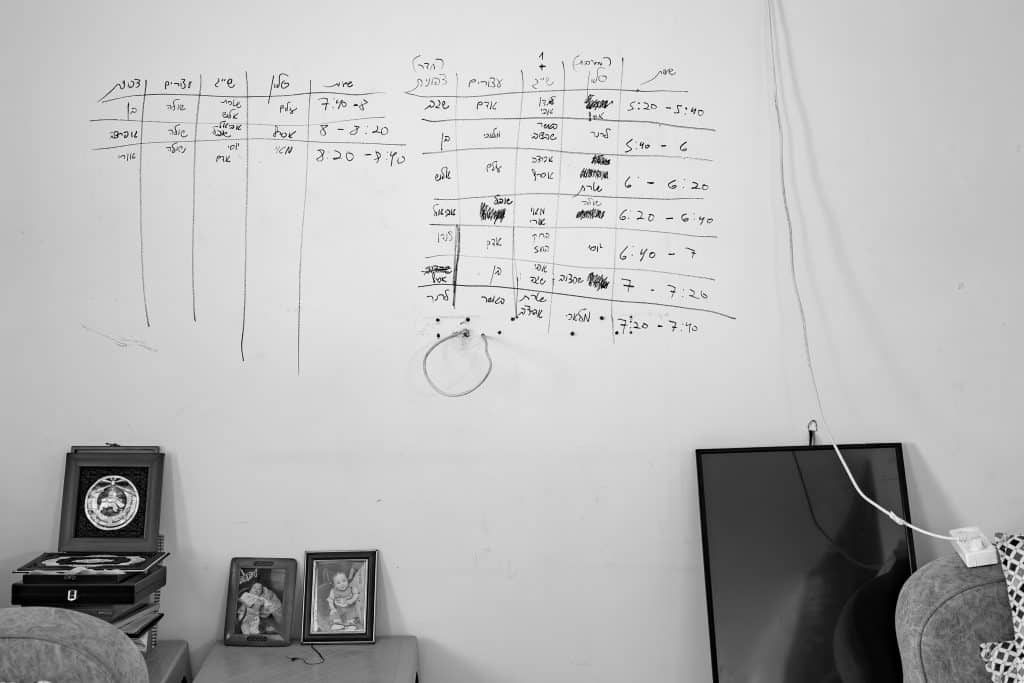
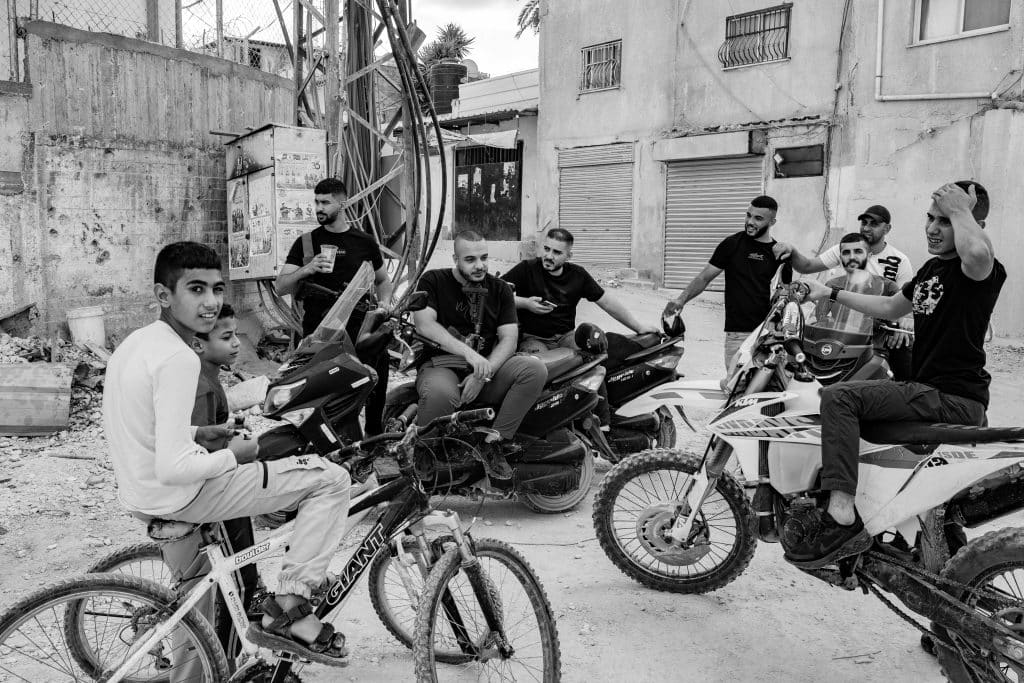
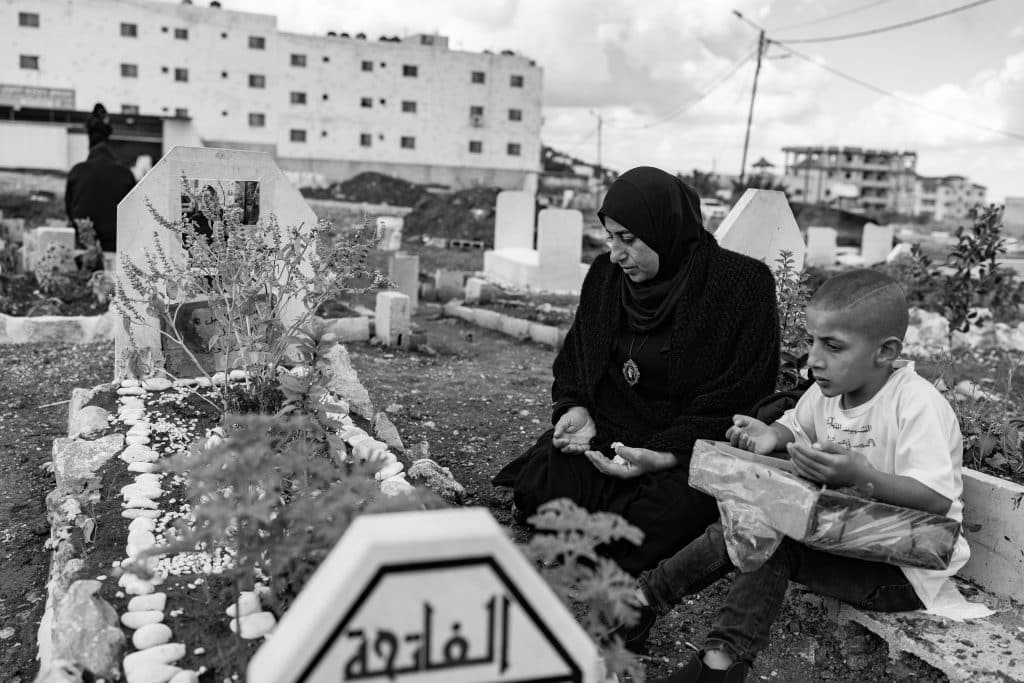
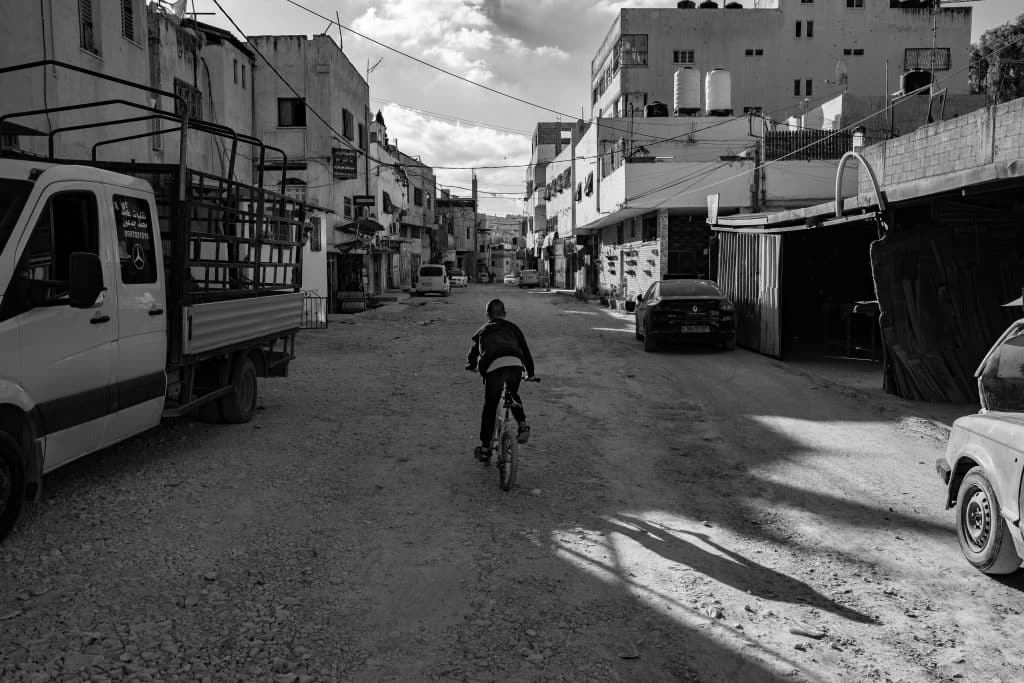
A view of Jenin refugee camp in October 2024. The refugee camp is known as a symbol of resistance in the West Bank and home to several armed groups. With several militias operating in the camp, Jenin was often subjected to heavy raids by the Israeli army, with drone and airstrikes occurring frequently. Posters of resistance fighters killed in Jenin can be seen on a wall in Jenin refugee camp. Many walls are covered in bullet holes from raids. Israeli soldiers also deface posters of fighters when they occupy the camp. (Photo: David Lombeida)Amira Ararawi cleans the wound of her nephew, Kemal, in Jenin refugee camp. In the summer of 2023, Kemal went to help his cousin, Amira’s son, Majdy Ararawi, who was shot outside their home in the camp during a raid by the Israeli army. As Kemal approached Majdy, attempting to attend to his cousin’s wounds, an Israeli sniper shot Kemal through the side of his head, and the bullet entered his cousin’s neck, killing Madjy and blinding Kemal for life. Kemal survived the gunshot but is now blind in both eyes, and currently studying to be an Imam (Photo: David Lombeida)During a 10-day raid on the Jenin refugee camp in the summer of 2024, Israeli soldiers used Alaa Pwaqneh’s family home as a base for their military operations. While the family was forced to remain in one room, the army climbed to the upper floor and dug a hole in the bathroom wall for a sniper to use. Alaa poses for a portrait where the sniper hole was used in her home. On November 9, Tamam Mar’i was in the house with her son, daughter-in-law and their two children when the army invaded Jenin. Her husband was out buying groceries when the army came, and couldn’t return home. The army, looking for armed militants, bombed their home with a rocket launcher, and the family entered the back room, hoping to not be killed from that blast. Tamam finally went outside to explain to the army that no militants are inside her home. The army escorted all the family outside, handcuffed her son, and bombed her home again. Tamam and her husband pose for a portrait in their destroyed home. (Photo: David Lombeida)On November 9, Tamam Mar’i was in the house with her son, daughter-in-law and their two children when the army invaded Jenin. Her husband was out buying groceries when the army came, and couldn’t return home. The army, looking for armed militants, bombed their home with a rocket launcher, and the family entered the back room, hoping to not be killed from that blast. Tamam finally went outside to explain to the army that no militants are inside her home. The army escorted all the family outside, handcuffed her son, and bombed her home again. Tamam and her husband pose for a portrait in their destroyed home. (Photo: David Lombeida)A commander of one of Jenin’s resistance groups poses for a portrait at the camp. He preferred to keep his identity hidden for security reasons. (Photo: David Lombeida)Children play amongst the rubble of a mosque that was targeted during an airstrike in the center of Jenin refugee camp after a 10 day-long raid of the area in 2024. The children’s home is adjacent to the mosque where they can be seen, and was also damaged from the strike. (Photo: David Lombeida)Posters of resistance fighters killed in Jenin can be seen on a wall in Jenin refugee camp. Many walls are covered in bullet holes from raids in Jenin refugee camp. Israeli soldiers also deface posters of fighters when they occupy the camp. (Photo: David Lombeida)From a raid in 2024 by the Israeli army, Soldiers occupied Amira Araraw’s home and used the walls to write schedules for the operations. (Photo: David Lombeida)A vehicle drives through the narrow alleys of the Jenin refugee camp. As the camp’s population grew, residents began building on top of their own homes for their families. Many of the homes in Jenin are self-built, creating a unique environment of small alleys and overlapping structures. Black tarps are placed between the houses to deter drone attacks, as the Israeli army routinely attacks the camps to target militants. Posters of resistance fighters killed in Jenin can be seen on a wall in Jenin refugee camp. Many walls are covered in bullet holes from raids in Jenin refugee camp. Israeli soldiers also deface posters of fighters when they occupy the camp. (Photo: David Lombeida)Young boys can be seen with resistance fighters in Jenin refugee camp. (Photo: David Lombeida)A resistance fighter poses for a portrait with his weapon, the magazine of which bears a sticker of a former fighter killed in Jenin. It is common for militants to mark their weapons with images of fallen resistance fighters and comrades. (Photo: David Lombeida)A Jenin resident mourns the loss of her son, who was killed in November 2023 in Jenin refugee camp during an Israeli army raid. There is a martyrs’ cemetery in Jenin, but it has recently become completely filled due to intensified clashes with the Israeli army. A new cemetery is being built on open ground near the camp, where a mother and son mourn their loved one. (Photo: David Lombeida)A child rides his bicycle through Jenin refugee camp. (Photo: David Lombeida)
David Lombeida David Lombeida is an independent photographer and filmmaker currently based in Istanbul, documenting the effects of conflict, migration, and surviving trauma. His work has been featured in the Washington Post, The Guardian, Bloomberg, Reuters, CNN, and Al-Jazeera, among other publications. He’s an alumnus of the 2021 Eddie Adams Workshop, and his website can be found here.
Jewish settler violence against Palestinians in the occupied West Bank has reached record levels.
October was on track to be “the most violent month” since UNRWA, the UN agency for Palestine refugees, began documenting settler violence in 2013.
David Lombeida’s phot essay on conditions in the West Bank:
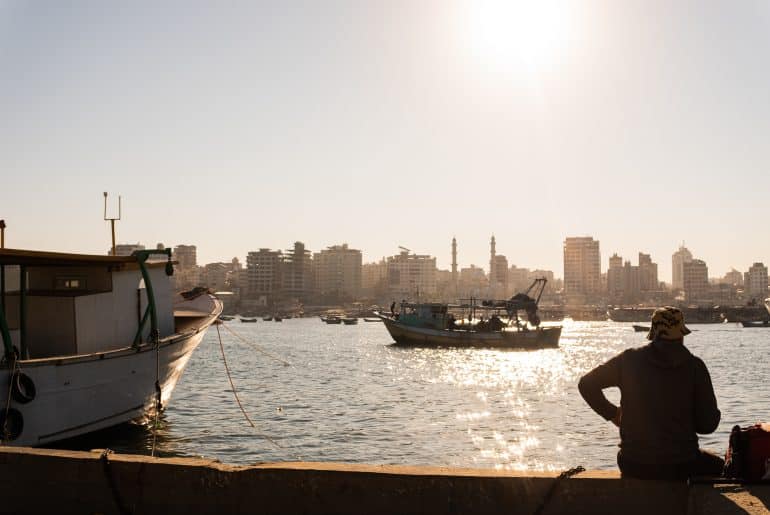
While the world watches Gaza unfold, a shadow is cast in the West Bank where a surge of unprecedented violence and displacement is taking place. Abdu-Rahnan from Wadi al-Seeq states, “It became a totally different life between Oct 6th, and Oct 7th”, after his entire community was forced to flee for fear of their lives. Since the Hamas attacks, 20 communities comprising over a thousand people have been displaced due to settler violence. Additionally, the number of Palestinians displaced by settler violence on average per month has more than doubled, totaling 280 people per month.
South Africa will investigate the “mysterious” arrival of scores of Palestinians who were kept on a charter plane at Johannesburg for 12 hours by border police because they did not have travel papers, the president has said.
A group of 153 Palestinians arrived at OR Tambo international airport in Johannesburg on a chartered Global Airways flight from Kenya on Thursday without departure stamps, return tickets or details of accommodation, according to the border authorities.
jrg
November 12, 2025 4:16 pm
If the Jenin refugee camp hadn’t allowed itself to be a breeding ground of murderous terrorists (whom this article euphemistically calls “fighters”) who launched suicide bombings against innocent Israeli civilians, perhaps none of the tragic events described here would have happened. Nobody seems to draw the connection between the two.






More on the West Bank:
Settler violence hits record level | The Electronic Intifada
Jewish settler violence against Palestinians in the occupied West Bank has reached record levels.
October was on track to be “the most violent month” since UNRWA, the UN agency for Palestine refugees, began documenting settler violence in 2013.
David Lombeida’s phot essay on conditions in the West Bank:
The Silent Displacement — David Lombeida – Visual Storyteller
While the world watches Gaza unfold, a shadow is cast in the West Bank where a surge of unprecedented violence and displacement is taking place. Abdu-Rahnan from Wadi al-Seeq states, “It became a totally different life between Oct 6th, and Oct 7th”, after his entire community was forced to flee for fear of their lives. Since the Hamas attacks, 20 communities comprising over a thousand people have been displaced due to settler violence. Additionally, the number of Palestinians displaced by settler violence on average per month has more than doubled, totaling 280 people per month.
Some imaginative ethnic cleansing:
https://www.theguardian.com/world/2025/nov/14/anger-south-africa-plane-palestinians-held-12-hours
If the Jenin refugee camp hadn’t allowed itself to be a breeding ground of murderous terrorists (whom this article euphemistically calls “fighters”) who launched suicide bombings against innocent Israeli civilians, perhaps none of the tragic events described here would have happened. Nobody seems to draw the connection between the two.