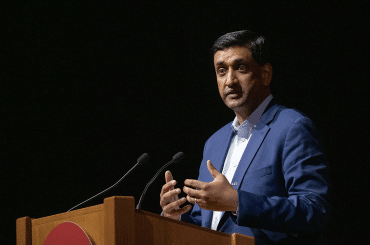
Last month, Mark Levine, New York City’s newly elected comptroller, said he would resume investing city pensions in Israel Bonds.
But activists in the city are pushing back against the announcement, and their campaign is building off a nationwide wave of momentum. Will they be able to block reinvestment, or will New York return to business as usual?
Levine and Mamdani
Israel Bonds are loans to the Israeli treasury that help to sustain the country’s economy. Between October 7, 2023, and March 2024, Israel received more than $8 billion via the bonds.
Levine’s predecessor, Brad Lander, allowed the city’s longtime investment in the bonds to lapse in 2023. The move generated backlash from pro-Israel groups, who claimed it amounted to a boycott of the country, but Lander denied the accusation and insisted he was simply abiding by the city’s stated policy of avoiding foreign debt.
“Israel bonds have never missed a payment in 80 years,” Levine told the pro-Israel Jewish Telegraphic Agency (JTA) last September. “They pay excellent interest. They are a very sound investment. And a good, diversified portfolio should allocate a component to Israel bonds.
“It’s what every comptroller going back to Abe Beame has done in New York City in the ‘70s, what almost every pension fund in America does even today,” he continued. “I think it is a sound financial move.”
Levine reiterated his position in a recent interview with The City.
“Israeli bonds had been part of the portfolio for decades,” he explained.
Levine finds himself at odds with New York City Mayor Zohran Mamdani on the issue, who has publicly stated he opposes the move.
“I’ve made clear my position, which is that I don’t think that we should purchase Israel bonds,” he told reporters last month. “We don’t purchase bonds for any other sovereign nation’s debt, and the comptroller has also made his position clear, and I continue to stand by mine.”
While some have speculated that the two men could be headed for a political showdown, Levine has dismissed the idea that Mamdani can legally intervene.
“The mayor has only one vote. And there’s no real track record of the mayor driving significant investment decisions in our pension funds, for that reason,” Levine told JTA. “It’s generally led by the comptroller, in consultation with municipal labor trustees.”
“[The mayor] certainly couldn’t act singlehandedly. Just doesn’t have the votes for that,” he added.
Break the Bonds
Opposition to Israel Bonds goes far beyond Mamdani, as Levine is facing increasing pressure from human rights groups and local activists.
In September 2025, Jewish Voice for Peace NYC launched its “Break the Bonds” campaign in response to Levine’s intention to reinvest the bonds. Dozens of organizations have joined the effort since then, including NYC Democratic Socialists of America, IfNotNow NYC, Sunrise NYC, and NYC Educators for Palestine.
The group is also circulating an open letter that has gathered thousands of signatures, and a number of elected officials have expressed their support, including Councilmembers Chi Ossé, Tiffany Cabán, Alexa Aviles, State Assemblymembers Phara Souffrant Forrest and Claire Valdez, and State Senators Jabari Brisport and Julia Salazar.
“If Levine chooses to buy Israel Bonds, he will be throwing pension holders and all New Yorkers under the bus, risking city money in order to advance an unpopular political agenda and fund Israeli war crimes,” Danny Kaplowitz, a JVP-NYC member and organizer with the campaign, told Mondoweiss.
“It’s not just Levine against Mamdani; it’s Levine against all of us,” he continued. “A huge majority of New Yorkers understand that sending our tax dollars to the right-wing extremists in the Israeli government is morally obscene. It’s also fiscally unacceptable, gambling with the futures of city workers to serve a political cause.”
The campaign has also gained support outside of the city.
Last month, Democracy for the Arab World Now (DAWN) sent a letter to New York State and New York City lawmakers, calling on them to divest from Israel Bonds. The letter included a 26-page memo detailing the legal and financial risks of investing with the Israeli government.
“Our city and state public officials should ensure that there are no further investments in Israel Bonds because such investments breach their international legal obligations not to aid and abet Israeli crimes and their fiduciary duties to taxpayers,” said DAWN’s executive director Sarah Leah Whitson in a statement promoting the letter. “For too long, our public officials have prioritized politically expedient support for Israel, using taxpayer money to finance Israel’s brutal war machine, ignoring the clear financial, ethical and legal harms to our citizens.”
Polling indicates that a majority of Democratic voters agree with these sentiments.
A September 2025 survey, conducted by YouGov for the Institute for Middle East Understanding Policy Project, found that 76% of Democrats support a ban on extending credit to Israel through the purchase of Israel bonds.
Activist wins
In recent months, BDS campaigns across the country have targeted Israel Bonds in their states and notched major victories.
Michigan’s retirement system divested around $10 million in state pension investment amid local pressure, activists pushed North Carolina State Pension Fund to sell off more than $6.4 million in Israel bonds, and Minnesota’s State Board sold more than $13 million in Israel Bonds.
” We are very confident that the decision to sell the bonds represents the power of people’s voices from across the state who called attention to these problematic investments, with high risk and low return,” Ari Rosenberg, a member of the Break the Bonds NC Coalition told Mondoweiss last December.
“We know that genocide and apartheid are not a good investment — and the growing wave of city and state divestments across the country demonstrates that more and more people agree,” she added.