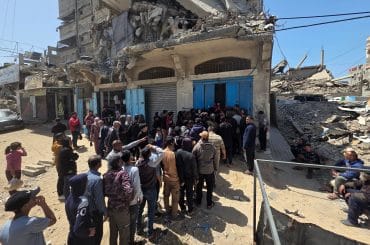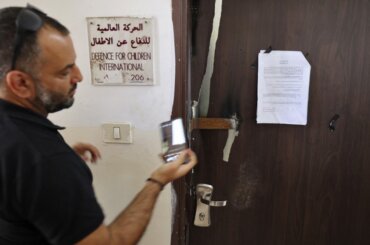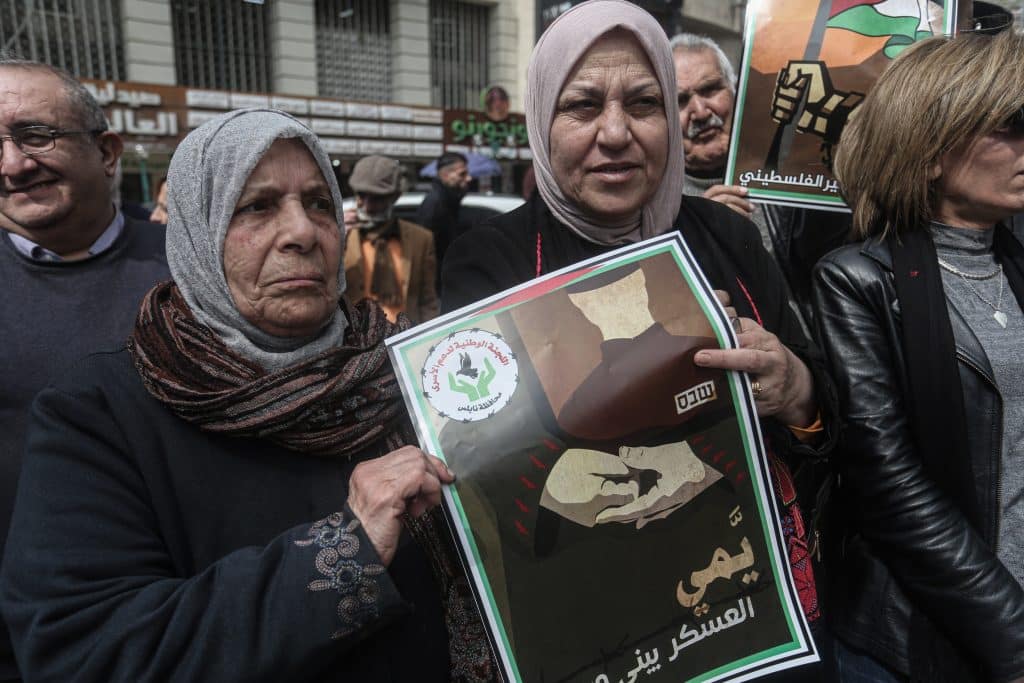
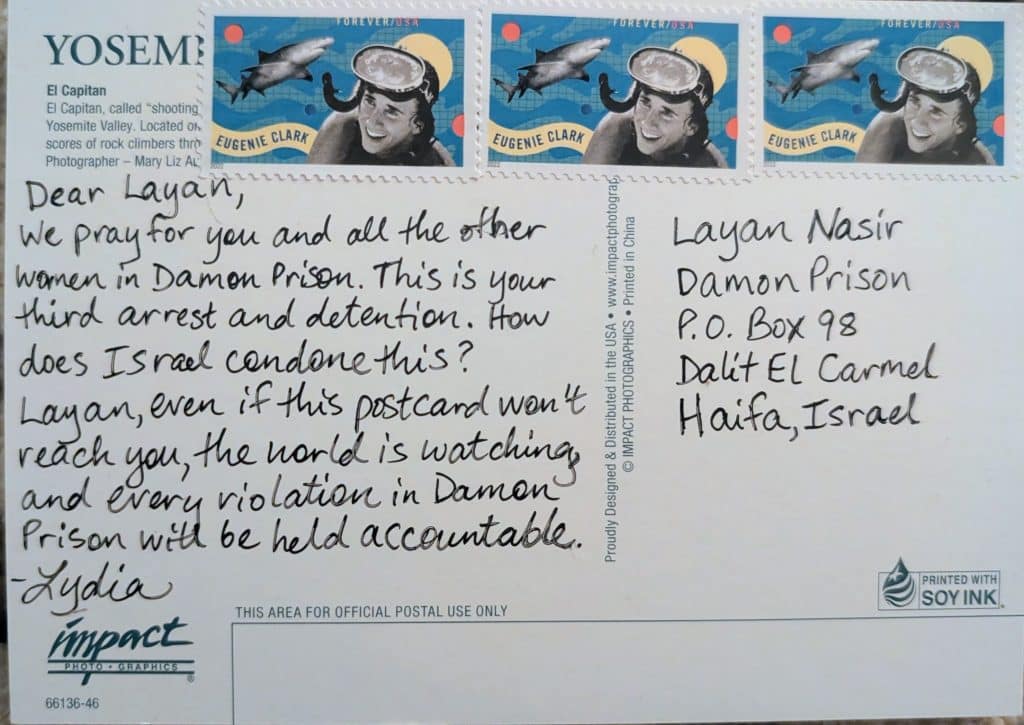
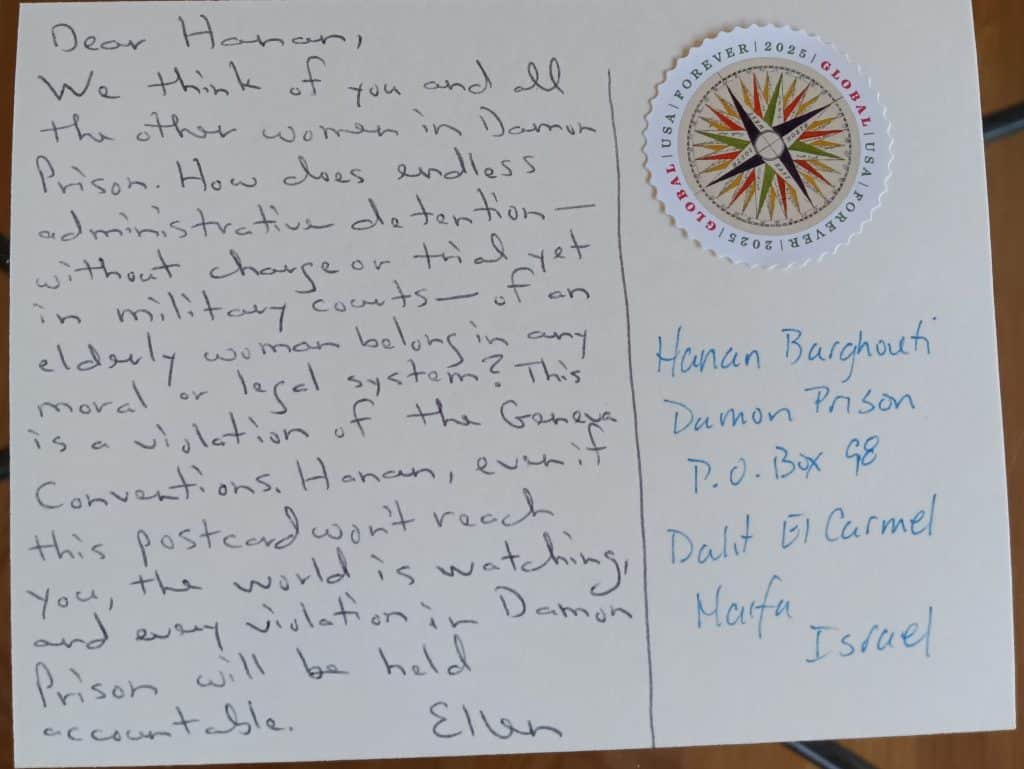
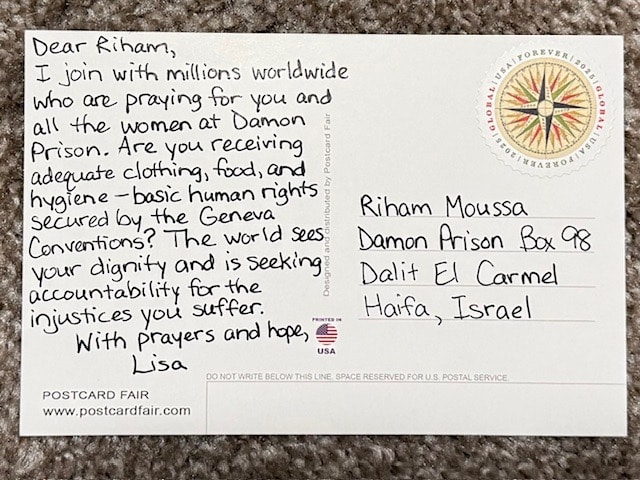
Over 1,000 postcards have been written, stamped, and sent across continents. They were carefully addressed to Palestinian female prisoners held inside Israel’s Damon Prison, carrying words of solidarity, prayer, and protest. But the female prisoners will never see them.
Prison authorities have systematically blocked all communication with female detainees, including these messages of support. They don’t want them to know anything about the outside world.
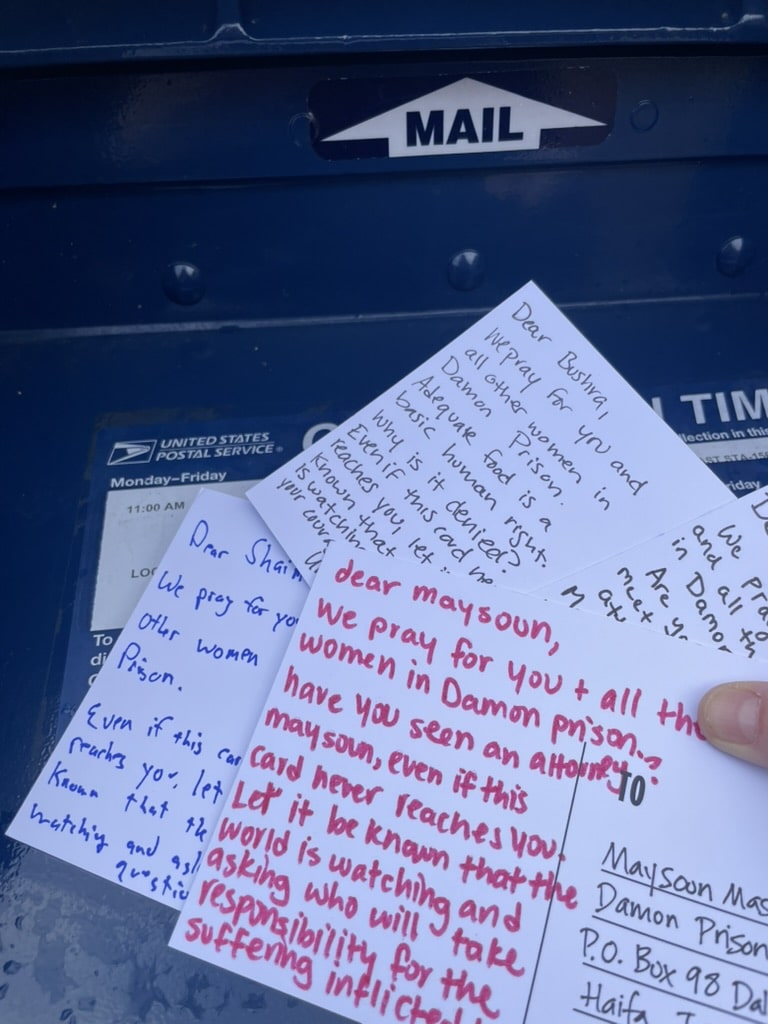
The postcards are part of a growing international campaign led by churches and an Islamic center across 15 U.S. states, in partnership with Friends of Sabeel – North America (FOSNA). Launched at the beginning of Lent — a season traditionally associated with reflection and moral reckoning — the initiative seeks to draw global attention to the conditions under which Palestinian women detainees are trying to survive and to break through the enforced silence surrounding their lives.
Two recent reports on the abject conditions in Israeli prisons, B’Tselem’s “Living Hell” and UN Special Rapporteur Francesca Albanese’s “Torture and Genocide,” detail how the torture and abuse of Palestinian detainees has become a routine practice. This includes regular beatings, sexual violence, tear gas, strip searches, prolonged shackling, food deprivation, restrictions on religious practice, psychological abuse, extended solitary confinement, and night raids involving police dogs. These constitute grave violations of international law, including the Geneva Conventions and the Rome Statute of the International Criminal Court.
Detainees are also being systematically denied the right to practice their religion, both Muslims and Christians, with reports citing bans on communal prayers, the denial of clergy visits, and restricted access to religious texts. They are banned from reading the Bible, and their copies of the Quran are limited.
‘They stopped getting their menstrual cycles due to poor nutrition’
Of the over 80 Palestinian women imprisoned by Israel, some of them are doctors, students, and professionals. One has reportedly given birth while in detention. Others suffer from serious illnesses, including cancer, yet lack appropriate medical attention. Nearly half of them, 39 women, are mothers. A dozen are university students. Three of them are school students. All of their families are shattered.
This campaign is grounded in the ethical and Biblical mandate of accompaniment and solidarity: “I was in prison, and you visited me” (Matthew 25:37). Yet “visiting” is prohibited, according to attorney Nadia Dacca, who used to visit Damon prison prior to the war against Iran. Since the war started, conditions have only worsened. “The women are completely cut off,” she said. “They no longer have any sense of time, spending 24 hours inside their rooms, with no interactions whatsoever, not even with those in other rooms. Even the brief one hour of yard time that they used to enjoy, called ‘al-fora,’ has been denied them.”
“It is difficult to imagine how female detainees are being held under constant prison camera surveillance,” she said, adding that they lack access to medicine, medical care, and hygiene products, including sanitary pads. “Some have even stopped getting their menstrual cycles due to poor nutrition.”
Family visits, including those facilitated by the International Committee of the Red Cross (ICRC), have been banned. Access to media — television, radio, even books and writing materials — has been stripped away.
But these conditions are only part of the broader reality. All Palestinian prisoners, men and women, are subject to an exclusively military court system, while Israeli settlers living in illegal settlements in the West Bank, if arrested, are tried in civilian courts, highlighting a dual legal regime of apartheid. Arrests and detentions are arbitrary, and over one-third of detainees are never charged with a crime, falling under the category of “administrative detainee,” which allows Palestinians to be imprisoned without charge or trial for six-month sentences that can be renewed indefinitely. Palestinians are denied fair trials, with an over 99% conviction rate, and their meetings with their attorneys are surveilled. Most recently, Israel approved a new discriminatory death penalty law that exclusively targets Palestinians, further underscoring the system of apartheid, which has been condemned as a “war crime” by world officials and human rights groups.
But the death penalty law only marks the legalization of an existing practice. Since October 7, 2023, “at least” 98 Palestinian detainees have been killed in Israeli custody due to torture, starvation, and violence. Israeli soldiers who raped Palestinian prisoners were acquitted of all charges and cleared to return to military service. This system of impunity is itself a microcosm of the regime of occupation.
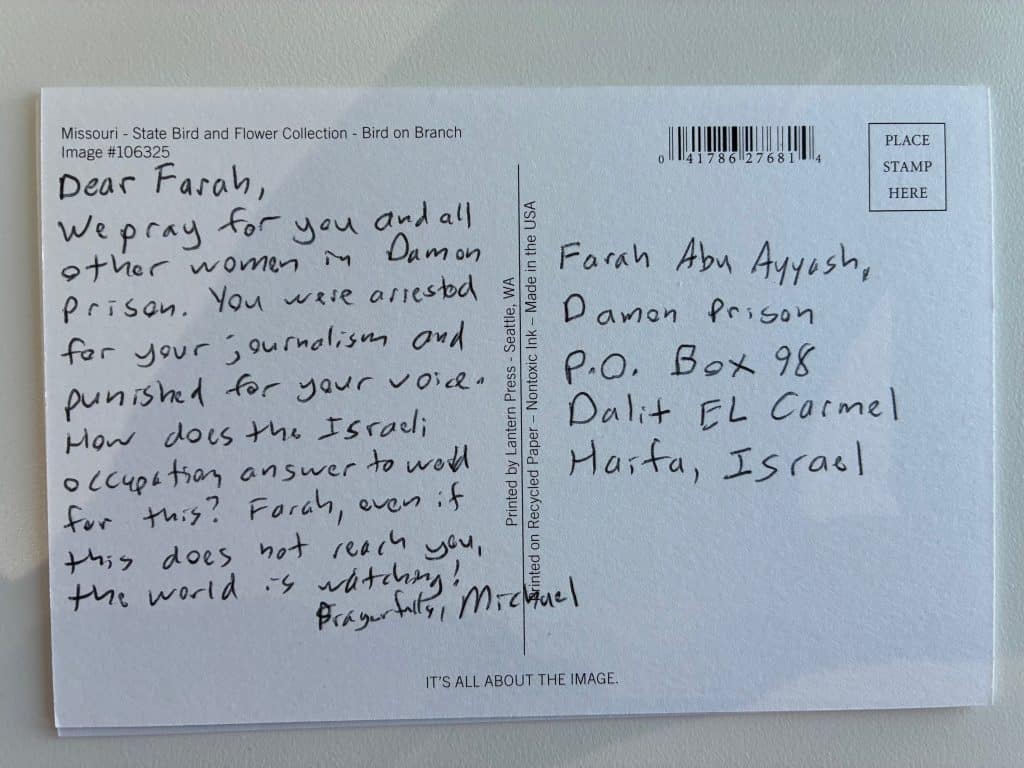
‘The whole world is watching’: a global campaign for accountability
For these reasons, the postcard initiative builds on a wider advocacy effort calling for the release of all Palestinian female detainees. In addition, supporters have flooded inboxes with petitions and appeals directed at political, diplomatic, and military figures in the U.S., as well as Israeli officials and the Red Cross. The petitions demand independent access to all detention sites and an immediate end to abuse and rights violations in Israeli prisons. They also call for accountability under international law and the abolition of the military court system, including administrative detention. To view and sign the petition, click here.
According to Jonathan Kuttab, Executive Director of FOSNA, the postcard campaign is part of the organization’s ongoing effort to build sustained faith-based solidarity and to foster long-term relationships based on respect and advocacy. The FOSNA program, Friends of Palestinian Detainees, consists of a network of faith teams across North America who are each connected with a Palestinian detainee, prisoner, or a released prisoner and their designated family member(s).
These faith teams work as a network locally and nationally to challenge the narrative of Christian Zionism, humanize those in prison, pray for and accompany Palestinian prisoners and their family members in the struggle of daily life under occupation, and advocate for Palestinian human rights by educating and mobilizing their own faith and local communities. Kuttab stressed that the work of this FOSNA program is especially critical amid policies promoted by Israel’s hardline National Security Minister, Itamar Ben-Gvir, who has vowed to make Palestinian prisoners’ lives “a living hell.” He is also the key architect of the discriminatory death penalty law.
The broader campaign remains committed to freedom for all Palestinian prisoners. Each postcard declares: “The whole world is watching. We will continue to demand accountability until it is achieved.”
Special thanks to Rev. Philip Lloyd-Sidle, Rev. Dr. Joyce Penfield, and Dr. Mary Segall.