A visit to the destroyed Palestinian village of Ajjur reveals the violence and anxiety at the heart of the Zionist enterprise.
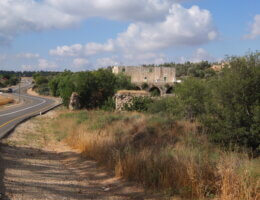

A visit to the destroyed Palestinian village of Ajjur reveals the violence and anxiety at the heart of the Zionist enterprise.
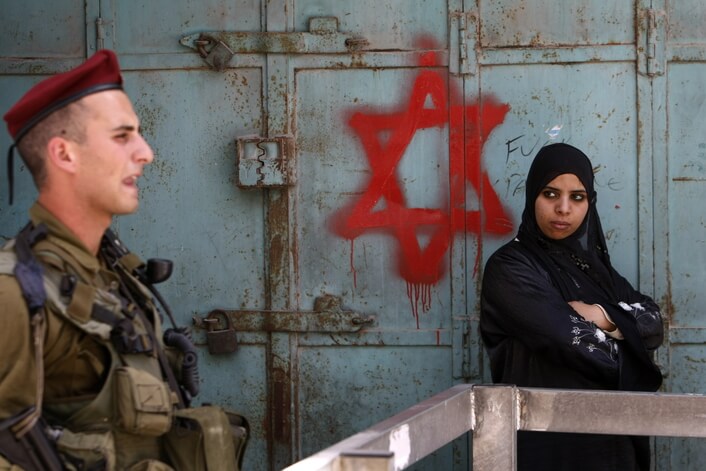
What will happen to the Israelis in Palestine after Palestinians are liberated from Zionism? The choices facing the “Pied-Noirs” at the end of colonization in Algeria may give us an idea.

Eitan Bronstein Aparicio commemorated the Nakba in Brussels this year. Having distance from Israeli society has helped him gain clarity about Israel’s settler colonialism.
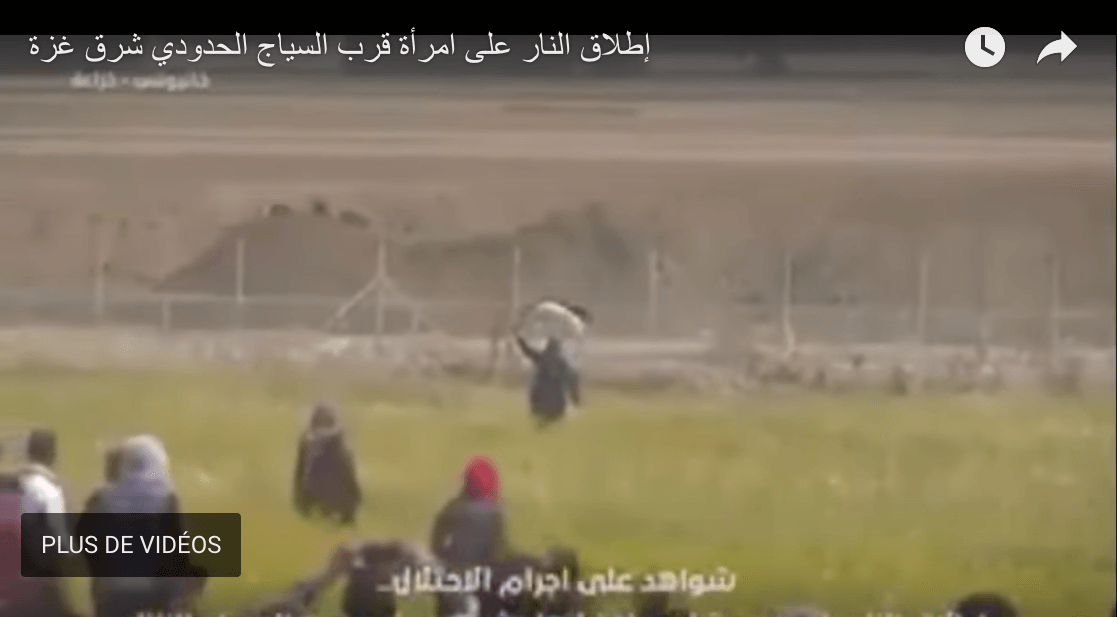
Eitan Bronstein Aparicio and Eleonore Merza Bronstein wonder what was so threatening about Nasreen al-Najjar that as she approached the fence between Israel and the Gaza Strip, soldiers shot her. She was only carrying a flag.
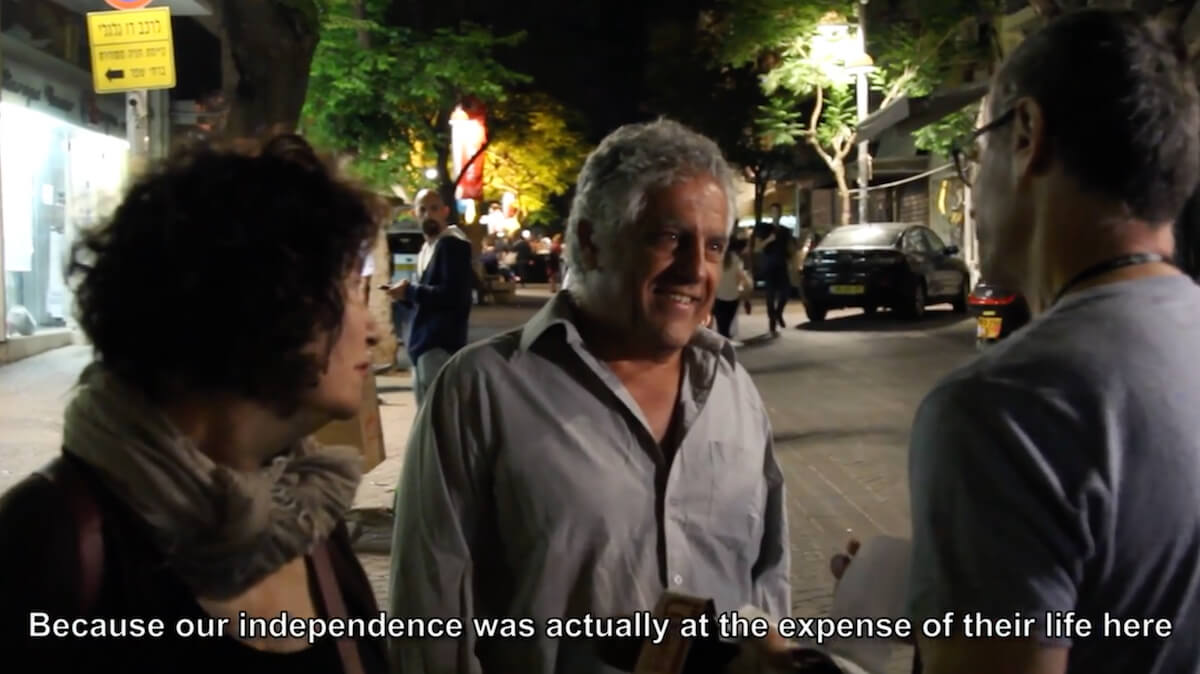
Each year since 2002, activists have marked the Nakba in major Israeli cities on Independence Day. The organization De-Colonizer produced a video showing this year’s action where activists asked partygoers celebrating Israeli independence if they would wear a sticker that said “Can you bear the NAKBA on Independence Day?”
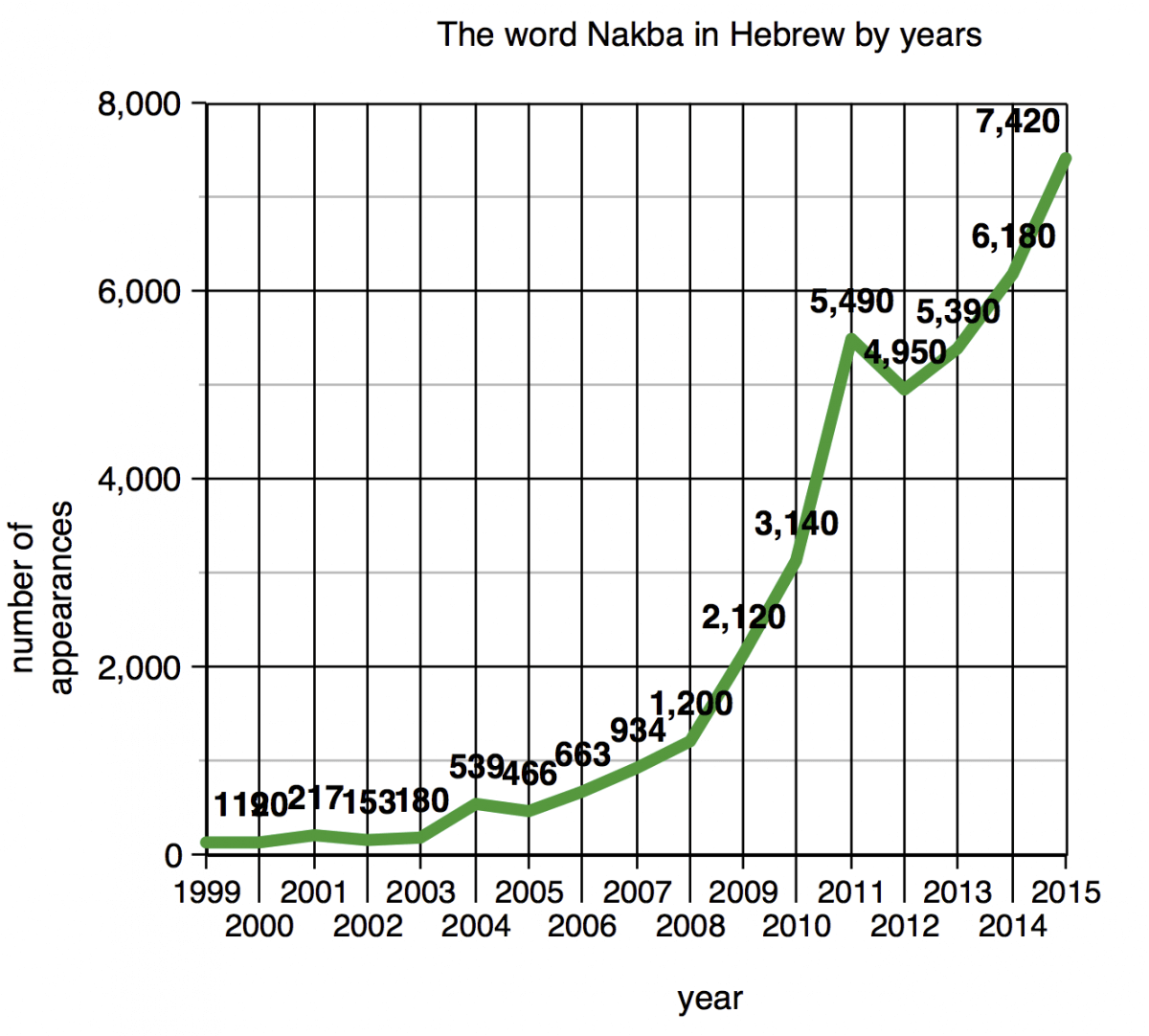
Eitan Bronstein Aparicio discusses how the discourse on the Nakba has changed over time in Israel — When did the term appear? When did it decline and what was repressed? And what has caused these changes? Bronstein Aparicio writes, “Today the term Nakba represents the polarization in Israeli society and discourse. In the non-zionist left there is a full understanding of its centrality in the construction of the conflict and its possible solution. On the other hand, there exists a raging battle led by the Israeli regime to repress these discussions as much as possible. Paradoxically these attempts to silence the discourse leaves the Nakba as a burning question that demands answers”

Eitan Bronstein reflects on the challenges of being a “Decolonizer” and trying to change Israeli society from within.