I tried to convince my parents to leave Gaza, but my father’s resolute refusal caught me off guard. “No, dear. I will never leave Gaza,” he stated firmly. The weight of our conversation lingered long after we said our goodbyes.
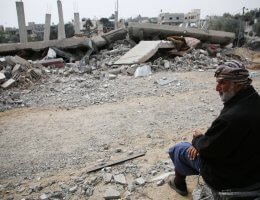

I tried to convince my parents to leave Gaza, but my father’s resolute refusal caught me off guard. “No, dear. I will never leave Gaza,” he stated firmly. The weight of our conversation lingered long after we said our goodbyes.

Israel uses numerous tools to control and abuse Palestinian prisoners. One of the lesser-known instruments of repression is a seemingly innocuous means of transportation: a bus.

Meta announced that it will allow calls for violence against Russian soldiers to be posted on Facebook and Instagram. Yet, under flimsy pretexts, the Facebook company has launched systematic campaigns against Palestinian activists to restrict content that reveals the true story of victims and victimizers. In one way or another, the western media have been trying to hide the brutal crimes and ethnic cleansing against Palestinians for decades.

Ghada Hania responds to CBS correspondent Charlie D’Agata who contrasted life in “civilized” Ukraine to places that have seen “conflict raging for decades” like Iraq, Afghanistan, or perhaps Palestine.
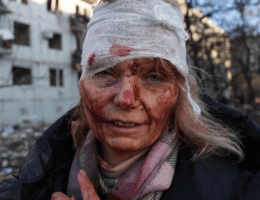
We, Palestinians, know the feelings of those who stand helpless today in the face of missiles in Kyiv, Kharkiv, and all the cities of Ukraine.

Unemployment is a nightmare for all university graduates in Gaza. Studying so hard and being so ambitious, I never imagined myself one day without work, Ghada Hania writes. Yet after graduation, I searched a lot for jobs, and tried to volunteer at institutions to get experience. But all my efforts were in vain. I mumbled to myself, “Never can I accept such a spectacular failure anymore.” I decided in that moment to follow my passions.
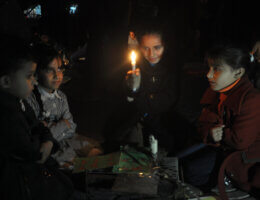
Ghada Hania shares a story about life in Gaza, where electricity can disappear without a moment’s notice.

Ghada Hania was raised in the UAE on bedtime stories of Palestine from her mother, but when she moved to Gaza at the age of 12, reality clashed with the idealized version of homeland in her head.