Reem Hamadaqa is among 70 Palestinian students accepted into Canadian graduate programs who are unable to leave Gaza due to the Israeli siege and genocide. The students are calling on the Canadian government to defend their right to education.
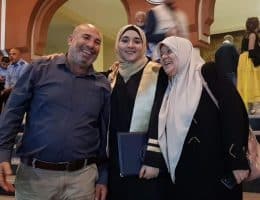

Reem Hamadaqa is among 70 Palestinian students accepted into Canadian graduate programs who are unable to leave Gaza due to the Israeli siege and genocide. The students are calling on the Canadian government to defend their right to education.
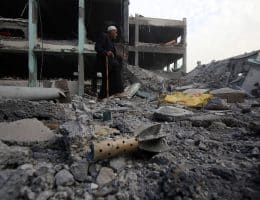
Every time someone asks, “How are you?” I feel a sharp twist inside. That simple question drags me back into a place I desperately try to avoid. The truth is, I am not fine. And neither is anyone else in Gaza.

Renowned Palestinian writer Refaat Alareer was Reem Hamadaqa’s professor and close mentor. She writes of his posthumous book If I Must Die, “Alareer’s poems embody the essence of resistance, grief, steadfastness—sumud—and storytelling as survival.”

Many of us are returning to northern Gaza, gasping for life. We have no choice but to stand up and recover. But what does this mean for our martyrs? Will they go back home too?

Out from under the rubble, I see my martyrs waving for me. They all stand again. They smile. They live. They go back home.

Gaza’s landscape is dominated by tents that have become homes to the hundreds of thousands of displaced Palestinians. But building a tent and living in one with your entire family isn’t easy.
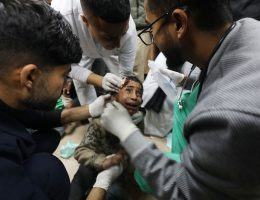
Reem Hamadaqa spent 96 days in Al-Aqsa Martyrs Hospital in central Gaza recovering from an Israeli attack that killed the rest of her family. Here are the stories of women and children she met while she was there.
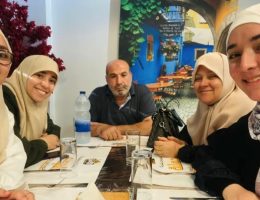
On the night of March 2 Israel wiped out four generations of my family. I barely survived the slaughter. It is now my responsibility to tell their story.

Reem Hamadaqa is 22 years old and has never left the Gaza Strip. Photos in an old family album are her only window to a Palestine she has never seen.