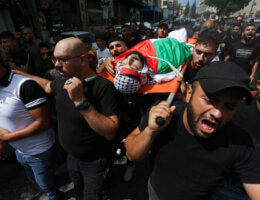
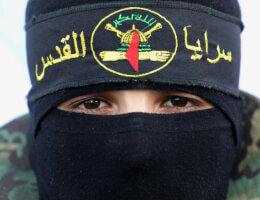
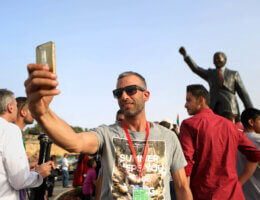
The West Bank town of Silwad has long been considered one of the most intense points of confrontation with the Israeli military, even in periods of relative calm. The town’s unbroken tradition of resistance has recently intensified under Israeli siege since the beginning of August, as Silwad’s youth remains determined to defend the village against the army whether by rifle or stone.
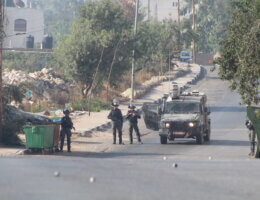
Mariam Barghouti travels to Nablus to meet the family of Ibrahim al-Nablusi, who was assassinated by Israeli forces on August 9. Al-Nablusi became a legend in the Palestinian generation born at the peak of the Second Palestinian Intifada. Although news reports hailed the young fighter as a “top commander” and “senior militant,” al-Nabulsi lived another life with his friends and family. “When we used to ask him why he kept going, he would reply, ‘I am reviving the spirit of resistance of an entire generation’,” Ibrahim’s sister Shahd al-Nabulsi tells Mondoweiss.
Mondoweiss Managing Editor Faris Giacaman shares the evolution of Palestinian armed resistance over the past 25 years, and how it set the stage for the latest Israeli attack on Gaza.
On August 9, Israeli forces killed four Palestinians in the West Bank, including notable Palestinian resistance fighter Ibrahim Nabulsi, “the lion of Nablus,” during a daytime military raid. Nabulsi’s killing is also connected to the ongoing struggle of hunger striker Khalil Awawdeh, who continues to be held under administrative detention in Ramleh Prison. All of these incidents are part of the same story — the Israeli campaign to eradicate Palestinian resistance.
The number of experts who characterize Israeli rule over Palestinians as apartheid keeps growing. As for the latest to say, It’s apartheid– a new survey of Middle East scholars says 60 percent use that word for the Israeli regime in the occupied territories. While 65 percent of Palestinians in the West Bank and Gaza say it’s apartheid, per the latest poll.