Over the past week the number of confirmed COVID-19 cases continued to increase in both the West Bank and Gaza, further entrenching November’s trend of a rising second wave.
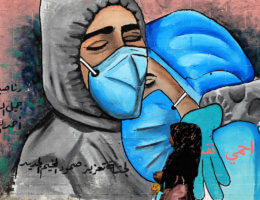

Over the past week the number of confirmed COVID-19 cases continued to increase in both the West Bank and Gaza, further entrenching November’s trend of a rising second wave.

Israel and Palestine begin to prepare for a possible COVID-19 vaccine as the UN agency responsible for Palestinian refugees—including health services—announced it has run out of money.
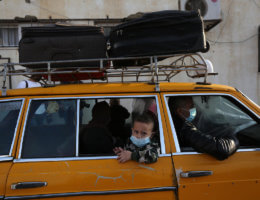
After seven weeks of declining COVID-19 infections across the occupied Palestinian territory, this week marked an increase in active cases for the first time since mid-September, and comes just weeks after students returned to in-person instruction.
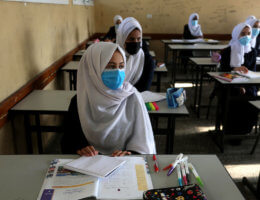
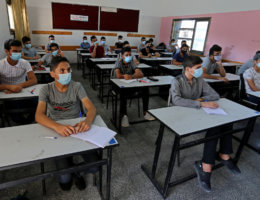
Palestinian students wear face masks as schools partially reopened amid the coronavirus pandemic in Deir…
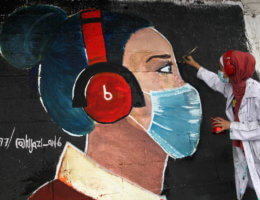
This week, the rates of active COVID-19 cases continued to drop with around a 12% decrease in active Palestinian cases.
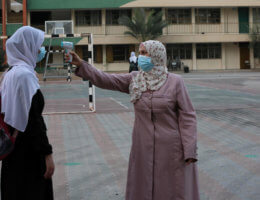
Gaza is partially still under curfew, heading into six weeks of closures and limited movement between governorates in nighttime hours, but some measures were scaled back this week.
There were at least 3,814 new cases of COVID-19 in the occupied Palestinian territory in the last week. Gaza is where most of the new cases are located, adding up to around 18% of overall current Palestinian cases.
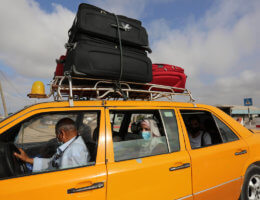
For a second time since the pandemic began, the Rafah border crossing between Egypt and Gaza opened in both directions for three days this week, allowing stranded Palestinians to return to their homes.

The wave of protests against Benjamin Netanyahu that sprouted in the spring continue throughout this latest lockdown. The most recent protest was last night with 2,000 demonstrators.
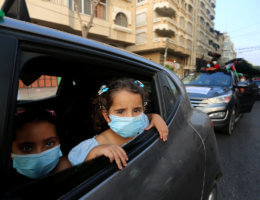
Palestinians in Gaza City on September 17, 2020. (Photo: Ashraf Amra/APA Images) Latest: 179,071 tested…