Marc Ellis writes, “As Israel consolidates its power, the weakness of Jewish dissent becomes more and more apparent.”


Marc Ellis writes, “As Israel consolidates its power, the weakness of Jewish dissent becomes more and more apparent.”
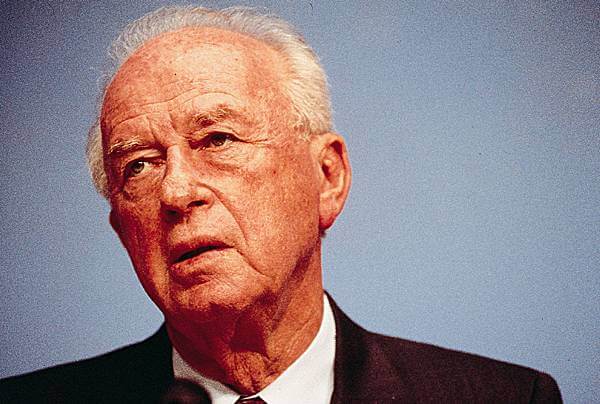
On the 20th anniversary of the assassination of Prime Minister Yitzhak Rabin, Isabel Kershner of the New York Times writes that Israelis on both sides of the political spectrum have reached a “pragmatic” consensus on the way forward. If alive today it’s likely Rabin would fit nicely into the “pragmatic” Israeli consensus as he did during his lifetime. Rabin’s pragmatism was the pragmatism of the powerful. The life of Yitzhak Rabin is part of the downward spiral where Jews come to accept the denigration and oppression of another people as “pragmatic.” For in the end, permanently ghettoizing the Palestinian people is the true legacy of Yitzhak Rabin.
Marc Ellis: “In the abyss of Jewish history, Jews must begin again – with Palestinians. This is a sharply-focused way of understanding what I realized many years ago: That the only way to be faithful as a Jew today is to embrace the Jewish covenant, a covenant that has fled from the precincts of Jewish power. That the Jewish covenant, and thus the Jewish prophetic, reside in the Palestinians ghettos Jews have created is difficult for most Jews to contemplate. Perhaps this is why Netanyahu’s “forever” sword signals a fight within and outside Jewish history until the end.”

Will the recent escalation of Israeli brutality, coinciding with the continuing diminishment of Palestine, change the progressive Zionism of Rabbis for Human Rights?
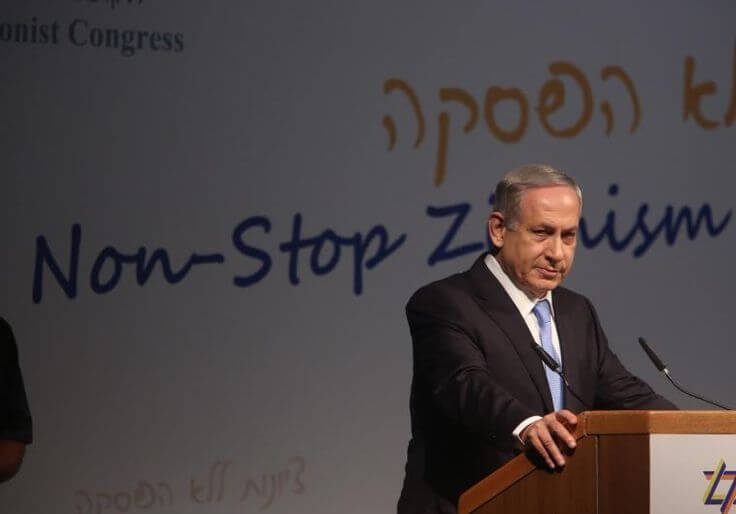
As Netanyahu’s Holocaust revisionism continues to find its way around the world, Jewish memory is besmirched. That’s the consensus of the many Holocaust historians and political figures that continue to weigh in on Netanyahu’s misreading of Holocaust history. Buried in the outrage, though, is a deeper issue: Rather than the historical details of Holocaust history, how the Holocaust functions in relation to Palestine is the issue at hand. Netanyahu’s misreading of the Holocaust pales in significance to how the Holocaust is used to strengthen Israel at the cost of Palestinian life.

As the crisis in Israel-Palestine devolves, with some predicting a third intifada, the YWCA in Jerusalem issued an alert calling Israel’s entrenched military occupation “the Endless State of Emergency.”

Rabbi Brant Rosen just published his congregation’s confession that will be prayed on Yom Kippur. Those on the political right and even those progressive Jews who continue to sit on the fence with regard to Israel and Jewish life in America, should take notice. Rabbi Rosen’s confession is wide-ranging. His title, “A Confession of Communal Complicity,” says it all. Unlike most rabbis during the High Holidays, Rabbi Rosen isn’t hiding behind a liturgy developed when Jews had little power. Rabbi Rosen knows that the Jewish situation in the world has changed from powerlessness to power. He isn’t pulling any religious or political punches.

Marc Ellis suggests Bernie Sanders visit Tzedek Chicago for High Holiday services this year where Rabbi Lynn Gottlieb and Max Blumenthal will be helping bring in the Jewish New Year.

Marc Ellis writes about Reverend Naim Ateek’s strident and heartbreaking letter to the Episcopal Church expressing his disappointment that it failed to pass a resolution supporting divestment from the Israeli occupation.
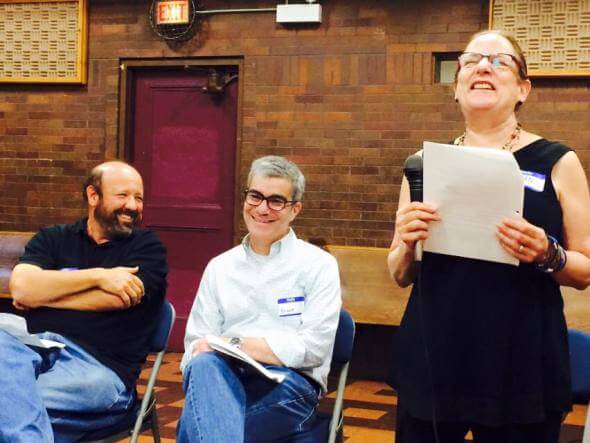
Rabbi Brant Rosen’s new congregational venture Tzedek Chicago continues to make news. Writing in the Forward, Jonathan Paul Katz thinks that such a non-Zionist venture rooted in universal Jewish values might fill a gap in Jewish life. That said, the issue is much more profound than Katz is aware of.