Being a Palestinian-German means carrying a double-burden: the burden of systemic racism, and the burden of Germany’s dark past.
Germany rarely condemns Israeli human rights violations, but support from leaders and the national media has been unprecedented over the past week.
The Israeli newspaper Haaretz has run a fascinating long report this week offering a disturbing snapshot of the political climate rapidly emerging across Europe on the issue of antisemitism. The article documents a kind of cultural, political and intellectual reign of terror in Germany since the parliament passed a resolution last year equating support for non-violent boycotts of Israel – in solidarity with Palestinians oppressed by Israel – with antisemitism.
Scholar Achille Mbembe was booked to speak at a German festival, but he has been smeared as antisemitic for likening Israel to apartheid South Africa and supporting the boycott campaign. Israel lobbyists are also targeting the festival director, Stefanie Carp.
Majed Abusalama writes that Palestinians are tired of demanding their obvious human rights, but there is now an opportunity to compel the international community to humanize Palestine and to treat Palestinians with full rights — the BDS movement.
On Saturday, organizers of the Berlin Radical Queer March instructed police to block and ban the participation of the Queers for Palestine contingent, a group of 500 Arab and Jewish-led marchers. Queers for Palestine write: “The very fact that we need to defend ourselves against physical and police violence at a ‘radical queer march’ is infuriating and deeply shameful.”
Sara Roy challenges the German parliament over its resolution equating boycott of Israel and anti-Semitism: “I lost a large extended family to fascism and racism. By endorsing the motion that alleges that BDS is anti-Semitic, you are criminalizing the right to free speech and dissent and those who choose to exercise it, which is exactly how fascism takes root.”
Two Israelis and one Palestinian are on trial for counts of trespassing and assault for disrupting an event with Knesset member Aliza Lavie who spoke at Humboldt University in Berlin in June 2017.
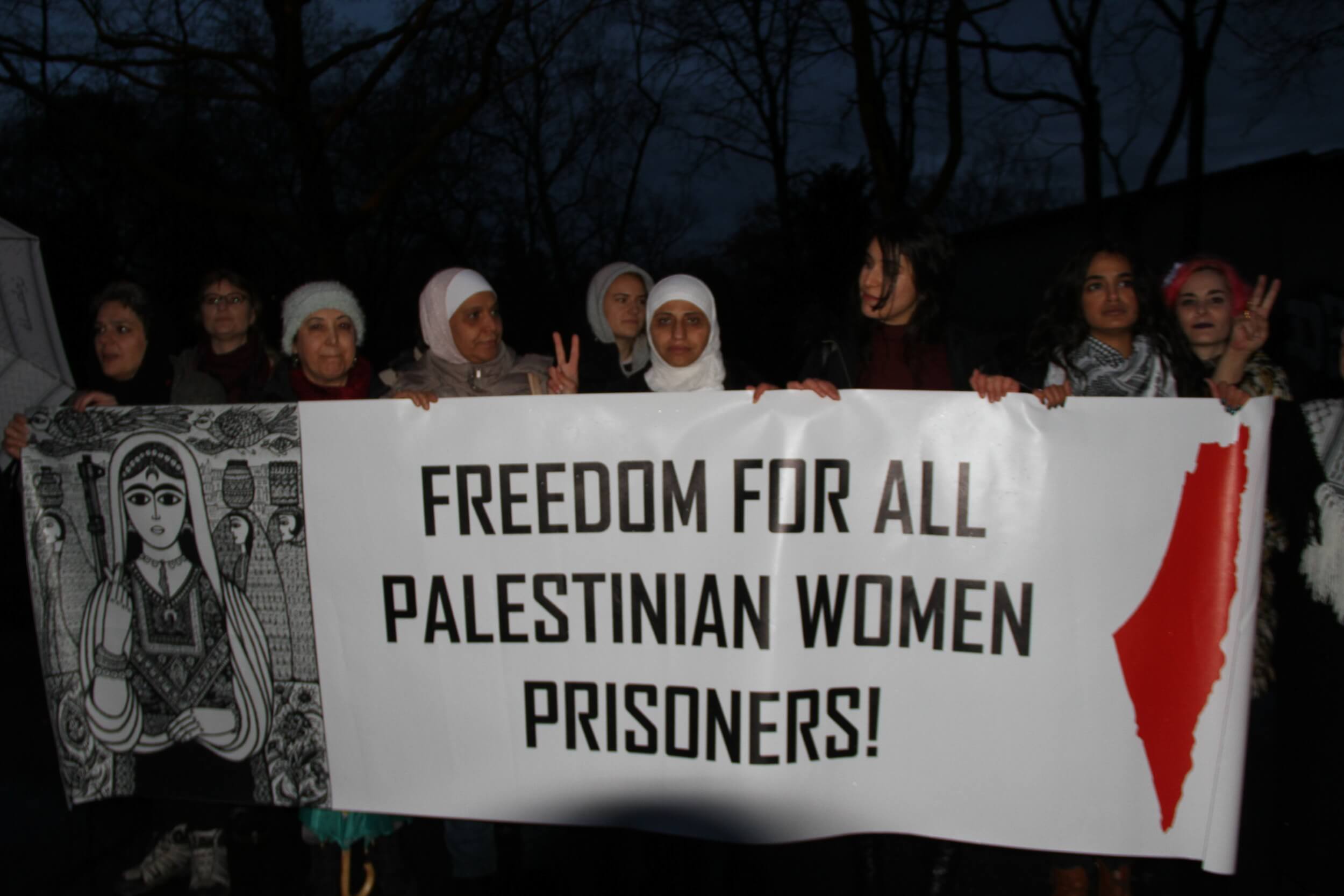
Rasmea Odeh dramatically had her visa revoked in Germany after pressure from the Israeli government grew to cancel her participation in a Berlin event on International Women’s Day. Her would be co-panelist, Palestinian poet Dareen Tatour explains how the events unfolded,”I was also supposed to read some of my poems. When I arrived at the event hall, I was surprised by something else. The venue was vandalized with graffiti.”
Last week, the German organization Jewish Voice for a Just peace in the Middle East received a peace prize from the city of Göttingen. The mayor promptly revoked the prize because the group supports BDS. Iris Hefets explains why it is so important that Jews say things about Israel other Germans cannot.