In Masafer Yatta in the southern occupied West Bank, Israeli settlers are accelerating their attacks on Palestinian farmers and herders in the area by cutting off their water supply.
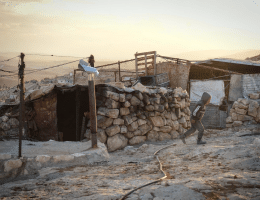

In Masafer Yatta in the southern occupied West Bank, Israeli settlers are accelerating their attacks on Palestinian farmers and herders in the area by cutting off their water supply.
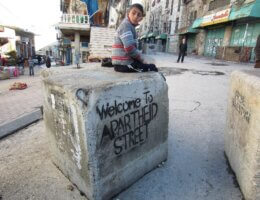
Hebron’s Palestinian municipality held planning authority over the city for nearly 30 years. Israel revoked it this month, then swiftly approved a yeshiva in the Old City — redrawing who controls the city’s land and future.
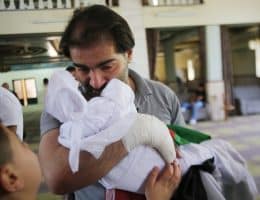
Sam Abu Haikal was riding in his parents’ car through Hebron when Israeli soldiers opened fire. His mother is in intensive care, and his father, wounded in the hand, buried him alone the next morning. He was only seven months old.

The Wall Street Journal would have you believe its report on a “sheikh” who wants to form a Hebron “emirate” under Israeli control is a groundbreaking political revelation. But anyone with basic knowledge of Palestine will tell a different story.
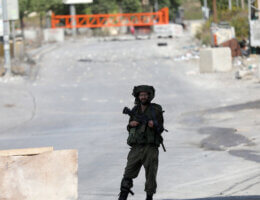
While the world’s eyes are on Israel’s genocidal war in Gaza, Israel has also put the entire West Bank on lockdown. We are living under siege.
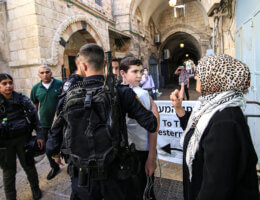
Amid the Jewish holiday season, Palestinians across the occupied territory pay the price, as settlers increase their attacks and the military and police restrict Palestinian access to holy places.
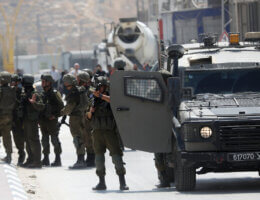
Huwwara and Hebron have been put on lockdown by the Israeli army as a manhunt has ensued following two “lone wolf” shooting operations in those areas, while Israeli settlers carry out revenge pogroms against Palestinians.

I did not learn much about my Palestinian heritage growing up, but a trip to Palestine as an adult exposed me to the beauty of Palestinian culture and the racist realities of life under Israeli occupation.
A new Amnesty International report documents Israel’s dystopian colonial surveillance in East Jerusalem and Hebron which have become “laboratories” for facial recognition and AI technology.

Two martyrs were killed by the Israeli colonial system — Ahmad Abu Ali, a political prisoner who died of systematic medical negligence, and Sharif Rabaa, shot to death under the pretext of a stabbing.