Antony Loewenstein spends a day in the Jordan Valley reporting on the nightmarish situation for many Palestinian shepherds as they attempt to graze their land.
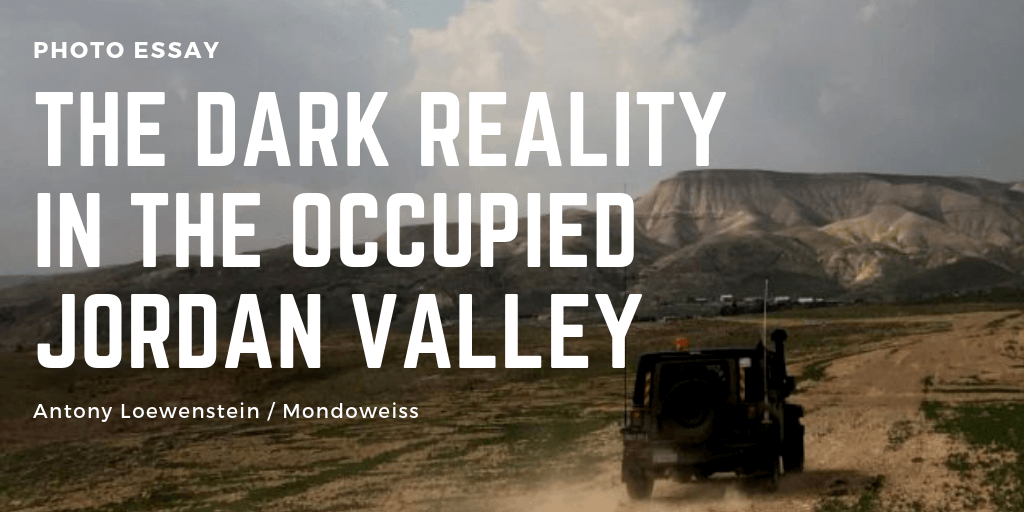

Antony Loewenstein spends a day in the Jordan Valley reporting on the nightmarish situation for many Palestinian shepherds as they attempt to graze their land.
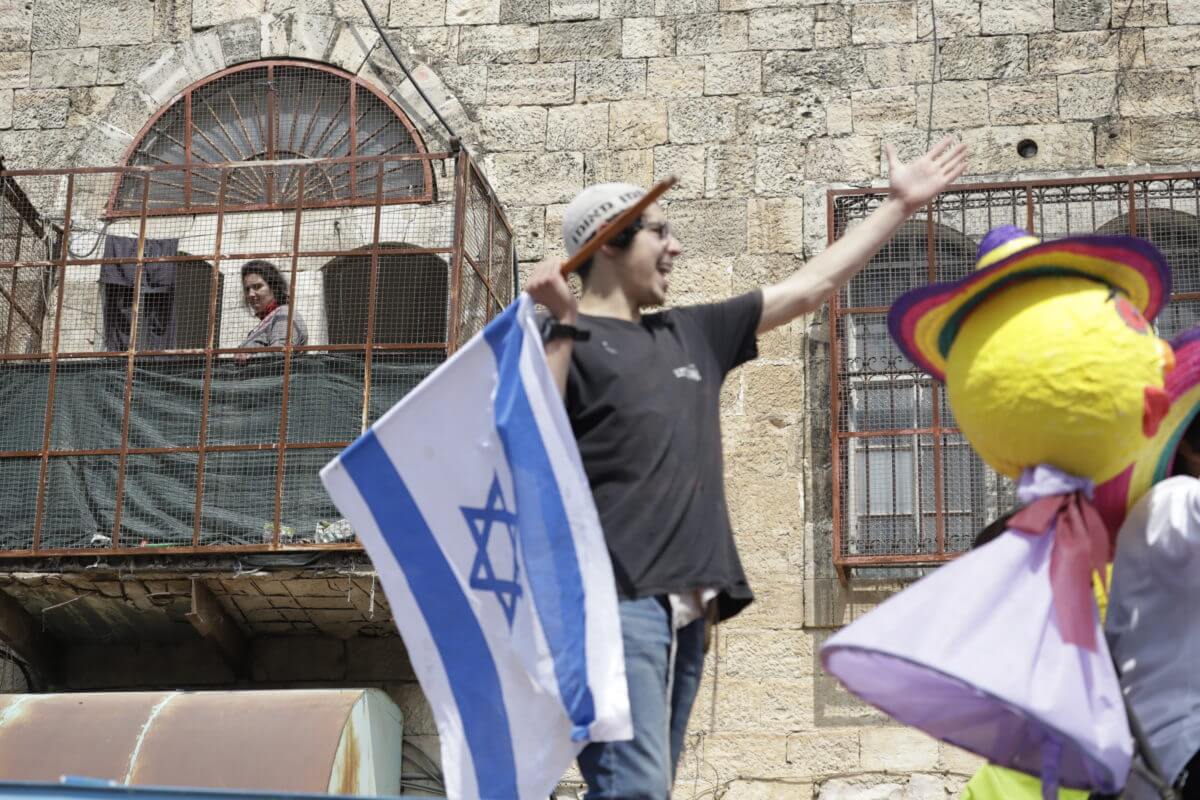
Ahmad Al-Bazz and Anne Paq send a photo essay from Hebron where Israeli settlers marched down Shuhada Street towards the Ibrahimi mosque to celebrate the Jewish holiday of Purim, under the protection of Israeli soldiers and police. The parade started at what was called the “Elor Azaria” junction, a reference to the spot where Azaria, an Israeli soldier and medic, killed an incapacitated Palestinian in March 2016.
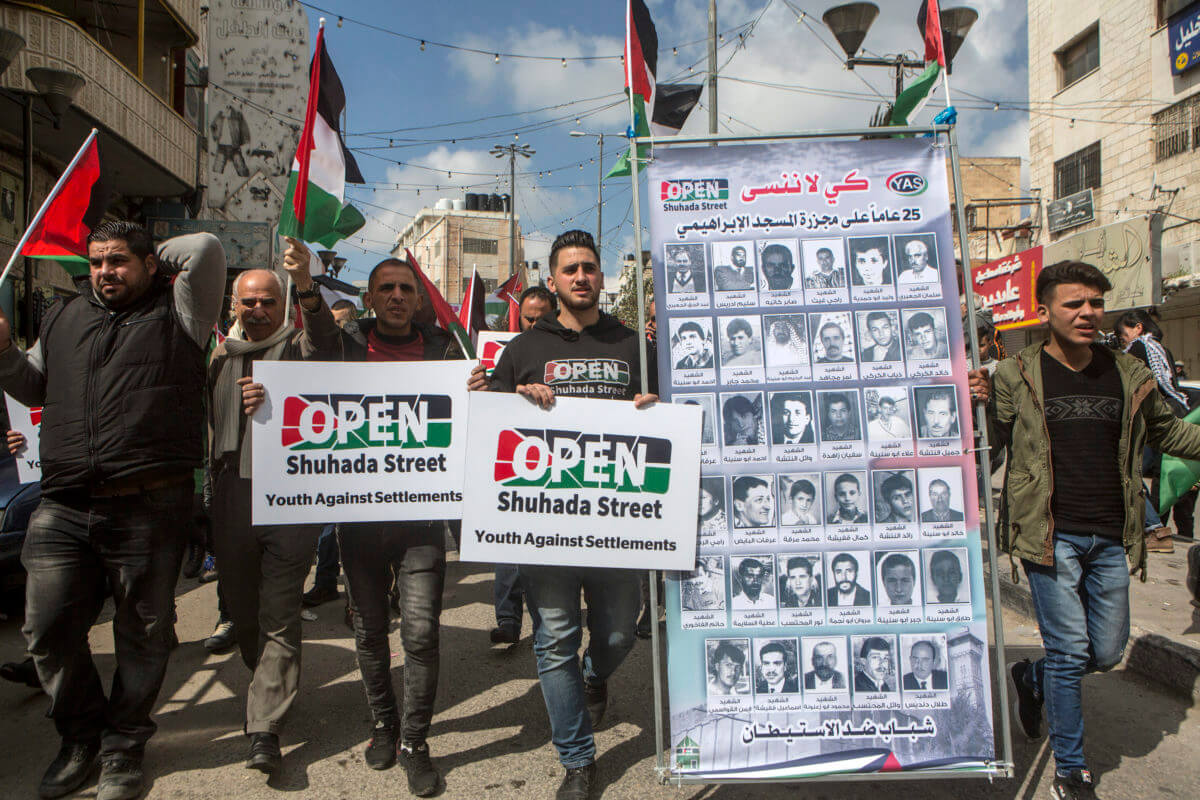
Palestinians took to the streets in Hebron to commemorate when a US-born Israeli settler named Baruch Goldstein opened fire on Palestinian worshippers in the Ibrahimi Mosque in 1994, killing 29 and wounding more than 100. The protests this year were held at a time of heightened tensions in the city following the Israeli government’s expulsion of international human rights observers from the city.
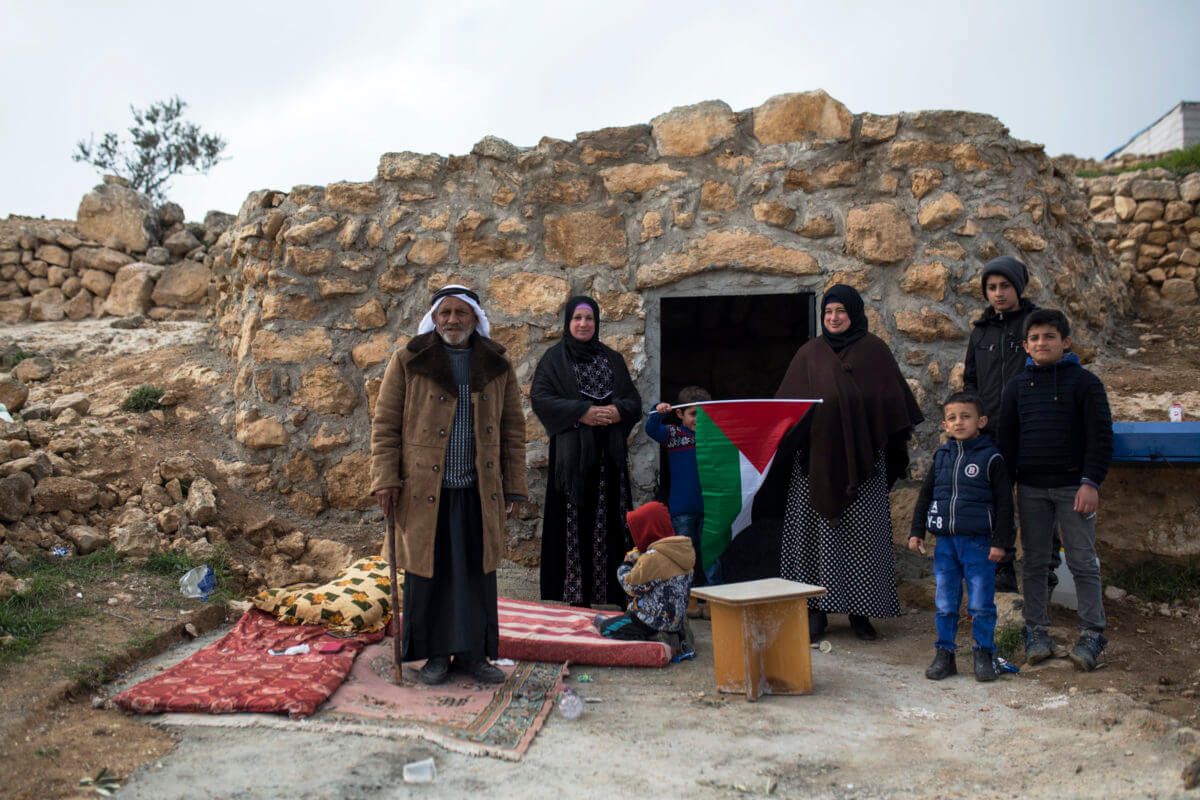
For weeks under the cloak of night Palestinians secretly renovated four caves and built a tin-roofed house in secret in the West Bank hamlet of Ar-Rakeez where only a handful of residents live. Because of rigid Israeli planning restrictions and frequent settler harassment, most of the Ar-Rakeez’s villagers moved to the nearby city of Yatta over the last 20 years. Yet in recent years locals have developed a strategy to repopulate the abandoned village by renovating caves, a legal loophole that circumvents Israeli policies of demolishing homes constructed or upgraded without a permit. Last week they opened the homes in a “bringing life back” ceremony.

Yesterday Israeli forces shot Aed Abu Amro in the leg, the Palestinian protester from the Gaza Strip who reached internet infamy after photographer for Anadolu Agency Mustafa Hassouna captured a shirtless Abu Amro gripping a Palestinian flag firmly in one hand and a slingshot in the other during a protest at the fence that divides the Gaza Strip and Israel.
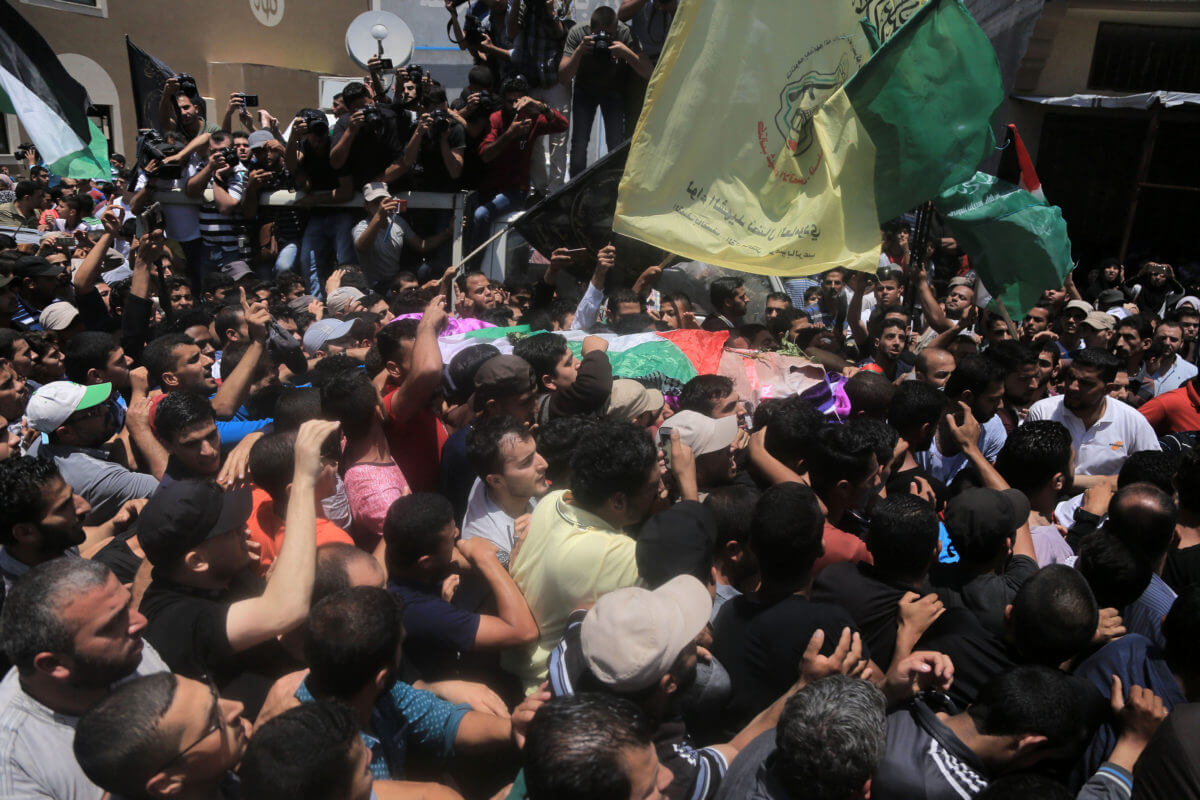
Today, Palestinians mourned the funeral of 21-year-old Rawan al-Najjar, carrying her body with on top her medic vest soaked in blood, in the city of Khan Yunis, Gaza Strip. Al-Najjar was a medic who was shot the day before by an Israeli sniper as she was attempted to reach the injured during the protest at the Gaza fence, near Khuza’a.

A photo essay of homemade gas masks demonstrates the creativity and resilience of Palestinian protesters demanding their rights in Gaza.

On March 30th, the village of Al Walaja welcomed Palestinians from from surrounding areas to mark Land Day by planting olive trees. The village has lost most of its lands since 1948, in successive waves of Israeli confiscations and land grabs. Ali Khalil Al-Araj, a resident from Al Walaja, 50, said, “I am here because this is our land. We will stay here and we will defend it. My family just with the settlement and the road, we lost 50 dunums. But we will stay and die here.”
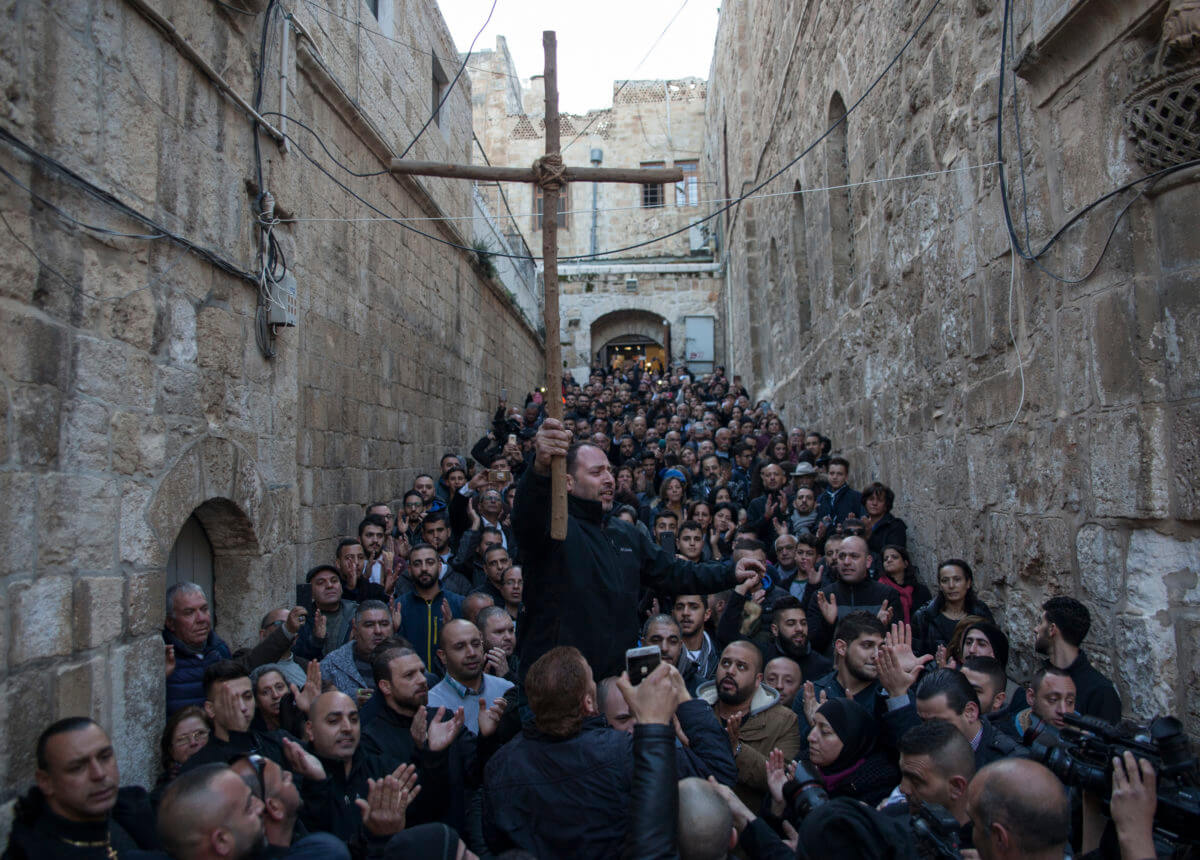
The Church of the Holy Sepulchre closed its doors Sunday to protest a new Israeli property law and tax policy that would allow the government to take over church properties leased to private companies, and begin imposing taxes on church properties. On Tuesday evening, as crowds of tourists and Christians gathered to pray outside of the church, local Palestinian Christians and Muslims marched together from the Christian quarter of the Old City to the Church of the Holy Sepulchre to protest the new policies.

Visiting the Al Aqsa mosque remains a distant dream for many Palestinians living in the occupied West Bank and the besieged Gaza Strip. Photos by Mersiha Gadzo show the crush of worshippers trying to get to Jerusalem through the Qalandia checkpoint, and the jubilant atmosphere at Al Aqsa for those able to make it.