Steven Salaita says Palestinians and Native Americans are perfectly suited to an “inter/national relationship” as they share mutually-affirmational national struggles with interlocking destinies.


Steven Salaita says Palestinians and Native Americans are perfectly suited to an “inter/national relationship” as they share mutually-affirmational national struggles with interlocking destinies.

The metaphors that attempt to render Palestine complicated obscure the simple brutality of Zionist colonization.

The only sustainable way forward is to engage in the “decolonization” of Greater Israel. What comes next remains an open question.

Palestinian knowledge of the land not only solidifies the Palestinian indigenous identity, but our right to the land as well.

Mohammed El-Kurd shares his lessons from engaging with the Western press, and how Palestinians can most effectively tell their story: “Our mission in the coming period should not only be legitimizing the Palestinian right to resist, but also legitimizing his or her right to feel anger when our land and rights are violated.”

Lifta must be saved not only because it is a gem of precious natural beauty and human architecture, but also because it is a step towards healing and redress.

The opposition to a “pro-Israel” position is not a “pro-Palestine” position, but rather a decolonial justice position. This is the position that not only captures the reality of conditions in Palestine/Israel but also seeks to transform them into something new and something just.

A recent debate over the term “settler colonialism” in the English version of Haaretz seeks to raise doubts over the appropriateness of using it to describe Israel. This is exactly how good solid hasbara works.

Within the Israeli colonization project, distinct legal frameworks are applied across a legally fragmented space and yet nevertheless share a common defining logic. The unifying logic of Jewishness as property, central to this system of settler-colonial domination, gives coherence to these legal fragments.
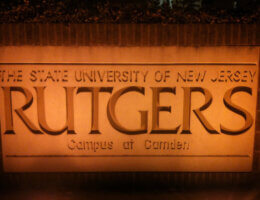
Rutgers University faculty condemns Israel’s military assault against the Palestinian people and joins all colleagues committed to combatting racism, colonialism, and settler colonialism.