Today, Gaza is on the frontlines, but she is not alone. We call on all Palestinians everywhere to unite in action. Our liberation can only be achieved through a unity of struggle, built upon a unity of people and a unity of land.
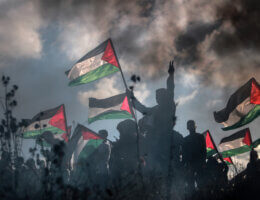

Today, Gaza is on the frontlines, but she is not alone. We call on all Palestinians everywhere to unite in action. Our liberation can only be achieved through a unity of struggle, built upon a unity of people and a unity of land.

Why have Palestinians with Israeli citizenship remained generally silent during the Gaza genocide? The answer is not only Israel’s forceful intimidation, but also the limits by which this community has sought to challenge Zionism in the Jewish state.

For too long, the global solidarity movement has only understood Palestinians as victims of Israeli violence. The current moment calls us to question the invincibility of the Zionist project and reassess our struggle.
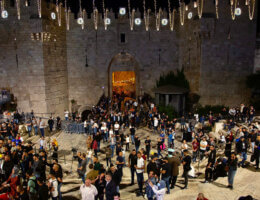
During the past ten years, Jerusalem has reemerged as the spark that sets off Palestinian revolt, culminating in the Unity Intifada of 2021.
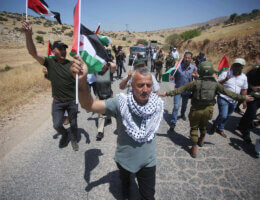
Since 2015 we have seen several moments of collective uprising in Palestine. They may ebb and flow with the tide of colonial provocation, but they have steadily increased, extending to include progressively broader sections of Palestinian society with each wave. The most recent wave of resistance in Palestine should be seen as a continuation of the legacy of last year’s unity uprising and of the uprisings preceding it.
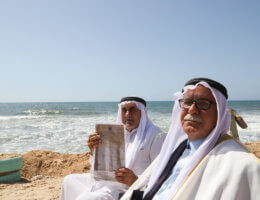
For nearly three decades, Palestinians were told, even by their leaders, that the Nakba is a thing of the past. However, with Palestinian reality worsening under the deepening system of Israeli settler colonialism and apartheid, Palestinians now understand that they have no possible alternative but their unity, their resistance and the return to the fundamentals of their struggle.
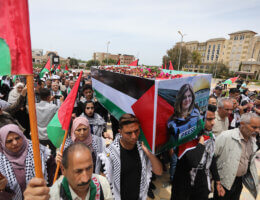
The mass outpouring of national unity that followed the killing of Shireen Abu Akleh reflects a historic moment of Palestinian struggle and consciousness. What began last year during the Unity Intifada in reaction to the attacks on Gaza and Sheikh Jarrah has now continued through the Gilboa Prison escape and the martyrdom of Abu Akleh. Palestinian political and civil society leaders must now maintain the momentum of this solidarity that Abu Akleh’s departure has left.
Abed Abu-Shehadeh, a Palestinian political activist from Jaffa, describes the traumatic events of May 2021 in Jaffa, their impact on Palestinian citizens of Israel and his new film “Testimonies – May 2021.”
Soheir Asaad, Mariam Barghouti, and Ahmed Abu Artema, Palestinian activists from ’48 Palestine, the West Bank, and Gaza, share their reflections and analysis of the current situation on the ground across Palestine, and what recent moments of popular resistance mean in the broader context of the Palestinian struggle.
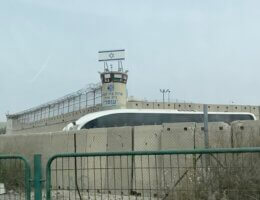
Mass incarceration has defined Israel’s colonial project. Since 1967, over 850,000 Palestinians have been arrested and imprisoned by the Israeli regime. Currently there are 4,450 Palestinians held in Israeli prisons, including hundreds of administrative detainees being held without charge or trial. But just as mass incarceration remains a defining feature of the Israeli occupation, so too has prisoner resistance. Currently, an ongoing boycott of the Israeli judicial system by all 530 Palestinian administrative detainees has surpassed 100 days.