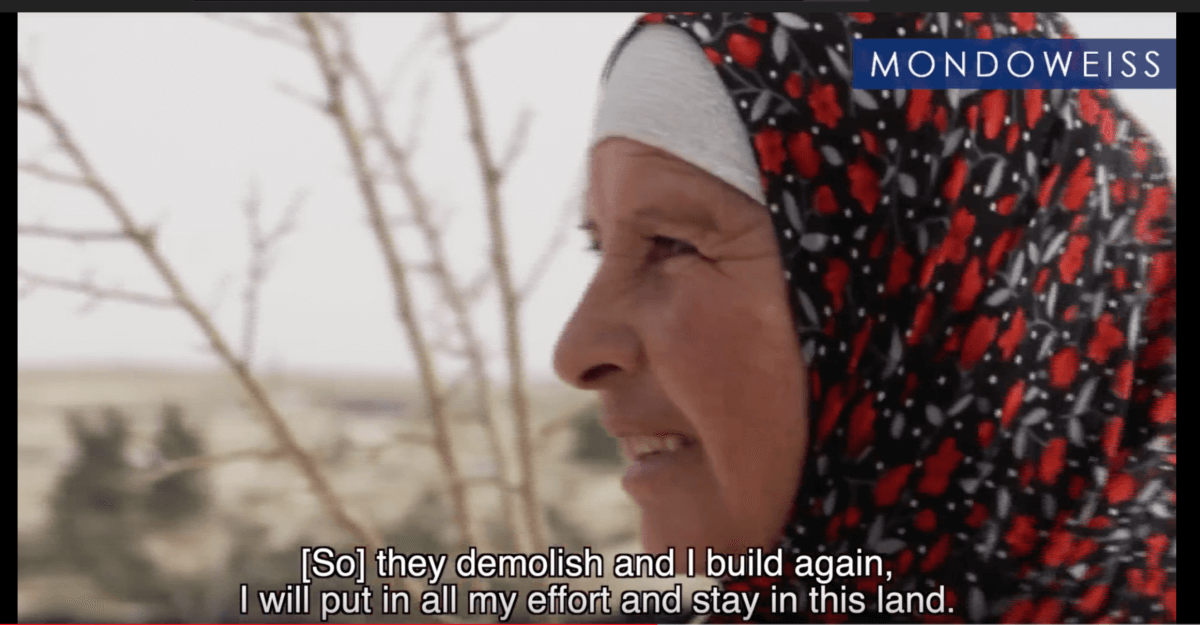
On the February 5th, the Israeli High Court of Justice decided that seven structures in the village of Susiya, in the south Hebron Hills of the occupied West Bank, could be demolished by Israel without delay. These seven structures are home to 42 residents of the village, of which half are children. Susiya has become an international symbol of Palestinian villages resistance against displacement, and the villagers say more international solidarity is needed to prevent these demolitions.
How does this Miko Peled video get 2.7 million views– how is that possible? This isn’t a puppy or music video. Because Muslims want to see a beautiful Israeli Jew discuss his country honestly.
On Monday, April 11, 2016, Dan Cohen went to Jerusalem’s Zion Square to ask Israelis for their thoughts on Bernie Sanders, the Jewish-American presidential candidate. Nearly all of the Israelis he spoke to had strong dislike for Sanders, and many disparaged him, even disqualifying him as a Jew.
Israeli forces have demolished every home in the Bedouin village of Khirbet Taha in the northern West Bank district of Nablus during three separate demolitions since the start of the year. The village’s only school was also destroyed, leaving children to study in a dilapidated 100-year-old mosque — the only structure left standing in the village.
On March 13, 11-year-old Khalid Ishtawy joined the thousands of other children injured by Israeli forces, when he was shot in the thigh in the northern occupied West Bank village of Kufr Qaddum during a protest. This past weekend other children joined the village’s weekly protest to honor their injured friend. Abed Al Qaisi and Sheren Khalel interview some of the young protesters who say they are demanding their right to be like children in the rest of the world, and letting their injured friend know they support him.
Eight months after the firebombing that killed five-year-old Ahmad Dawabshe’s baby brother and parents in the occupied West Bank village of Duma, he is still undergoing treatment in the Sheba Medical Center in Ramat Gan. In a heartbreaking video Dan Cohen talks with Ahmad’s grandfather, Hussein Dawabshe, who has devoted his life to taking care of Ahmad, “I am willing to stay and keep taking care of Ahmad for one, two, three or ten years. What matters is that Ahmad is not in danger. I want him to live without trouble and fear.”
Muhanned Qafesha, a resident of Tel Rumeida in Hebron, takes Mondoweiss through the arduous journey residents of the city have been subjected to since Israel made the town a closed military zone in November. Israeli soldiers detain and harass filmmakers Sheren Khalel and Abed Al Qaisi as they attempt to report Qafesha’s story.
Filmmakers Sheren Khalel and Abed al Qaisi wanted to know exactly how much the children who live in Bethlehem’s Aida and Beit Jibrin refugee camps understood about the military occupation going on around them, and how normal they believed their lives were. With their parents permission, Khalel and al Qaisi asked five children from the streets of the two camps what they thought. All of the answers were spontaneous and unrehearsed, and as it turned out, the kids understood — and have experienced — quite a lot.
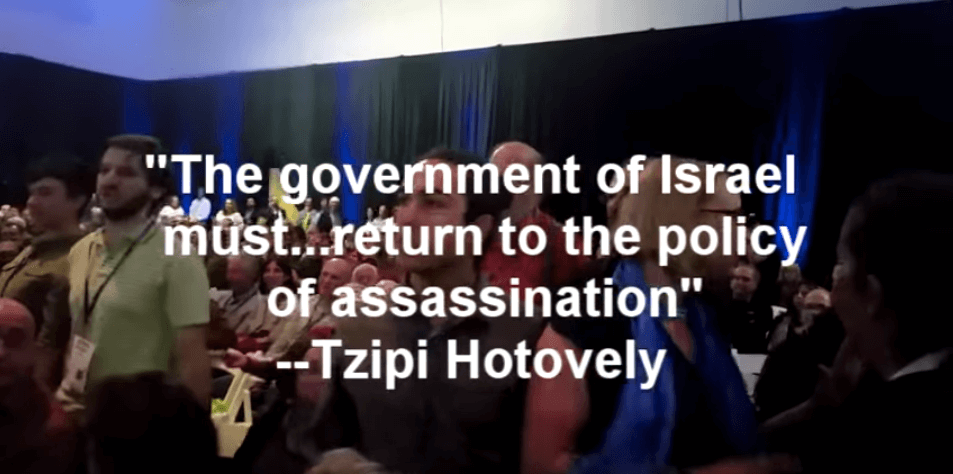
Bay Area activists pulled off an awesome action yesterday at Haaretz’s Zionism 3.0: Israel’s Place in Tomorrow’s World conference in Palo Alto, California. As Israeli Deputy Foreign Minister Tzipi Hotovely was introduced and stepped up to the podium a clear voice rung out: “Tzipi Hotovely this is a citizens’ arrest! We charge you with inciting colonial violence.”