Before I sleep, I have this image of your body under the rubble. It flashes into my mind and makes my heart sink. Then I pick up my phone and go to our photos.
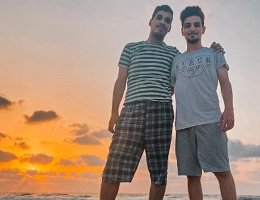

Before I sleep, I have this image of your body under the rubble. It flashes into my mind and makes my heart sink. Then I pick up my phone and go to our photos.

I am in my final year in medical school and have seen hundreds of critical cases as a volunteer doctor during Israel’s genocidal assault on Gaza. The traumas I have seen in my patients are no different from those I have experienced myself.
In this episode, Mondoweiss’s Culture Editor Mohammed El-Kurd speaks with journalist and co-founder of We Are Not Numbers Ahmad Alnaouq.
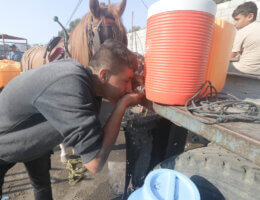
For Palestinians in Gaza, the most urgent daily task is the search for water. “Obtaining water has become like prospecting for gold,” explains H., a writer with We Are Not Numbers, “and whoever finds drinkable water is considered wealthy.”

“Can you kindly publish the attached stories if I die?” This is what we have been hearing from the young writers we work with from Gaza in the We Are Not Numbers project.

As I met my close friend Mohammed a deafening explosion jolted us. The world collapsed around me. “Am I dead?” I asked Mohammed, clinging to his hand.

Kevin Hadduck had never met a Palestinian until five years ago when a student studying Latin walked into his office. This chance encounter led to Hadduck’s “Beloved Brother, Beloved Sister,” a book of poems from voices in Gaza.
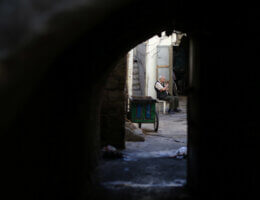
We are mentors for the We Are Not Numbers youth storytelling project. We work with Palestinian writers 18 to 30 years of age whose stories have been rendered largely invisible by the world. And we support the general strike by Palestinians on May 18.

The extended family of Asmaa Tayeh, operations manager for We Are Not Numbers, is increasingly typical of residents there. Twenty-five members of the clan have tested positive for the virus, 15 have fallen ill and three have died.

Ramzy Baroud talks with the Palestinian youth behind “We Are Not Numbers,” a media project in Gaza that aims to transcend the stereotypical discourse on Palestine.