After a ten day siege, the Israeli army invaded Aqbat Jabr refugee camp in Jericho and assassinated five resistance fighters in the camp, signaling the extension of armed resistance beyond Nablus and Jenin.
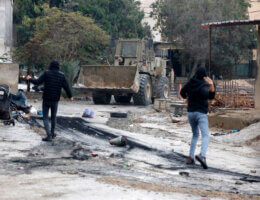

After a ten day siege, the Israeli army invaded Aqbat Jabr refugee camp in Jericho and assassinated five resistance fighters in the camp, signaling the extension of armed resistance beyond Nablus and Jenin.
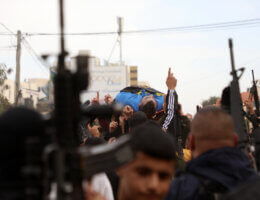
The next escalation is already here.
It feels very different from previous cycles of resistance and repression, as if Palestine is on the brink of something closer to an uprising.
While the many possible futures of Palestinian resistance remain formless and kaleidoscopic, the colonial constant ensures that resistance will have a future.

The martyrs of Palestine speak to one another in their final acts, emulating the examples of those that came before them, and turning into icons for those that will come after them.

The Israeli army has continued its onslaught against resistance strongholds in the West Bank. It now has its sights set on Jenin, and is drowning it in a river of blood.

From banning the flag, to slaying Palestinians, to continuing colonization, the actions of the Israeli state are consistent with the spirit and origins of Zionist settler colonialism.
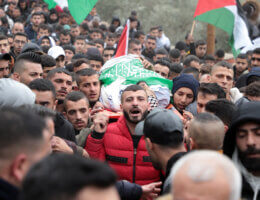
2023 is likely to be a year of escalations, but one question will decide its fate: what will become of the Palestinian resistance?

The Israeli colonial regime dominates every aspect of Palestinians’ lives — and in many cases, even after they die. Those who dare to resist are arrested, tortured, or summarily executed, and the indignities they suffer in life extend into their death, manifested in one of Israel’s most morbid colonial practices: withholding the bodies of the slain.

Despite the continuation of resistance, Palestinian deaths dropped in comparison to the Israeli onslaught of the previous weeks. This means one thing: the decision to kill is political.
As Mondoweiss has continued to point out, this signals the revival of the decades-old Israeli policy of “liquidation,” an attempt to restore Israeli deterrence through the obscene practice of raising the Palestinian body count.
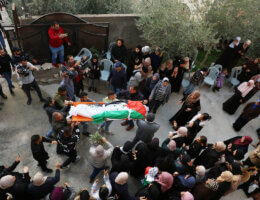
In recent weeks, Palestinians across the West Bank have organized themselves into small “battalions” of both armed and unarmed youth to confront the constant Israeli invasions of their villages and homes. Not much is known about them, nor about the youth that makes up these decentralized groups, but they continue to appear because Israeli army and settler provocation show no signs of waning.
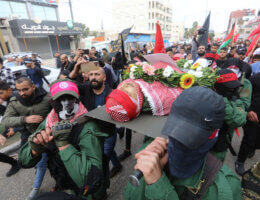
In one of the bloodiest weeks since the start of 2022, Israel kills 11 Palestinians in an attempt to make resistance too costly for Palestinians.