

Is there a statue of limitations on Nazi crimes? According to Haaretz last Friday, thousands of children of Holocaust survivors were about to file suit in Israel against the German government, demanding payment for therapy:
So far, some 3,000 Israelis have joined the suit, including reputed [reputable?] academics and performing artists. "I think it's time to raise the cry of the second generation, who bear the scars on their souls, and recognize them, too, as Holocaust casualties," wrote attorney Gideon Fisher, whose parents were Holocaust survivors, in the suit.
The suit describes, among others, the condition of five daughters of survivors who are suffering from trauma, anxiety and depression. One plaintiff, 55, is afraid of traveling on buses as they remind her of the trains that took Jews to the extermination camps. She is subject to panic attacks and takes tranquilizers.
Having met several children of Holocaust survivors, I accept that they suffer psychically from their parents' experience. Still, I find the tort dubious. The Holocaust took place 60 years ago. I wonder if some of the problem is not lacrimae rerum--or the tears in life, all life.
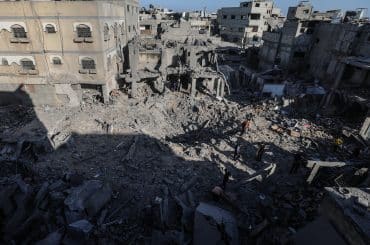
More important, what does this suit say about the issue of the Right of Return? Palestinian refugees demand a right to return to the land on which they lived and from which they were expelled in 1947-48 when the state of Israel was created. I have met some of these people too and can tell you that they suffer. In that case, of 59-year-old injustice, pro-Israel voices tell the aggrieved to "get over it." I believe Hillary used such language just last year, in her tough voice.
It is grotesque and selfish to insist on payment for psychic trauma, once removed from atrocities, and deny any cry of grievance by people who were forced to abandon their homes, often at gunpoint or fear of massacre.
(Thanks to Alex Chaihorsky for the tip.)
Thanks, Phil, for saving me two hours of writing the same post (but not as good) on the Magnes Zionist (
http://themagneszionist.blogspot.com/
You have added an extra sign above so your link does not work.
Sorry, in case I got this wrong.
Do you have a reference for Hillary telling the Palestinians to "Get over it"?
Follow-up: "A group representing thousands of children of Holocaust survivors filed a class-action lawsuit against the German government on Monday, demanding that Germany pay for their psychiatric care."
http://www.haaretz.com/hasen/spages/882429.html
Considering that Germany has paid more than $60 billion in reparations to concentration camp survivors and to Israel, while so many survivors in Israel live in dire POVERTY, this really looks preposterous, to say the least.
"Get over it"
The Clinton speech in question can be found at link to womenspeecharchive.org
.
Just search for "get over it."
Thanks to the speech's uniquely American message, it was uniquely offensive.
We do not normally tell a woman subjected to a brutal rape just to "get over it." And in this case the brutal rape is still in progress.
On the other hand from my vantage in Jewish studies, I would be more than willing to tell Ashkenazi Americans and Zionist interlopers, "Whatever grievances you think you have, get over it. Most of what you believe is either false or extremely distorted. As you expect Germans to show repentance and remorse for the evil and criminal acts of the German Nazis, you must now show repentance and remorse for the evil and criminal acts of Soviet and Zionist Ashkenazim."
$60 billion of reparations also sounds rather too low for the crimes committed against the native Palestinian population and the peoples of the former Czarist empire.
I think psychotherapy for the Palestinian people is a great idea. They have indeed suffered a traumatic injury, both from the Israelis and from their own internal fanatics. I'd be happy to contribute to a fund to pay for some of this treatment, just as I'd be happy to contribute to a fund to help those who suffered from the holocaust get over that trauma. And as the father of psychoanalysis I know that these traumas can deeply affect the next generation.
Perhaps after going through some treatment, both the fanatical orthodox Jews in Israel and the fundamentalist muslim Palestinians can get over their prejudice and oppression of gay men and women. Ironic since Arafat turned out to have been gay and died of AIDS (If you think I'm making this up do your own research).
Until ethnic Ashkenazim truly acknowledge the history of ethnic Ashkenazi genocidalism and show genuine contrition in the way that Germans have show contrition for German genocidalism during the Nazi period, the native Palestinian and other Middle Eastern populations have no reason to believe that the Zionist interloper population will refrain from committing the same sorts of crimes in the future that it has committed since the late 19th century in Palestine and that Soviet Ashkenazim committed during the creation and consolidation of the Soviet Union.
The Zionist interloper population is vicious, vindicative and self-righteous.
It is an extremely dangerous combination.
BTW, no one that understood the history of Palestinian factional conflict would take seriously any comments about Arafat by persons associated with the DFLP.
The French doctors…
Why would they lie?
So what if he was gay? Alexander was gay too.
Both the Jews and the Palestinians have been terrible victims, and both deserve our sympathy and support. A 2-state solution that recognizes the humanity of both groups is absolutely required. Those who oppose such mutual recognition of the other should exit themselves to Iraq, join a side and sow their genocidal oats in that nightmare of a place.
This is truly an excellent essay:
Palestinian statehood within a year
By Jerome M. Segal
Today, there is no Palestinian entity to which Israel can safely hand over the territories. Moreover, while the West Bank remains under occupation, Fatah will not engage in effective security cooperation. Were it to do so, it would be seen as ?the police of the occupation,? and its delegitimization would be terminal.
There is, however, a way to foster the emergence of a Palestinian partner. The key is to make security performance part of the process of ending the occupation, rather than a precondition for negotiations. Here is how:
1. Israel immediately opens negotiations on territorial and security issues with Palestinian leader Mahmoud Abbas, as head of the PLO. The negotiations include the future of both Gaza and the West Bank. Neither Jerusalem nor refugees are negotiated at this point. Except for Jerusalem, agreement would be sought on permanent borders (not interim borders as in the optional phase II of the "road map") and there would be mutual recognition by the two states. The agreement would be more than a hudna, but less than end-of-claims. In conducting negotiations, as president of all Palestinians, Abbas would consult with anyone he chose to, including Hamas leaders.
2. Upon reaching agreement with Israel on permanent borders and security arrangements, Abbas submits the treaty to a referendum. He requests that Hamas permit such a referendum in Gaza as well, under the supervision of the Palestinian Elections Commission and international observers. Hamas has previously said it would respect a referendum on a PLO-negotiated agreement, but if it refuses, the referendum is held in the West Bank alone. Because the agreement does not deal with refugees, the referendum is not open to members of the Palestinian diaspora.
3. If approved in a referendum, the treaty is deemed by Israel and the PLO as "ratified," and performance-based implementation begins:
? Israel recognizes the State of Palestine as the de jure sovereign of Gaza and the agreed-upon West Bank and swapped territory. Israel immediately withdraws its military forces from that portion of the West Bank where Palestine is most able to function as a state (that is, where it can exercise a monopoly of force). This would include the Jericho area and the border with Jordan.
? Israel begins dismantling settlements in all areas under Palestinian de jure sovereignty. Both sides undertake confidence-building measures, including prisoner releases, improved freedom of movement, and an end to incitement.
? Concurrent with Israeli military withdrawal and the assumption of de facto sovereignty over the initial area, the State of Palestine is established, explicitly based on the 1988 Declaration of Independence. The PLO designates a broadly based interim government, pending future elections, including members of Hamas, but only if they accept the ratified treaty as the law of the land.
? Palestine seeks international recognition and admission to the United Nations.
? Once the State of Palestine is established, the Palestinian Authority is dissolved. The new state exercises sovereignty where Israel has withdrawn; where Israel has not yet withdrawn, it serves as the administrative authority; and it claims sovereignty over Gaza, where Hamas continues to hold actual power. Provided that there are no attacks on Israel from Gaza, Israel would treat Gaza with benign neglect.
? As the new state demonstrates its ability to function as a sovereign, Israel extends its withdrawal of forces. This demonstration of capacity to actually exercise sovereignty is the necessary precondition for further withdrawal. This means disbanding all non-state militias and disarming or integrating into the state forces all individuals presently bearing weapons. Essentially, the state would be calling on Palestinians to accept it as the sovereign. If cooperation is not forthcoming, it could use other methods. In order for this process to be credible to Palestinians, a third party (such as the United States or the Quartet) serves as the "court of appeal" should Israel and Palestine disagree over whether the state has sufficient control to trigger Israeli withdrawal.
? Once Israel has fully withdrawn from all of the agreed-upon West Bank areas, Palestine will seek Hamas' acceptance of its sovereignty over Gaza as well. If this is actually accomplished on the ground, Israel, in accord with the security provisions of the treaty, will lift the air, land and sea blockade of Gaza. Provided it accepts the treaty as binding, Hamas will be offered the opportunity to function as a political party, without any armed wing, and to participate in new elections. With Israel offering to lift the blockade of Gaza, it is likely that Hamas will accept these terms for re- establishing Palestinian unity, under the authority of the new state. If Hamas rejects this offer and retains military control of Gaza, the status quo would continue, awaiting evolution prompted by the Gazans themselves.
4. Negotiations over Jerusalem and refugees would be conducted on a state-to-state basis. They would begin immediately after the first elections in the State of Palestine, to be held shortly after Israel completes its withdrawal from the agreed-upon West Bank territory. Resolution of those issues would satisfy, in the Palestinian dimension, the requirements of the Arab Peace Initiative for normalization of relations of the Arab states with Israel, and for an end-of-claims agreement between Israelis and Palestinians.
Jerome M. Segal is director of the Peace Consultancy Project at the University of Maryland's Center for International and Security Studies
I searched for Hilary Clinton's "get over it" remark but found myself unable to read anything more of her inanities after the comment quoted below. Can anyone who is more familiar with her career tell me: is this woman deliberately lying for political gain or is there just a chance that she is deceiving herself, together with her AIPAC-public.
"But in the short period that I have been given the honor of addressing you, I want to start by focusing on our deep and lasting bond between the United States and Israel. Now, these are bonds that are more than shared interests. These are bonds forged in a common struggle for human rights, for democracy, for freedom. These are bonds that predate the creation of the state of Israel, that really predate the creation of the United States because they are rooted in fundamental beliefs and values about the dignity and rights of men and women to live in freedom, free from fear, free from oppression. And there is no doubt that these incredibly strong bonds and values will remain as the lodestar of our relationship with our democratic friend and ally, Israel. Now, Israel is not only, however, a friend and ally for us, it is a beacon of what democracy can and should mean."
One way or another, Israel will spend this summer fighting the last war.
Never has a prospective war been more expected. Well before the Second Lebanon War was over, the Third was already being confidently predicted by a broad consensus of experts.
But even if the predictions of a new war are proven mistaken, the last war is likely to remain a focus of the nation's attention though the summer and beyond. Inquiries on the government's wartime failings are likely to monopolize the attention of a prime minister whose every calculation is keyed to political survival.
At the same time, there is every danger that in dealing with the fallout of the last war, the government will find ways to refrain from working to resolve issues that go the very heart of why the state of Israel was created, and why it continues to exist.
The problems represent critical tests of the very idea of Zionism. As such, the government may have every interest in trying to skirt them, ignore them, or otherwise dodge them. Here are five:
1. The new Palestinian refugees – the settlers of Gaza
Israel was not created in order to settle and hold the West Bank. Ironically, however, the 2005 disengagement from Gaza may serve to keep the West Bank in Israel's hands indefinitely.
Any future peace prospects will hinge on Israel's treatment of the Jews it expelled from Gaza. The logic is simple. Israel has shown itself unable or unwilling to find adequate permanent housing and satisfactory employment for less than 2,000 families evacuated from an area for which a large majority of Israelis felt no affinity and which polls showed most had wanted to abandon years before. How can the government then expect to win support for the expulsion of tens of thousands in the West Bank, an area which many more Israelis consider traditionally Jewish land.
And this consideration is brought into even greater relief at a time when Qassam rockets are still being fired from abandoned settlements into Israel ? some of them striking areas to which evacuated settlers have been moved.
The situation is oddly advantageous for the larger settlement movement, which can rest assured that the treatment of Gaza settlers, and the overkill evacuation of the illegal Amona outpost in January, 2006, coupled with Qassams, virtually guarantee that present settlements will remain where they are.
As such, the situation bears peculiar reminders of the plight of Palestinian refugees still in Gaza. For sixty years, Arab states and fellow Palestinians made strenuous efforts to enshrine the misery of the Palestinian refugees. They blocked efforts to resettle them in improved housing, and generally took advantage of their own and Israel's inaction, holding the refugees hostage for their own ends.
2. The refugees from Darfur
Israel was not created as a refuge for all the world's threatened and displaced persons. Nonetheless, when peoples are threatened with genocide and appeal for help, Israel cannot turn its back.
Jews cannot continue to complain about the world's silence during the Holocaust, if they are willing to stand on the sidelines while another people is systematically slaughtered.
In recent months, refugees from the Sudan, currently the site of the signal human rights atrocity in all the world, have made their way on foot through the Sinai desert and across the border into Israel. Government agencies and the Knesset have ducked and deferred policy decisions regarding their status. Soldiers who have picked them up as they cross the border, have been instructed to simply take them to Negev cities and leave them there. The government cannot decide how – or when, or whether – to deport them. The Knesset cannot even decide whether to discuss the issue.
"We as Jews are obliged to help not only Jews." Nopel laureate and Holocaust survivor Elie Wiesel told Haaretz last year. "I was a refugee and therefore I am in favor of admitting refugees."
"I thought it was very laudable when Israel became the first country to admit the Vietnamese boat people. History constantly chooses a capital of human suffering, and Darfur is today the capital of human suffering. Israel should absorb refugees from Darfur, even a symbolic number."
3. The people of Sderot
Sderot is a test case for Israel, and for the world as well. It is a daily target of war crimes violations. The world should pressure Hamas to stop rocket attacks targeting civilians. The world has shown itself unwilling. Israel's military efforts have also been unable to stop the attacks.
In the present reality, protecting the people of Sderot and the western Negev must be a primary priority of the government. Resources must be marshaled, here and abroad, to make certain that homes, schools, and workplaces receive proper reinforcement, that children and adults receive needed psychological support.
Israelis must redouble their efforts to show the people of the western Negev that they are not an expendable appendage, but that their resistance to what Palestinians have laughably called "resistance" is crucial to the future of all Israelis.
4. Economic support of destitute Holocaust survivors
Over the past year, Israelis have learned in detail that large numbers of the hundreds of thousands of Holocaust survivors in the country are living in poverty. Knesset Speaker Dalia Itzik has announced that she will seek to block passage of the State Budget unless and until the treasury agrees to address the needs of survivors.
If the effort fails, this will be the surest proof that the very foundation of the state has been sold to finance some Thatcherite ideal.
5. The end of the People of the Book
In large part, the Jewish people, and the state it created, are alive today because of education. Unsexy, not violent, the subject barely draws yawns in crisis-inured Israel. But public education is being allowed to die a slow death. When it does, the rest of this enterprise will not be far behind.
Sorry Phil Weiss, but you just perpetuated a CANARD on Hillary. She was rather tough on the Palestinians, but the "get over it" was in an entirely separate part of the speech. About how people in the Middle East IN GENERAL have become prisoners of their history: "History has weighed heavily on the Middle East . . . It can get better, just get over it." She's basically just engaging in the usual optimistic pablum about how barefoot people really can pull themselves up by their own bootstraps if they just put their minds to it. She wasn't specifically referring to the Palestinians.