

Among the most powerful ways people have learned about the Gaza genocide over the past two and a half years has been from the heroic efforts of Palestinians in Gaza to tell their stories. A new book shares among the most powerful testimonies collected to date, and will surely be a reference for generations to come.
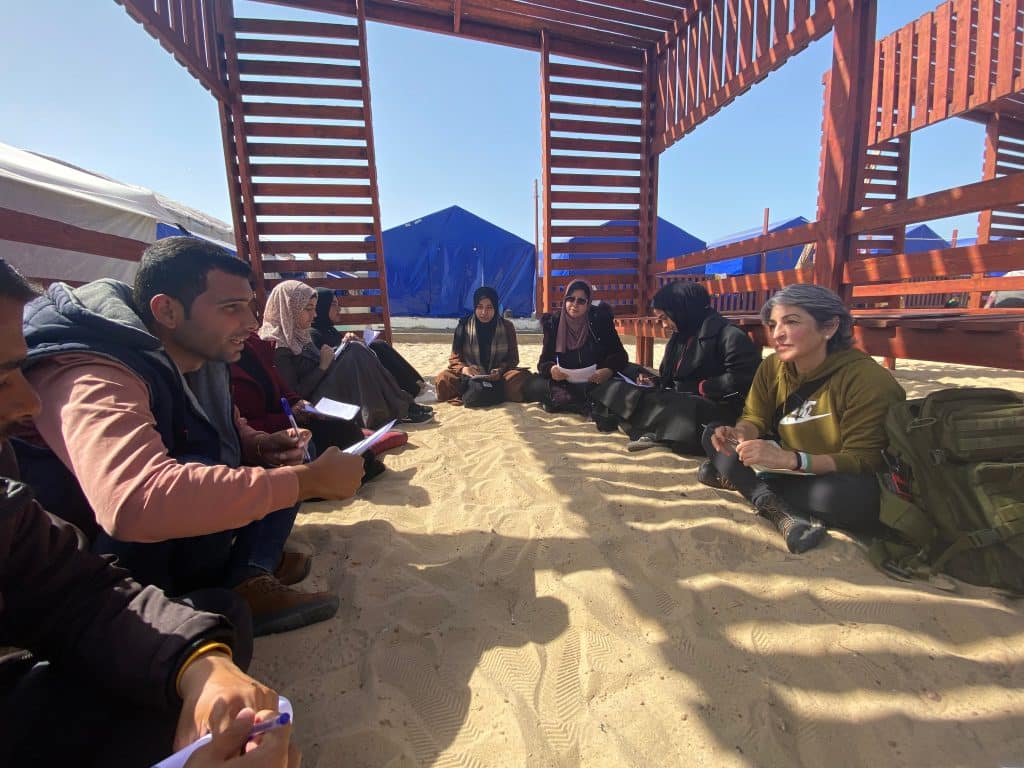
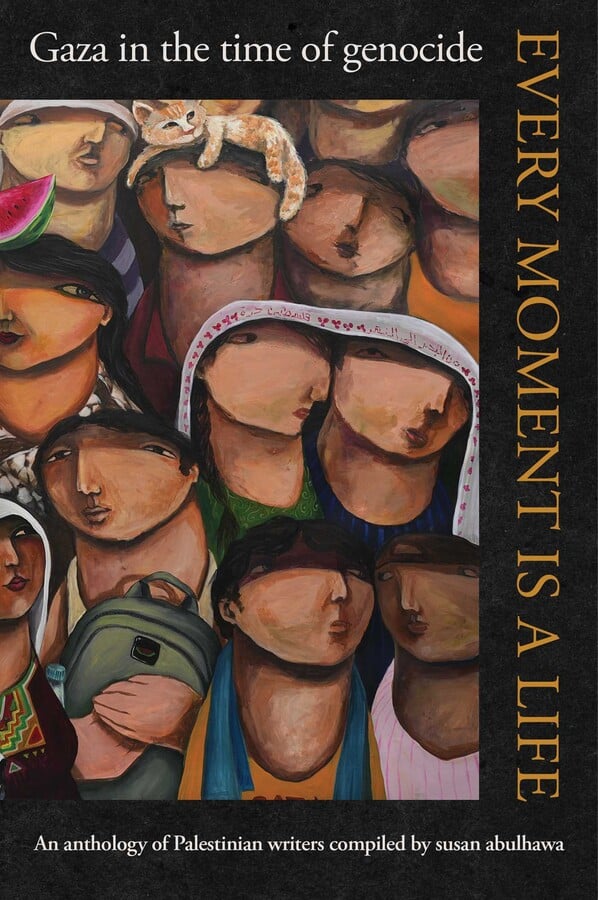
Every Moment Is a Life shares the stories of 18 Palestinian writers and was the product of workshops that author susan abulhawa gave through a community organization during multiple trip to Gaza during the genocide.
I was excited to get a chance to interview abulhawa about this incredibly powerful book. Abulhawa is an internationally bestselling novelist, poet, and activist whose books Mornings in Jenin has been translated into thirty languages. We talked over Zoom to discuss the process that led the book, her experiences with the writers, as well as what she is taking away from her time in Gaza.
Mondoweiss: Thank you so much for finding time to talk. The book is a great accomplishment and I know it has an amazing backstory, starting with you traveling to Gaza during the genocide. How did this book come to be?
susan abulhawa: When I first went into Gaza, we were all bewildered and unsure what to do, how to help, how to be of service, how to stop this. And we were all just overwhelmed. We still are. But at the time, I thought, okay, I’m just going to figure out how to get there. My first attempt landed me in jail in Egypt. And then the second attempt, I took a different route, I used my medical credentials from way back when. I went in with a delegation, and I brought in a ton of aid, which was a drop in the ocean, really, compared to what people actually needed. And I listened to people, I collected stories, I bore witness, I helped where I could, and I brought medication where I could. But it just wasn’t enough.
Towards the end of my trip, one of my friends – who runs an organization called the Culture and Free Thought Association, which I highly recommend if anybody’s interested in giving to Gaza – asked me if I would do a writing workshop for young people.
When I went, I was just really struck by these young people who showed up – and even more so when I realized what they had to go through to get there. That first session was really just introductions, and we did a few writing exercises, and I realized that these young people risked so much to get there. For some of them, it was a mortal risk, and they spent money that they didn’t have. Of course, the art organization reimbursed them, but still, they didn’t know that at the time. In one case, it took them two hours to get there. Getting anywhere in Gaza takes a really long time, even if it’s a short distance, just because everybody’s really crammed. And even if you have a car, you just can’t go more than five to 10 miles an hour because there are no open roads.
And they did it really because there are no outlets for intellectual refuge, really. There are no outlets for creative expression. These are all young people who lived solidly middle-class lives. They had dreams. They were going to university. They were in medical school. They were starting businesses. They were getting married. They were having kids. And suddenly, not only were their homes and everything they had completely destroyed, not only were their relatives killed, people they loved murdered, not only were they just living with this extraordinary trauma, they were suddenly trying to contend with living in tents and sharing bathrooms with hundreds of people – but they also had their dreams demolished, their futures were taken away from them, everything that they took for granted in life was shattered. And they were grasping at straws to just feel like they had a voice, that they still had something to contribute to the world, that they were still part of the world, that they still mattered. And I recognized that. It was a real epiphany for me because I was trying to figure out what I could do. And it occurred to me then that, okay, I can do this. I’m uniquely positioned to impart whatever writing skills I have to people who have lived this extraordinary historic journey of barbarism, so they can narrate their own stories. And that’s what we did.
So I promised them I would try to come back, but nobody believed me. And so when I did come back, it was especially fun, and it felt hopeful. And I told them that I was going to try to put this in a book. So we worked on it, and we had eight more workshops. There were tears, storytelling, laughter, people singing songs, and it was really special. And their stories evolved over the course of these workshops. It was really wonderful to see, and I got to know them.
And then the publishing journey itself was quite a story. Initially, we were just going to self-publish it under Palestine Writes, and then we sold it to Simon & Schuster. Everything was written in Arabic, and I can read and write Arabic, but it’s not sophisticated enough for me to write my own Arabic and literature. And so I asked my friend Huzama Habayeb if she would work with them just to edit the pieces a little bit. She did, and then I translated them, and Kay Heikkinen also helped translate some of them. Then we had this incredible offer from Simon & Schuster to publish a bilingual edition, which is hardly ever done here in the U.S., so it was really wonderful.
I was floored by the stories in this book, each one just hit me on such a profound level, and I want to talk about the stories and the authors. As I was putting my questions together, and this is going to sound so cliched and trite, but really all of my questions are going to be around the power of stories, both for the storyteller and the reader.
Let’s start by talking about the authors and storytellers you met in Gaza. You didn’t only talk with the authors in the workshops; you also met with women in the hospital who started sharing their stories with you, which you refer to in the introduction as a form of indigenous therapy: women sharing their stories and supporting each other. Can you tell us something about engaging with these writers and storytellers? What was the process, and what do you think they got out of it?
So initially, I asked them all to come to the next session with any kind of draft – don’t worry about it being badly written, just write a story. And what we did was each person read what they had written. Sometimes it was fully formed. Sometimes it was, you know, just thoughts. And then we would go around the circle, each person would critique that story, and I would be the last to offer feedback.
Over time, as the stories evolved, their critiques also evolved. In the very beginning, all the stories were the same. Every single one of them had their home demolished. Every single one of them had lost family members. Every single one of them was living in a tent. They were all struggling with the same things. This is where the workshops started, where we really tried to tease things out. We talked about honing in on a single moment and allowing the reader to extrapolate the bigger story – the reader will know you’re in a tent if you talk about the walls flapping, right? And they rose to the challenge beautifully, as you can see. The stories are all unique, and they’re sensory. This was the other thing we tried to work on.
I originally wrote about these storytelling circles and how the women cried after I prodded them. I got all this criticism from other Western women, basically saying that you’re not a professional psychologist, you shouldn’t be doing this, you could be doing more damage, etc. This is such a Western framework that bears no resemblance to the lived realities of other people, this idea that the only person who can help you heal is a trained professional in an office setting. As if we didn’t have our own traditions that are hundreds of years old. That’s why I was keen to explain that these are indigenous healing circles.
When I was talking to these women initially in the hospital, these were all women who were recovering, but they were with their babies, their children. It was a recovery from a serious physical trauma, but some of them had serious psychological trauma as well. Most of them had been pulled out from under the rubble, they had been bombed, or they had been near a bombing, and they were telling me their stories in a very detached way, like, you know, “our house was hit, and then they pulled me out from under the rubble.”
And the thing is, as a writer, I know that what they’re narrating is a kind of metacognition in a way. It’s what they learned after the fact, right? Because it’s your brain’s interpretation, it’s a narrative that has replaced the actual sensory details. And I kept prodding them: “But you didn’t know at first that your house was hit. What did you see?” I really wanted them to give me the sensory details, right before their brain made sense of everything that was happening, something else that was really raw and purely sensory. Then the real story started coming out: “I saw a flash of red light, and then I felt a weight on my back, and then there was gravel” – that’s the real story.
And when they started telling me this, they were crying, and I think it was the first time, because they had told this story many, many times to others. But when they started remembering the actual sensory details, it had a different effect. It touched them in a different way. And as a writer, this is what matters, right? This is the heart of storytelling. It’s the sensory details. It’s taking the reader with you into what happened. It’s allowing them to witness what’s happening. And that’s what we worked on.
For example, Khadijah had to make a decision about burning her brother’s bed because there was no wood to build a fire, and it was all she had left of her brother. So she just let the reader into her heart, in this whole decision-making process to relinquish her brother’s bed and how that felt and what it looked like, what the bed looked like. And then Diana Slaya, who takes us with her as she’s waiting in line to use a shared bathroom for the first time in her life.
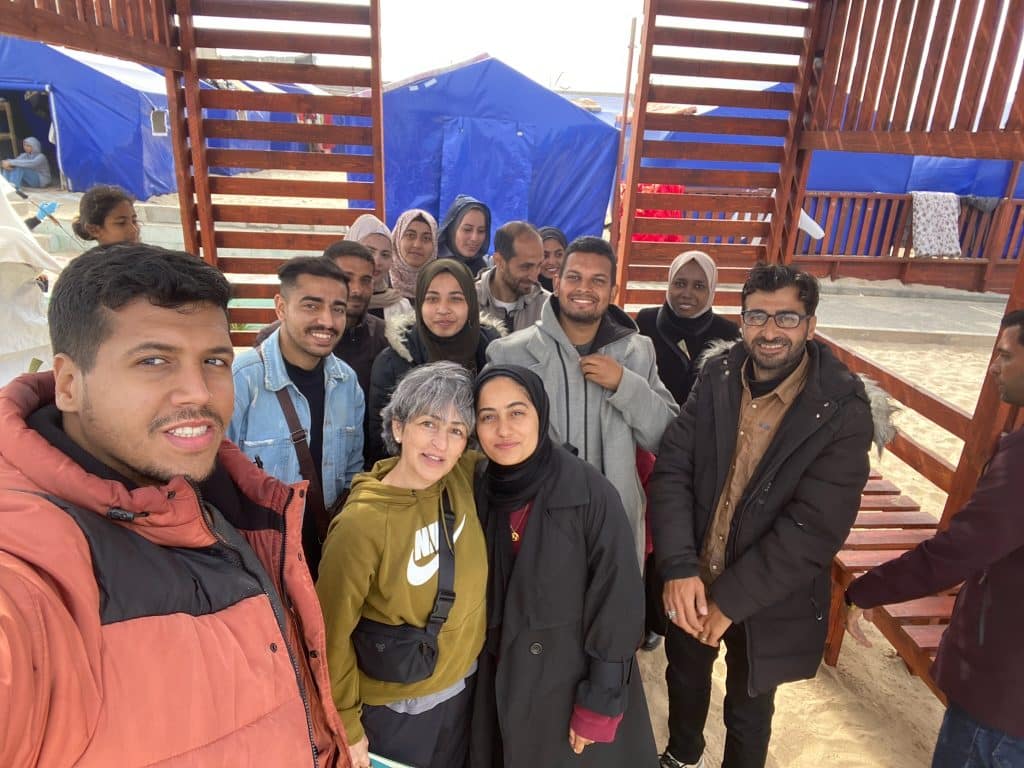
One of the things that I love that you wrote in the introduction is that “while these writers came to learn from me, I was learning from them. Because I don’t know anything about what it’s like to bury family without space to grieve.” And you list these other things the writers experienced and you write, “but they do. And they show me what it’s like to gather oneself up and see creativity and beauty.”
I feel like that’s what I learned from reading this book, too. I learned how to be a heroic, brave, vulnerable, and devastated person in the midst of a holocaust. There’s a degree to which reading the stories in this book is really learning about human experience and learning about humanity.
Can say more about what you learned from this experience? What have you learned from these young people? What have you learned from these stories?
Honestly, it’s so humbling to be around people who are just extraordinary. They’re very ordinary people in the most extraordinary circumstances. And as much as one tries to imagine, and when empathy is a skill that we always have to hone no matter what, even I, who saw it up close and personal, sat with it, heard the bombs, smelled the stench of death, and all of these things… I still knew I was going to leave and that there was an exit for me.
So, while I know what I learned is that I will never truly know, but I know that it is devastating. And for people to still get up every day and live with that devastation day in and day out and see the world kind of just looking away… I learned that I will never forgive Israelis. I learned that we may never forgive the world.
I think maybe you and others have noticed that my public speech has been altered. It’s more aggressive. I would say it’s more honest, because I have been altered by it. I have been completely changed to see the kind of cruelty that I witnessed. The degradation, the total and utter dismantling of a society, and to know the people who are living in this, to love them and to know what they have to endure and to be spared myself, I’m enraged. I learned that I don’t want to censor myself. I learned that we all have to pay a price. Anybody who wants to effect liberation in the world has to be willing to pay a price.
I have a friend who lives in the north [of Gaza]. He was actually living through the starvation in the north early on. He was a young man from a relatively well-off family in Gaza, and he had just gotten engaged. It was a big family, and they had homes in the same area. All of their homes were destroyed, and his car was gone. Members of his family were killed. Of course, you know, the wedding was off, everything was gone. This guy is like 20-something years old, and he said to me, “You know, freedom’s not cheap.” I will never forget that. It was just so humbling. This kid is half my age, and he said it with so much poise and conviction. He believed it. This is the price we pay. And I remember thinking, I need to pay a price too. And whatever the price is going to be, I’ll pay it.
I also learned that all the things that we are told to value in this society and in the world aren’t real. They can be taken away at any moment. They’re not real, and they don’t matter ultimately. I’m still learning from people in Gaza who fight to the death, who go into battle knowing they’re going to die, but they’re going to fight, because they’re not going to take their last breath on their knees.
There are lessons there for all of us to learn. And I learn from them every day. I don’t say this to romanticize their suffering. It should not be romanticized. It’s horrific. But they are teaching, they’re teaching the world so much. They are removing all the veils.
There’s so much that could be said about that, which I think we won’t go into, except that I think so much of what you were describing is an experience that many people have been having in trying to process and understand and learn from the resistance in Gaza and being inspired by it. That really resonates with me.
Exactly. And I always make a point to say that because I don’t appreciate the way that they are denigrated, that they are presented as if they are something toxic outside of Palestinian society in Gaza, when in fact they are our sons, and our brothers, and our fathers, and they’re heroes, epic heroes.
My last question actually takes us a little bit outside of this book project. You referenced Palestine Writes earlier. Palestine Writes is a Palestinian arts organization here in the U.S. with a book imprint, and many people will be familiar with it as the organizer of a literature festival here in the U.S. The last Palestine Writes Festival was in September [2023], right before October 7, in Philadelphia at the University of Pennsylvania. And it created this entire firestorm at the University of Pennsylvania, which was really a precursor to the moral panic on campuses that we saw after October 7th.
It’s actually still there. It’s still ongoing, some kind of congressional investigation into antisemitism. It’s insane.
Exactly.
You’re not only an accomplished writer and novelist, but also an activist engaged in this war of ideas and discourse on Palestine in the U.S. for a long time. We are now over two-and-a-half years into the genocide, but again, this didn’t start on October 7. You mentioned earlier that your own language has shifted over this period. I think we are seeing many shifts in language and ideas. I would never even call it a silver lining, but there is this element that, as horrible as what’s documented in this book is, Israel has never been more hated than it is now. The mask is off, and you see it in poll after poll in the United States, that people in the U.S. are coming to reject Israel and expecting more of, say, our elected leaders.
I wonder, how have you seen this discursive shift during the genocide in these last two-and-a-half years? And is that something you find, I don’t know if the word would be ‘hope,’ but comfort in?
Yes, it’s a hell of ah a price to pay just for people to wake up, right? We say this a lot: all the masks are off. But Zionism, imperialism, and capitalism are so resilient. And they have been pushing back with the full might of the legal system, the media gatekeepers, the propaganda, and so forth. And it’s just fascinating that all of their attempts with all of their resources, their money, and their power, are failing because the truth has a way of finding the light eventually.
There’s a lot of work to be done, but I think the overarching victory or triumph, if you will, in this is that people have seen enough to make them not just question Israel or hate Israel, and rightly so, as the whole world should hate them and isolate them, but also to understand that all these myths that we have lived with – myths like the free press and democracy and freedom of speech – it’s all bullshit, none of it is real, they will take it away when they want. And that’s exactly what they’re doing. We see this on display, especially in the UK, where the Filton Six or what they’re doing to Dr. Rahmeh [Aladwan]… they’re like just silencing people in this country, people are losing their jobs left and right, and then of course the algorithms are silencing all of us and shadow-banning all of us.
Yes, and books like this are helping open people’s eyes, helping to get around those gatekeepers. The truth is obvious, and this book will be one that lives on for generations, letting people know what happened in Gaza during the genocide. So thank you for that.
And I really appreciate you giving these young writers space. I really mean it. This is one of the proudest things I’ve done, to amplify voices that would have never been heard before.
Adam Horowitz
Adam Horowitz is Mondoweiss’s Managing Editor.
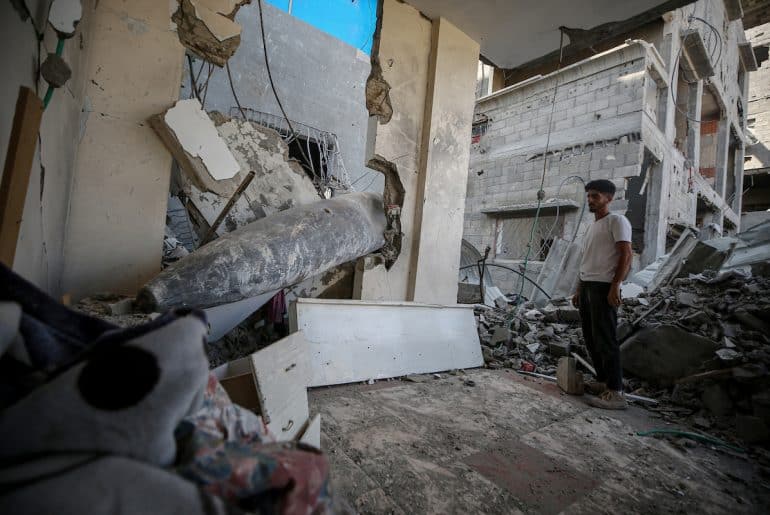
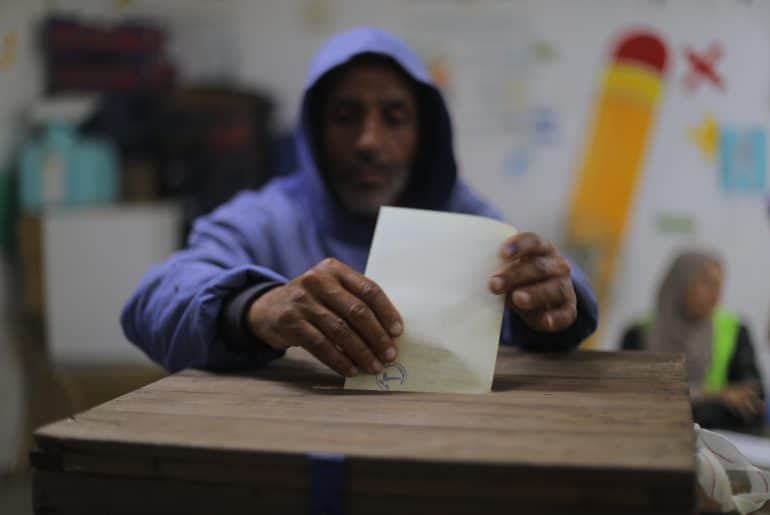
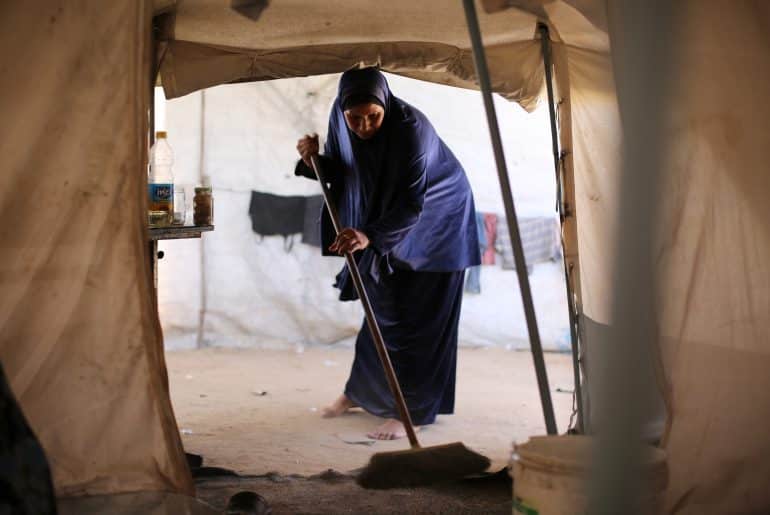
“They had dreams. They were going to university. They were in medical school. They were starting businesses. They were getting married. They were having kids. And suddenly, not only were their homes and everything they had completely destroyed, not only were their relatives killed, people they loved murdered…”
I was struck by one word :Suddenly.
Suddenly? Wasn’t there something that happened “suddenly” and caused all this suffering? Right, and the word “Hamas” – absent from this piece…
The writer will never forgive Israelis. Does she forgive Hamas?