

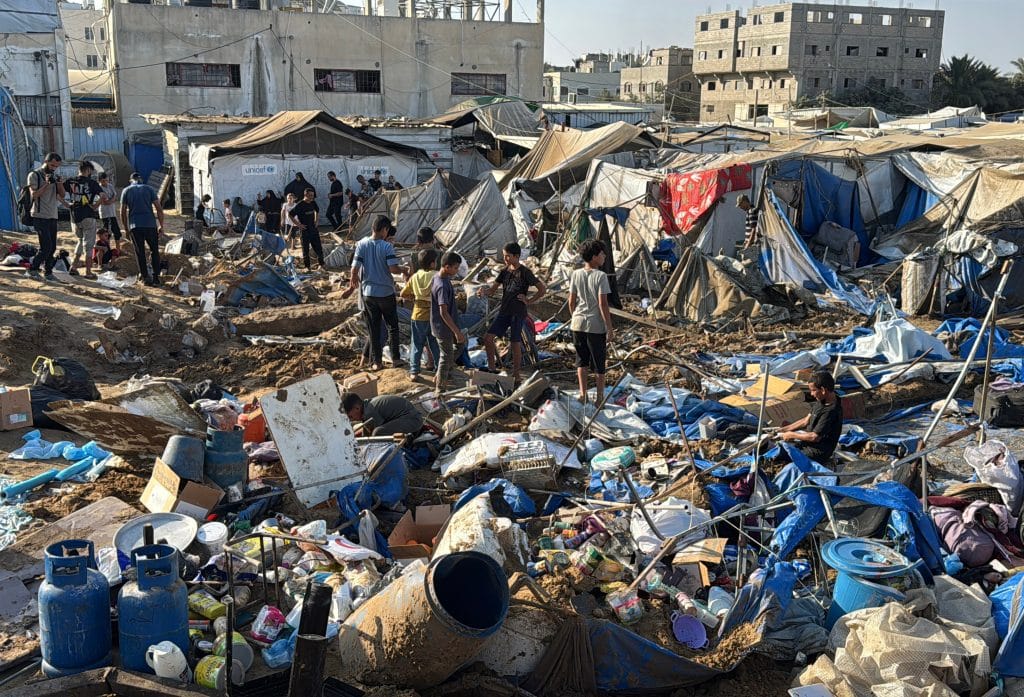
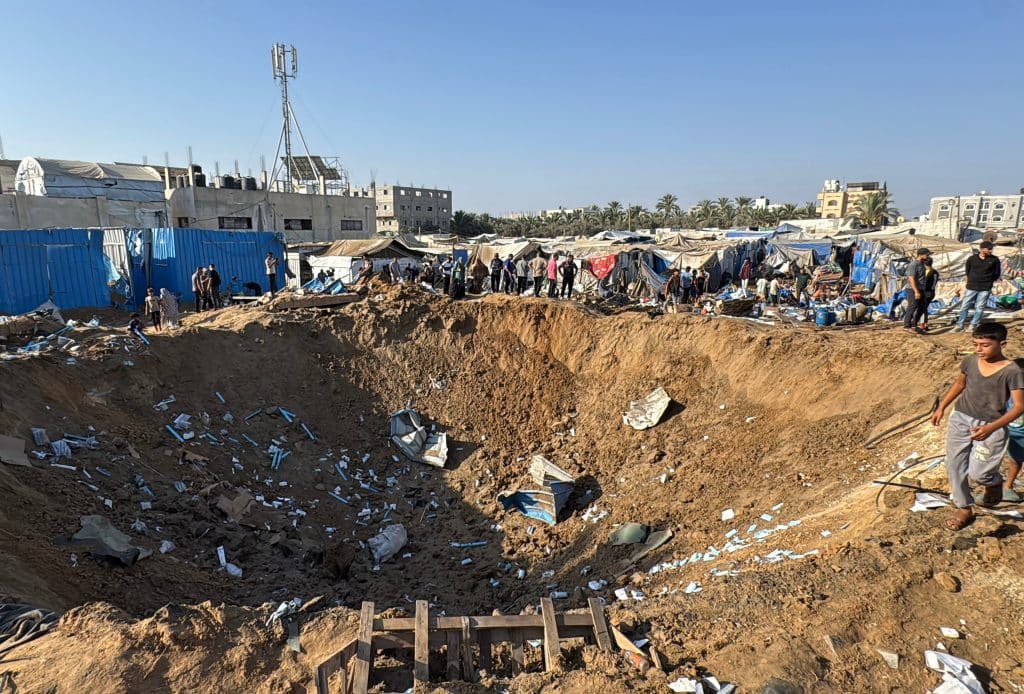
Before dawn on Sunday, August 2, the Israeli military struck a pharmaceutical warehouse adjacent to al-Aqsa Martyrs Hospital in Deir al-Balah, central Gaza, in what Palestinian health officials described as the latest step in a systematic campaign to dismantle Gaza’s healthcare system.
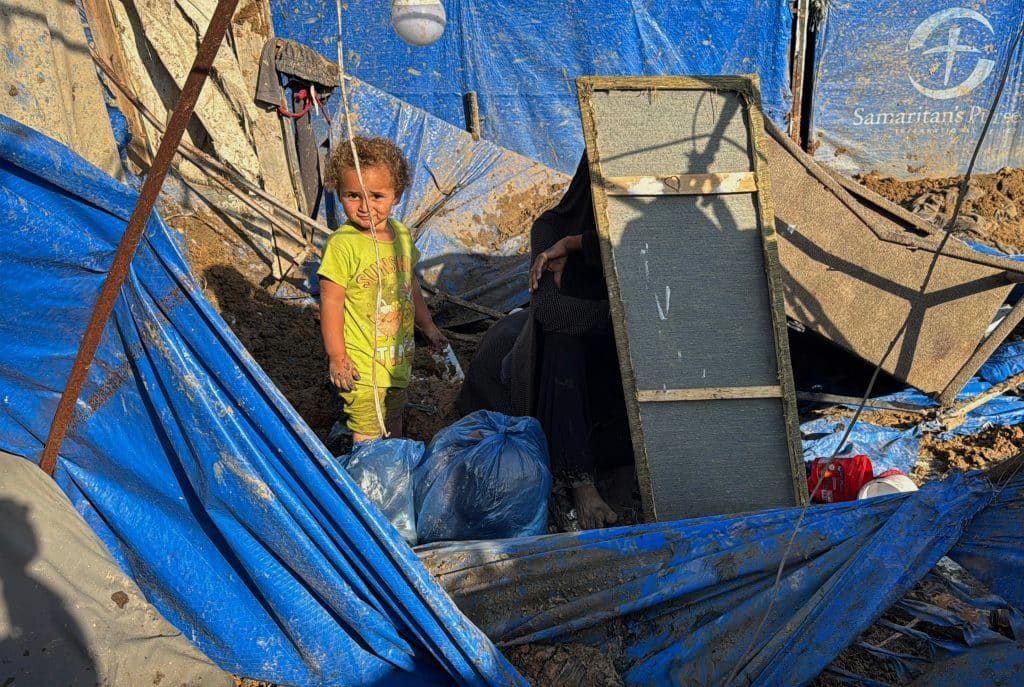
The attack inflicted extensive damage beyond the targeted facility. Two of the hospital’s four medicine warehouses were completely destroyed, while the remaining two sustained severe structural damage, the Gaza Ministry of Health said in a statement. The blast also tore through dozens of tents sheltering displaced families who had sought refuge inside the hospital compound after losing their homes.
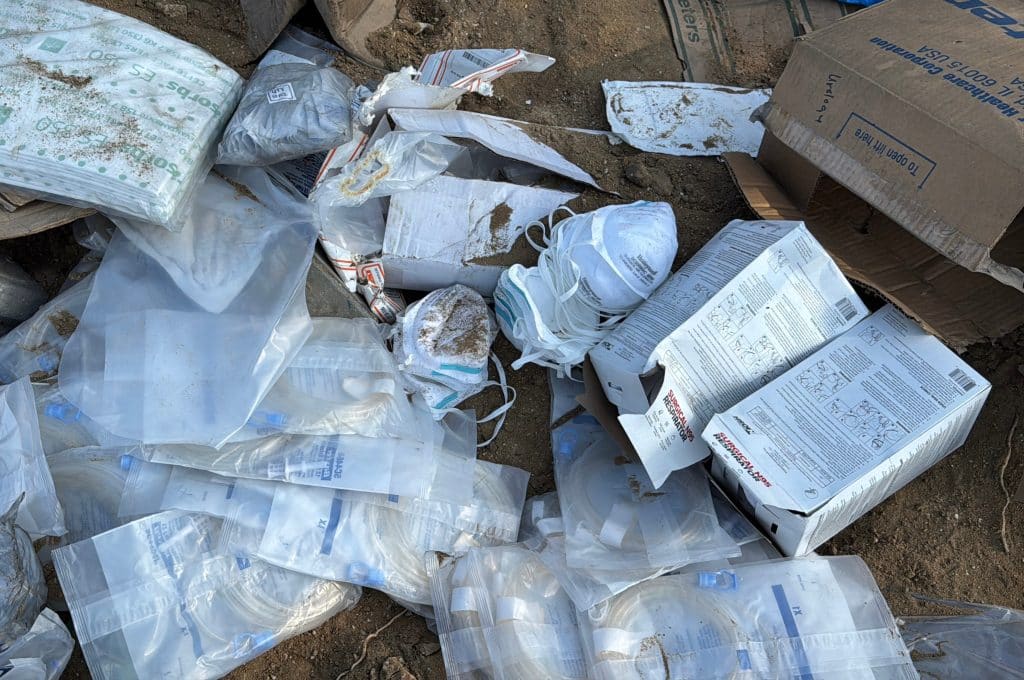
According to the Health Ministry, the strike also caused significant damage to a nearby outpatient clinic building and destroyed already critically low stocks of medications and medical supplies.
“The attack came on top of months of restrictions on the entry of medical aid and the continued prevention of thousands of patients from traveling abroad for treatment,” the statement added, describing Israel’s strikes as “systematic and deliberate.”
Since the beginning of Israel’s genocide in Gaza, the healthcare system in the Strip has been battered by overlapping crises. Medical facilities have come under repeated attack, with hospitals and clinics damaged or destroyed across the Strip. Of the hospitals that once served Gaza’s population, only a small number remain operational and continue to receive patients.
Dr. Khalil al-Daqran, spokesperson for the al-Aqsa Martyrs Hospital, said that Sunday’s strike was part of that broader assault on Gaza’s health sector. “The occupation seeks the complete collapse of Gaza’s healthcare system,” he said. “The missiles completely destroyed the warehouse, leaving behind a massive crater and placing large numbers of patients in grave danger.”
According to al-Daqran, the destroyed warehouses contained medicines for patients with chronic illnesses, including kidney disease. With those supplies now destroyed, he warned, many patients face an immediate threat to their lives.
He noted that medicines reaching Gaza’s hospitals are largely supplied through international organizations such as the World Health Organization, but that Israel “shows no regard for international law or international organizations,” citing the destruction of the warehouse as evidence.
‘I watched my father die of cancer. Now it’s my son’s turn’
Six weeks ago, Jihad Abu Hamida, 61, was battling cancer while struggling to survive in Gaza’s collapsing healthcare system. Displaced to the Al-Mawasi area of Khan Younis after his home in the city was destroyed, Abu Hamida never received the treatment he needed to fight the disease. Within six weeks, he died after months of inadequate care, as his family was unable to obtain the medications he required or secure permission for him to leave Gaza for treatment abroad.
His son, Ali Abu Hamida, 41, said the family exhausted every possible avenue, contacting organizations and authorities inside and outside Gaza in an attempt to save his father.
“We fought for him and reached out to everyone we could, but nothing worked,” Ali told Mondoweiss. “My father died before my eyes while waiting for a chance to receive treatment.”
The family’s ordeal did not end with his father’s death.
Ali said his own son, Abdulazziz, 14, suffers from multiple heart and kidney conditions and, before the war, regularly traveled to hospitals in the occupied West Bank and Jerusalem for specialized treatment. Since the outbreak of the war in October 2023, however, he has been unable to continue his medical care. As a result, his condition has steadily deteriorated and has now reached an advanced stage.
“Now I am watching my son die before my eyes, just as I watched my father die,” Ali said.
He said his father died because the treatment he needed was simply unavailable. Today, he watches his son’s health worsen day by day. The child has also developed symptoms of severe psychological trauma brought on by constant fear of bombardment and the inability to continue treatment.
“In every other country, governments and humanitarian organizations care for patients and provide them with the treatment they need so they have a chance to recover,” he said. “Only in Gaza are patients deliberately left to die while the world watches their suffering without offering them any real help.”
“This is the occupation,” Ali added. “This is what it has done to our daily lives. Illnesses that are treatable elsewhere become fatal here because people cannot access basic medical care.”
Medical shortages leading to 3 cancer-related deaths a day
Stories like those of Ali Abu Hamida are part of what the Gaza Health Ministry calls Israel’s “silent extermination” of patients amid the genocide, according to a statement it issued on Monday.
The Ministry said Israeli restrictions continue to block and severely limit the entry of medicines into Gaza, with incoming supplies falling far below minimum medical needs. Cancer and hematology drugs are among the hardest hit, with shortages reaching 61%, placing oncology patients at “imminent risk of death” due to the interruption of treatment protocols, the Ministry said.
According to the ministry, medicine shortages have reached 47%, while medical consumables shortages stand at 58%. Laboratory testing materials are in critically short supply, with shortages reaching 85%, raising fears that many essential diagnostic and therapeutic services could soon cease altogether.
The ministry said shortages now affect nearly every major area of healthcare. Medicines for maternal and child health are down by 56%; primary healthcare medicines by 55%; kidney disease and dialysis medications by 46%; psychiatric and neurological medicines by 35%; emergency and intensive care drugs by 33%; surgical supplies by 39%; and orthopedic materials by 48%.
It added that severe shortages of laboratory testing supplies are directly undermining physicians’ ability to save lives. Among the most urgently needed are complete blood count (CBC) tests, blood gas analysis, and clinical chemistry tests, all of which are essential for the daily management of critically ill patients in intensive care units and surgical departments.
In another statement, the ministry said, “the crisis facing cancer patients has reached catastrophic levels, with three patients now dying every day because of the absence of specialized treatment.”
Dr. Muhammad Abu Nada, the medical director of the Gaza Cancer Center, warned in a video statement published by the Ministry of Health of an unprecedented deterioration in the condition of cancer patients across the Strip. Approximately 11,000 cancer patients are now at risk due to severe shortages of essential medicines and continued restrictions preventing travel for treatment.
According to Abu Nada, the collapse of specialized cancer care and the absence of essential therapies have resulted in three cancer-related deaths every day. Around 4,000 patients hold official medical referrals for treatment or diagnosis abroad but remain unable to leave Gaza because of border closures.
The destruction of specialized treatment centers, Abu Nada said, has forced physicians to make increasingly drastic clinical decisions. In some breast cancer cases, including patients diagnosed at an early stage, “doctors have had no option but to perform full mastectomies because radiotherapy is unavailable and patients cannot travel abroad to receive treatment.”
Tareq S. Hajjaj
Tareq S. Hajjaj is the Gaza Correspondent for Mondoweiss and a member of the Palestinian Writers Union. Follow him on Twitter/X at @Tareqshajjaj.
Re extermination of Palestinians:
Dr. Shmuel Lederman** has written a 27 page report, written in 2026, titled “Data For Denial: the Smoke Screen behind Gaza’s Starvation”. The whole thing is in Hebrew – while I can translate sections, I haven’t found a way to translate the whole thing. Are there are Hebrew speakers out there who can summarize this piece? One of the last paragraphs:
“Such starvation is extreme. In recent years, this norm hasn’t stopped various countries from using starvation as a weapon, often with the backing of powers that have declared it a crime in the Security Council. But it’s doubtful that any other case has challenged this norm quite like the systematic, meticulous, and openly visible starvation of Gaza by Israel — due to the significant support for this policy from Western powers, led by the U.S., the same countries that claim to lead a world order…”
But there is an article about this report in English:
Israeli study finds starvation in Gaza was result of deliberate policy…Scholar Shmuel Lederman says policies point to a systematic ‘architecture of starvation’ amid public and political denial….Its author, Shmuel Lederman, an Israeli scholar specialising in genocide studies, told Middle East Eye that he was motivated by what he described as widespread denial within Israel over starvation in Gaza during the two-year genocide that began in October 2023….He said such denial among the public was to be expected, drawing comparisons with historical cases of mass violence.
“There is a thirst for denial,” Lederman said, with many in Israel seeking to portray the army’s conduct in Gaza and elsewhere as entirely justified or unproblematic….The study documents how restrictions on aid, fuel and cooking gas, alongside the destruction of key infrastructure such as bakeries and disruption to humanitarian operations, severely limited Palestinians’ access to food….The Gaza Strip, Lederman’s report argues, was used by Israel as a kind of laboratory, with implications that extend far beyond the territory itself.
Israeli study finds starvation in Gaza was result of deliberate policy | Middle East Eye
**
Shmuel Lederman – The Open University of Israel
“The Open University of Israel, Department of History, Philosophy and Judaic Studies, Lecturer, University of Haifa, International MA program in Holocaust Studies, Lecturer”