

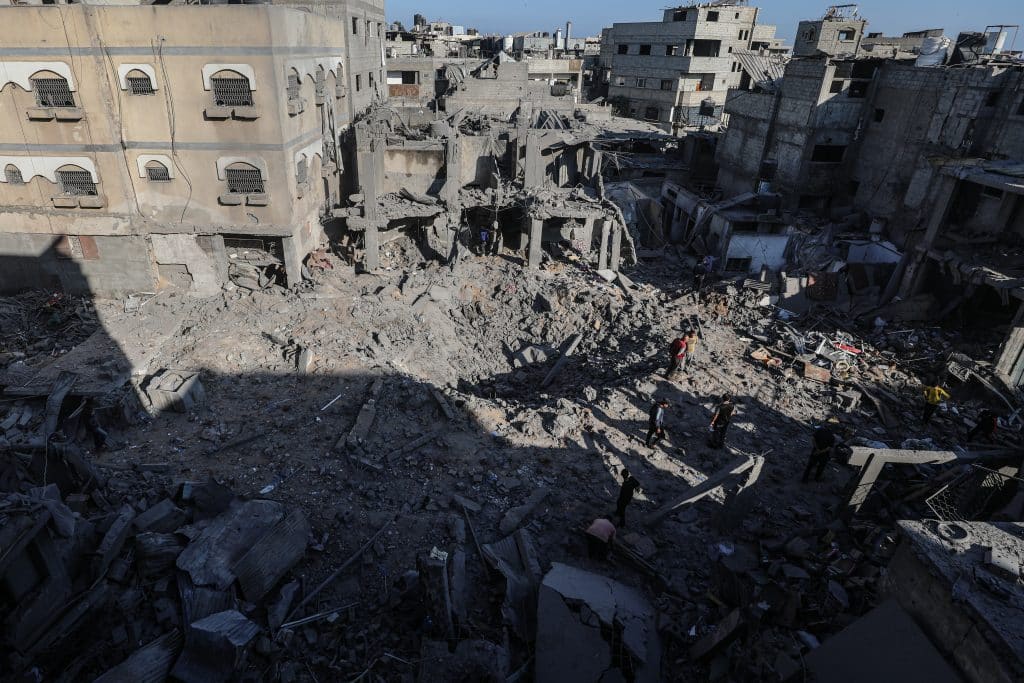
On May 24, Karam Ismael, 43, received a phone call from someone who identified himself as an Israeli army officer. The caller delivered one message: evacuate your home in 20 minutes before we bomb it. At first, he thought it was another scare tactic, similar to the messages the Israeli army used to send during incursions into neighborhoods. It was one of several calls made to residents of Nuseirat refugee camp in central Gaza, with a warning that covered residential blocks near al-Quds Supermarket and a local UNRWA clinic. The area included dozens of homes that had not previously been bombed throughout the past two years.
Four minutes after receiving his first call, Ismael’s phone rang again. The officer told him they had 10 minutes left, ordering him to evacuate immediately and to notify his neighbors. This time, he took the threat seriously and fled with his neighbors, leaving his belongings behind.
After half an hour, quadcopter drones appeared and hovered above the residential block, followed by the fighter jets. The entire block was leveled.
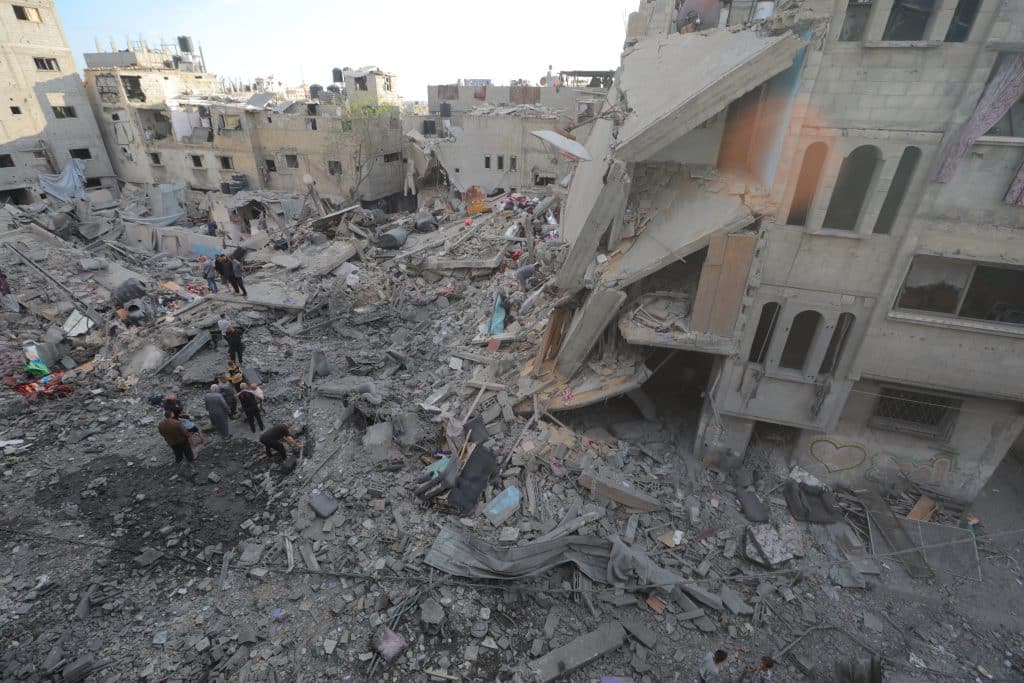
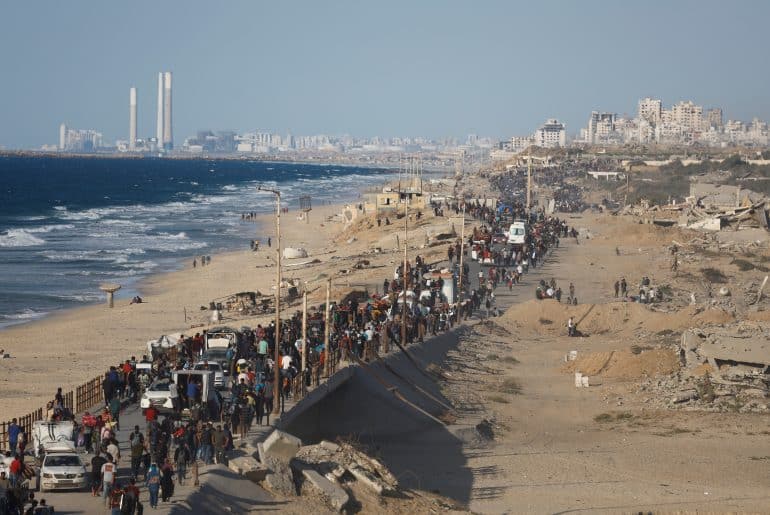
This was not the first such incident in recent weeks in which the Israeli army warned entire residential areas to evacuate and then bombed their homes. The Israeli army has been following a new pattern during the ceasefire: targeting residential blocks that had not experienced a ground invasion and had not been bombed during the war, remaining intact and still sheltering their owners. Over the past week, the army appears to have escalated this approach by specifically targeting residential blocks that had previously remained undamaged.
The officer who had called Karam Ismael stayed on the line with him for more than half an hour, making sure everyone had left. When Ismael asked which house they were targeting, the officer cut him off. “That’s none of your concern,” he recalled being told. “Just inform the neighbors.”
Over the past week alone, the army struck residential blocks belonging to the Al-Kurd family in Nuseirat on May 22, the al-Khatib family in al-Bureij and the Abu Shamala family in al-Maghazi on May 23, and the al-Tawil family in Nuseirat again on May 26. In each case, the pattern that emerged was clear: civilian residential blocks with no apparent connection to military activity were bombed for the first time in the war, displacing their families for the first time as well.
The escalation comes as Israel has been openly threatening to resume the genocide in Gaza. After Palestinian factions refused a U.S. demand to disarm, rejecting conditions put forward by Trump’s envoy Nickolay Mladenov in mid-April, Israeli media reported that the army was preparing to restart operations “as early as next month.” Netanyahu signaled the same after the U.S.-Iran ceasefire, stating that Israel would now “focus on Hamas.” According to reporting by Drop Site News, Mladenov presented Hamas with a 15-point roadmap, making total disarmament a precondition for any reconstruction or Israeli withdrawal. Hamas and other factions rejected these terms as “the occupation’s conditions,” pointing out that Israel had not implemented a single one of its own obligations under the first phase of the deal: the Rafah crossing remained blocked, no reconstruction materials had been allowed in, and Israeli forces had expanded their presence deep beyond the agreed boundaries.
No more options
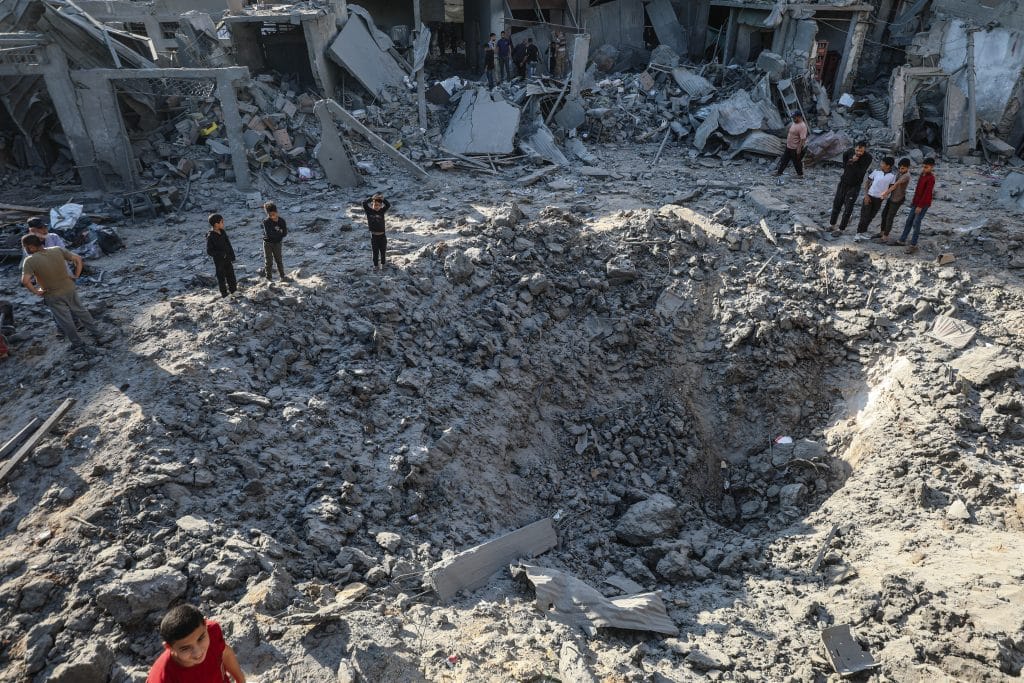
According to residents who were made homeless during the Nuseirat bombing, the Israeli army targeted one home, but the strike damaged six neighboring houses, rendering them uninhabitable.
Ahmad al-Kurd, 34, said that the army did not initially specify which house it intended to strike, instead ordering the entire block to evacuate. “We left our homes carrying nothing and returned to rubble, finding nothing,” he told Mondoweiss.
Al-Kurd added that even the house that had been targeted was home to over 12 families, each comprising at least 5 people, while the surrounding buildings housed many more, totaling around 25 families.
“What did we do to deserve this?” he exclaimed. “This is happening during a ceasefire, during blessed days as we await Eid al-Adha”.
Al-Kurd also mentioned that there was no Hamas presence in the residential neighborhood. “There’s no resistance here,” he said. “There was no justification for the Israeli army to target us.”
Khalil al-Najjar, 41, a resident of al-Bureij who experienced a similar strike, told Mondoweiss that residents also received the same calls from Israeli officers.
“We ran out in fear that missiles would fall on our heads,” he said. “We couldn’t even take a change of clothes. Just what we had on our backs.”
When they returned to the site of the bombing, they found their homes lying in ruins, al-Najjar added, leaving over 50 families homeless and without any belongings.
“We have no more options left,” he said, explaining that every school-turned-shelter in the area turned them away, while tent encampments had no room or tents to speak of. “So we’re just going to live in the ruins of our homes. What else can we do?”
‘In Gaza, even the child is wanted’
Naama Salem, 49, said that at first she saw neighbors carrying some belongings and rushing out of their homes. When she asked what was happening, they told her a call had come from the Israeli army ordering the neighborhood to evacuate within twenty minutes.
“At that moment, I felt that the house could be bombed at any second, so I got dressed and left,” she said. “I could not even reach my ID card, which I kept in my bag beside me.”
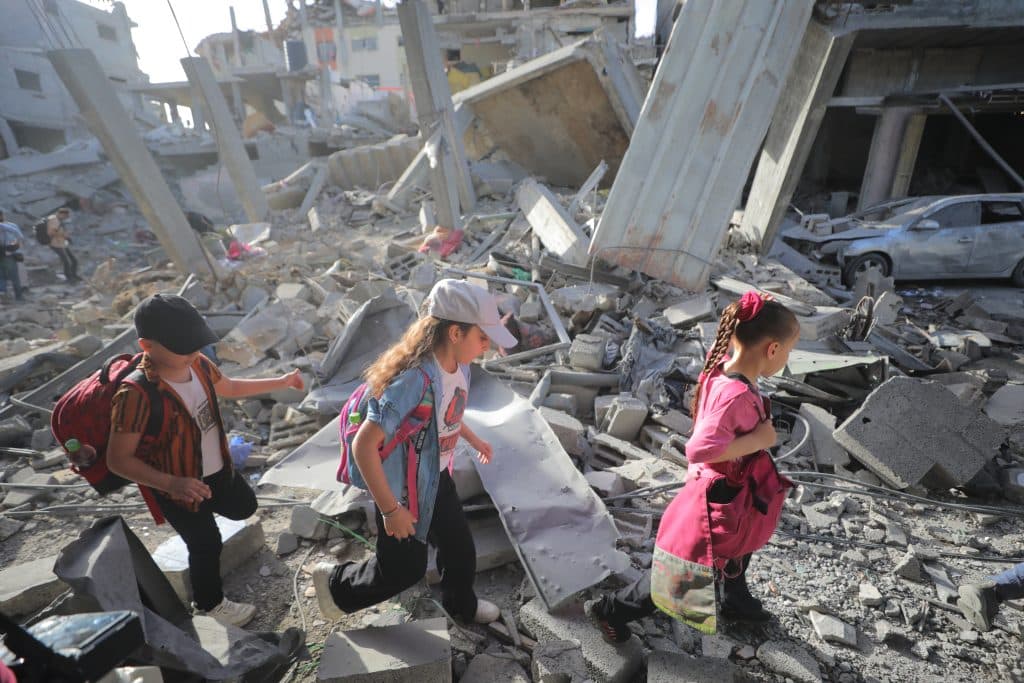
Her daughter, a high school student, lost all of her books, notebooks, and study materials in the bombing. For the entire war, Salem’s home hadn’t been bombed. She considered herself lucky to have escaped that fate that had befallen most of Gaza’s population, and believed that the worst was behind her in light of the ceasefire. She assumed the army might strike the home of a wanted person, and that would be it.
“We never imagined that the policy of bombing whole residential blocks would return,” she said.
She added that the situation is getting worse day by day, even during the ceasefire. “Every day, there are people killed. Every day, homes are destroyed, and families are displaced. We sleep in fear of the bombing, we walk the streets in fear, and we sit with our children in fear. Fear has become a permanent guest in our homes, our hearts, and among our loved ones,” she said. “This situation is unbearable. It is more than human beings can stand.”
Khalil al-Najjar, the Bureij resident who lost his home, said he knows his neighborhood and all of its residents one by one — and that there are no members of Hamas or resistance groups among them.
There was no one wanted by the Israeli army inside the residential block, he asserted. Rather, what Israel really wants is to turn as many Palestinians in Gaza as possible into displaced and homeless people. “It’s to pressure us into leaving our homeland,” he explained.
“In Gaza, the child is wanted. The woman is wanted. The man is wanted. The elder is wanted. Even the animals are wanted by the Israeli army,” he said.
Tareq S. Hajjaj
Tareq S. Hajjaj is the Gaza Correspondent for Mondoweiss and a member of the Palestinian Writers Union. Follow him on Twitter/X at @Tareqshajjaj.


I would defend this as entirely on topic:
Recently I saw the 2025 film “Orwell: 2 + 2 = 5”, a documentary/commentary on George Orwell’s** life and work. ( Netflix or Amazon ). The film has clips on the worlds great lying murderous dictators – Orban, Putin, Milei, W Bush, etc. I was happy to see Netanyahu included, with clips of him talking about peace at the U.N. and numerous overhead shots of Gaza.
Highly recommended.
Orwell: 2+2=5 (2025) – IMDb
** aka Eric Blair
I’m reminded of Tom Stoppard’s final theatrical masterpiece, Leopoldstadt. A short extract, not the horrifying scene where the Nazi officer orders the family to leave, but the lead-up to it:
https://www.youtube.com/watch?v=h2R505nqilg
There really seems to be no hope for Israel as they prove every day they are a genocidal, apartheid,assassination,sadist state. The war crimes committed day after day in Gaza, West Bank, Lebanon are the persistent, deadly proof.
While Israel kills, maims, displaces, destroys homes lives they are destroying themselves!