

I just caught about 30 minutes of the Progressive Policy Institute's panel today on national security issues facing the next president. "So this is what progressives have to say," the head fred progressive said when it was done, Will Marshall. But what had I heard? A lot of talk of the Middle East, but not a word about Israel/Palestine. Kenneth Pollack spoke about a belt of anger going from Bangladesh to Marrakesh, and of the responsibility of the U.S. to deal with the underlying forces producing that anger. Then, astonishingly, he said that America must reduce its dependency on foreign oil. Let me write that down. The anger belt, and nothing about Israel/Palestine. The panelists I saw were Pollack, Tammy Schultz, Bruce Hoffman, James Goldgeier of CFR, and Harvard's Ashton Carter. Without getting into my usual Jewish-identity stuff, I'd note that the most interesting statement came when Carter said that Pakistan is loath to give up its proxy in Afghanistan, the Taliban, because it needs all the friends it has, given that India still doesn't think that Pakistan should exist. I reflected that Israel long denied the existence of the Palestinians, and vice versa; and yet somehow 3 out of 4 of these peoples won the right to self-determination in '47, and one has been denied it for 60 years; and what has been the effect on the world?
The PPI also had a talk today by Peter Beinart, who like Pollack supported the Iraq war and who gives private consults to AIPAC on how to help Israel in this election. Congresswoman Ellen Tauscher spoke at lunch; she also supported the disastrous Iraq war. PPI is a Clintonite organization that the writer Jacob Heilbrunn has said has become hospitable to neocons. I note with pleasure that the camera panned to the sumptuous ballroom; more than half the chairs were empty. Progressives are meeting elsewhere.
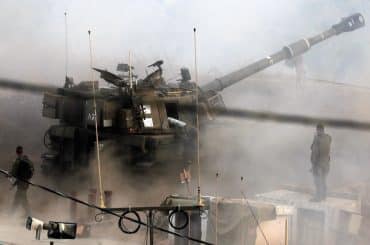
And speaking of Iraq, a recently leaked "draft agreement" lays out the endless occupation plan that both sides of the war party, the RepubCrats, support:
"Maybe from a U.S. point of view, there is a difference in rhetoric. But from an Iraqi point of view, I think both the candidates, Obama and McCain, are planning to leave troops in the long run. So from an Iraqi point of view, I don't think there is a major difference in the U.S. foreign policy in Iraq between the two candidates, because both of them are not for ending the intervention in Iraq. Both of them are for keeping troops in Iraq. They call it residual force; they call it whatever they want to call it. But they want to continue interfering in Iraq militarily and politically in the long run."
http://www.informationclearinghouse.info/article20745.htm
I hope "progressives" and "liberals" aren't too self-satisfied when they cast their vote for O-bomb-a. Oh, that's right: it's the lesser of two evils. If that's the case (and I believe it is), then send a message and vote for a third party. Please.
"The argument that the two parties should represent opposed ideals and policies, one, perhaps, of the Right and the other of the Left, is a foolish idea acceptable only to doctrinaire and academic thinkers. Instead, the two parties should be almost identical, so that the American people can 'throw the rascals out' at any election without leading to any profound or extensive shifts in policy. The policies that are vital and necessary for America are no longer subjects of significant disagreement, but are disputable only in details of procedure, priority, or method…But either party in office becomes in time corrupt, tired, unenterprising, and vigorless. Then it should be possible to replace it, every four years if necessary, by the 'other' party, which will be none of these things but will still pursue, with new vigor, approximately the same basic policies." -Carroll Quigley, historian and professor of history at Georgetown University (1941 to 1977), consultant to the U.S. Department of Defense and the U.S. Navy, one of two people Bill Clinton thanked in his inauguration speech (the other being his mother)
bulldoze the beltway. it's our only hope