Murakami in Jerusalem: ‘Between a high, solid wall and an egg that breaks against it, I will always stand on the side of the egg.’

Last month, the Japanese author Haruki Murakami accepted the Jerusalem Prize as part of the Jerusalem International Book Fair. Murakami was widely criticized for attending and rejecting calls to boycott the event. At the award ceremony Murakami addressed the controversy in his acceptance speech:


I chose to come here rather than stay away. I chose to see for
myself rather than not to see. I chose to speak to you rather than to
say nothing.

Please do allow me to deliver one very personal
message. It is something that I always keep in mind while I am writing
fiction. I have never gone so far as to write it on a piece of paper
and paste it to the wall: rather, it is carved into the wall of my
mind, and it goes something like this:

"Between a high, solid wall and an egg that breaks against it, I will always stand on the side of the egg."

Yes,
no matter how right the wall may be and how wrong the egg, I will stand
with the egg. Someone else will have to decide what is right and what
is wrong; perhaps time or history will decide. If there were a novelist
who, for whatever reason, wrote works standing with the wall, of what
value would such works be?

What is the meaning of this metaphor?
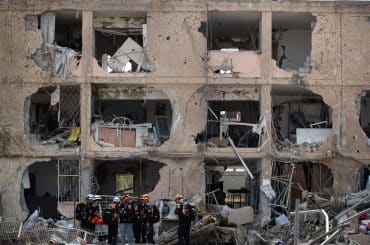
In some cases, it is all too simple and clear. Bombers and tanks and
rockets and white phosphorus shells are that high, solid wall. The eggs
are the unarmed civilians who are crushed and burned and shot by them.

This
is not all, though. It carries a deeper meaning. Think of it this way.
Each of us is, more or less, an egg. Each of us is a unique,
irreplaceable soul enclosed in a fragile shell. This is true of me, and
it is true of each of you. And each of us, to a greater or lesser
degree, is confronting a high, solid wall. The wall has a name: it is
"the System." The System is supposed to protect us, but sometimes it
takes on a life of its own, and then it begins to kill us and cause us
to kill others — coldly, efficiently, systematically.

Murakami's speech was greeted with some confusion in the Israeli press. He is now making his point a bit clearer back in Japan.

Murakami has written about his experience in a recent article in the Shunjuu Bungei literary journal. Although he did not venture into Gaza or far into the West Bank, he had enough experiences in Jerusalem to get the picture. Murakami says he witnessed "an Israeli soldier [take] an entire family out of their
car and beat up the father in front of his children." He also describes seeing the Separation Wall driving with an Israeli taxi driver,
"I asked him what was the purpose of the security wall that
runs along the highway. He replied that it was there in order to keep
the animals from crossing the border." Murakami continues,

"Israel has adopted a policy that seals off
the Palestinians inside the West Bank and the Gaza Strip, a policy that
denies the refugees' right to return to their land in order to protect
the interests of the Jewish people; this is unjust," Murakami writes. 

While Murakami notes that "Israel
isn't a tyrannical state and is founded on free speech," the encounters
with Israelis he describes reflect a racist, militant and aggressive
society. 

"I sense a very strong patriotic approach
when I talk to Israelis. The schools instill it in them through the
official history, and three years of military service for boys and two
years for girls is mandatory," he writes.

Murakami claims that Israelis fail to understand that their
policy towards the Palestinians is wrong. "Palestinians have to undergo
thorough security checks whenever they want to go somewhere and their
economic activity is limited. They are not free to build their homes
when and where they want to, and in fact have no sovereignty over their
land," he explains.

The egg has spoken.
About Adam Horowitz

Adam Horowitz is Co-Editor of Mondoweiss.net.
Posted in BDS, Israel/Palestine, US Politics

{ 17 comments... read them below or add one }

  1. Richard Witty says:

    Thankfully opposing academic and cultural walls.

  2. Rowan says:

    The first image I got was of the egg being thrown at the wall by a third party — to its terminal detriment. Thus, 'being on the side of the egg' is rather a dark piece of whimsy.

  3. 5 dancing shlomos says:

    a few decent words soaked in shit. return to japan and yoko and pout about the 2 nuke bombs and the firebombing of every city you cherish. then explain why you speak nonsense.

  4. 5ds says:

    while we are talking about jewish injustice and meanness and jewish evil, lets remember the decent and wonderful and tortured-by-jews mordechai vanunu.

  5. Andrew says:

    In explaining his decision to travel to Israel rather than to respect the call for academic and cultural boycott issued by Palestinian civil society, Murakami said, "I chose to see for myself rather than not to see." You might suspect he was just feigning ignorance either to avoid politics or to hide sympathy for Zionism, except that from the rest of his statements it sounds like based on what he saw he decided that Israel is killing and oppressing innocent Palestinians. I'm willing to give the guy the benefit of the doubt: he didn't really know if what he'd heard was true, but he believed it when he saw it. This may mean that, as world news media continue to cover Israeli apartheid and war crimes, international intellectuals will become more aware of the depths of the depravity of the Israeli military, and hence that more will respect the boycott. We can hope anyway.

  6. Citizen says:

    The first though I had was of the wall of heavily manipulated public opinion. The egg asked questions, searched beneath the wall and peered through tiny holes in it that appeared very seldom. The egg was very fragile as the only wall it had to protect itself, being only one egg & not any other, was its own thin shell. And, being an egg, in any confrontation with the stone wall, the yolk was on the egg–its own yolk, which was quite an inside joke to the wall. Then I thought of Humpty Dumpty. He sat on the wall only in the sense that first, he could not really sit on it as how would he get up there? Secondly, in that even if he could, he'd soon be displaced (like, oh, say Freeman). And all the king's horsemen and all the king's men
    couldn't put Humpty together again–because the king's lackey's wanted to keep their jobs and couldn't afford court battles against the king & his higher minions. Rowan, "the egg breaks against it." It was not
    necessarily tossed against it. It breaks against it simply by being an individual egg who wants to see what's on the other side of the wall. What does anyone think–first thoughts like mine and Rowan's are
    what I'd like to see. Thanks all for your responses.

  7. seethelight says:

    Another arts genuis, violinist and composer Yehudi Menuhin made this statement about the Occupation before the Knesset in 1991 when he accepted the prestigious Wolf Prize from the Israeli Government:

    "This wasteful governing by fear, by contempt for the basic dignities of life, this steady asphyxiation of a dependent people, should be the very last means to be adopted by those who themselves know too well the awful significance, the unforgettable suffering of such an existence. It is unworthy of my great people, the Jews, who have striven to abide by a code of moral rectitude for some 5,000 years, who can create and achieve a society for themselves such as we see around us but can yet deny the sharing of its great qualities and benefits to those dwelling amongst them.

    When challenged as to why he gave such a speech, Menuhin replied, "That is why I came".

    Israeli political leaders continue to disregard the prophetic voices of great Jewish minds, like Menuhin, who call for justice for Palestinians. How can Israelis expect their future to be any different from the one they have now?

  8. David Shasha (Director of the Center for Sephardic Heritage in Brooklyn, NY) often addresses issues related to ethnic Ashkenazi domination of modern Judaism. He tends to avoid being drawn into arguments about Zionism. Yet in a recent article entitled A Broken Frame, he writes:

    At present, Jewish life is marked by a serious difficulty in dealing with the outside, non-Jewish world and by an equally difficult internal series of intractable conflicts waged within the Jewish community. These conflicts, internal and external, bespeak a particular vision of Judaism that remains wedded to an insular modality that judges the external as problematic.

    Ashkenazi mental walls may be the source of the inner darkness that has occasioned Zionist mass murder, ethnic cleansing, degradation, brutalization and immurement of the native Palestinian population.

  9. LanceThruster says:

    I see it as a variation of sorts on this quote:

    "Washing one's hands of the conflict between the powerful and the powerless means to side with the powerful, not to be neutral." ~ Paulo Freire

    The wall is the power (and the status quo) while the egg is both fragile and temporal. It is the ultimate underdog against the wall.

    I stand with the egg.

  10. Dan Kelly says:

    Or:

    If you are neutral in situations of injustice, you have chosen the side of the oppressor. If an elephant has its foot on the tail of a mouse and you say that you are neutral, the mouse will not appreciate your neutrality." – Desmond Tutu

  11. LanceThruster says:

    @Dan – THX for that contribution. I like Desmond Tutu's version as well. I had never heard it.

  12. LeaNder says:

    Ashkenazi mental walls

    Obviously, they got infected by the German genocidal gene by too close association. Isn't it reassuring that evil can be always traced to a single human source infected by the devil? Gives the rest of the universe more space to move unmolested.

  13. tommy says:

    "A racist, militant and aggressive society," programmed by a liturgical, archaic language.

  14. Obviously, LeaNder, you should probably take up your issues about criticism of ethnic Ashkenazi behavior with David Shasha.

    David interprets "Asu syag laTorah" differently from the tradition that he is criticizing and points out from the beginning of his article that ethnic Ashkenazim had a problem in dealing with non-Jews long before Hitler appeared.

    I would add that non-Ashkenazi Polish Lithuania Tatar Jews were already becoming quite annoyed with Ashkenazim by the middle of the 19th century.

    Sometimes social and political cultures can develop in unfortunate directions as Germans are usually quick to acknowledge about their own.

    I am not German and feel no obligation whatsoever to refrain from criticisms of ethnic Ashkenazi group behavior.

    It is time for Germans to wake up and stop giving ethnic Ashkenazi Nazism a free pass to commit heinous crimes.

  15. Citizen says:

    I agree with Joachim, LeaNder. Please read his essay on the screaming jew inside you. It is a mirror image
    in a way of the screaming Nazi inside people back in the first part of the 20th Century.

  16. doppler says:

    How about a small seed falling into a narrow crevice in the wall, but eventually growing up to breach the wall.

  17. marc b. says:

    Certainly, Murakami was not invited to speak, nor did he represent that he spoke, for the Japanese people. However, it is of interest to note the historical affinity between the Japanese and Zionists. For example, when Herzl's plan was criticized because the emmigration of European Jews to Palestine would debase their culture (literally make them more 'Asiatic') Herzl used the Japanese as a counterpoint, illustrating that the 'Asian' race could be modern, sophisticated.

Leave a Reply