

When Iran launched a barrage of strikes on Israel this week in defense of Lebanon, Tehran was making a point: Hezbollah and Lebanon are red lines. In an exclusive interview with Mondoweiss, Mohsen Rezaei, senior adviser to Iran’s Supreme Leader and former Commander of the IRGC, lays out Tehran’s strategic thinking, arguing that regional security and diplomacy — including nuclear talks — can no longer be separate negotiations.
Last week, Iran suspended indirect talks with Washington amid renewed Israeli military operations in Lebanon, with Iranian officials directly linking the future of any diplomatic contacts to events on the ground in both Lebanon and Gaza.
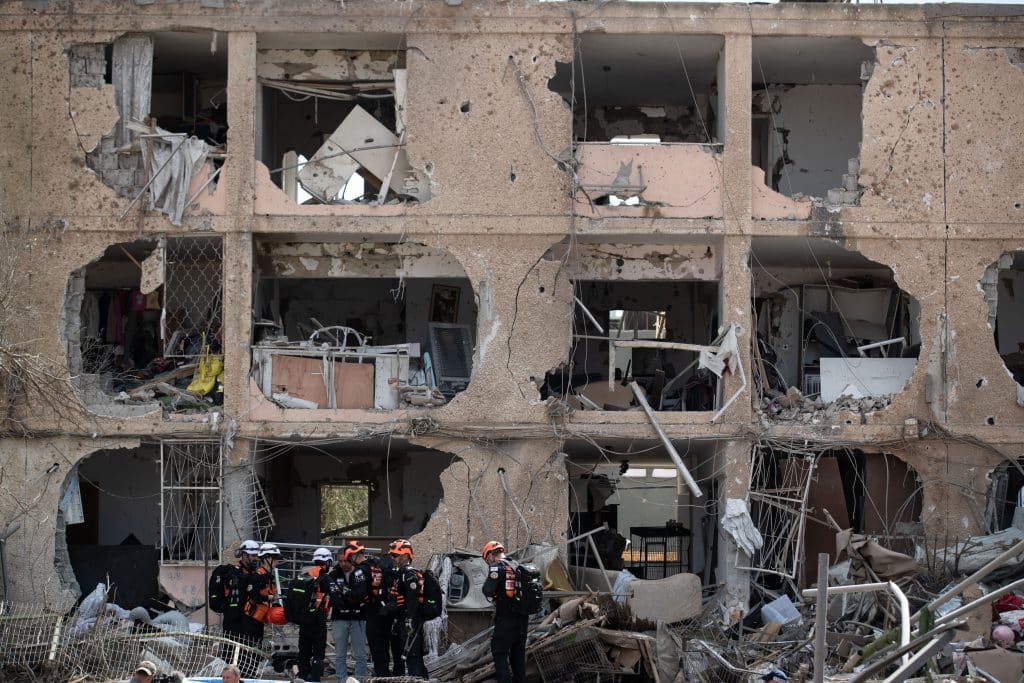
On June 7, that point was driven home with force. In direct response to an Israeli strike that hit Beirut’s southern suburbs, Iran launched multiple waves of ballistic missiles toward Israel, the first direct attack on Israel since a US-brokered ceasefire that took effect in April.
By choosing to escalate, Tehran demonstrated in real time the contours of its red line: an attack on Lebanon will trigger a forceful response.
“Lebanon, and Hezbollah in particular, remain among Iran’s most important red lines in any potential agreement with the United States,” Rezaei told Mondoweiss. “From Tehran’s perspective, Hezbollah is not merely a political or military ally. It is part of a strategic partnership forged over decades.”
“Lebanon, and Hezbollah in particular, remain among Iran’s most important red lines in any potential agreement with the United States,” Rezaei told Mondoweiss. “From Tehran’s perspective, Hezbollah is not merely a political or military ally. It is part of a strategic partnership forged over decades.”
Regional tensions have not been confined to Lebanon. An attack on Kuwait International Airport last week — which Iran blamed on U.S. Patriot missile interceptors misfiring — added to concerns that the conflict’s repercussions could spread well beyond the immediate battlefield, reinforcing fears in Tehran that any future confrontation may draw multiple states into the crisis.
Against this backdrop, Rezaei’s remarks may signal a broader strategic shift, one in which regional security can no longer be separated from diplomacy.
“Iran believes that any durable regional order must be built on trust and credible partnerships, and for that reason, Tehran does not view its relationship with Hezbollah as a negotiable issue, but as an integral component of its long-term strategic vision for the Middle East,” Rezaei told Mondoweiss.
“Tehran does not view its relationship with Hezbollah as a negotiable issue, but as an integral component of its long-term strategic vision for the Middle East.”
Mohsen Rezaei
Increasingly, Iranian decision-makers appear to be treating diplomacy, deterrence, regional alliances, and the balance of power in West Asia as parts of a single strategic equation rather than separate policy tracks.
“Several days after the ceasefire, the blockade was imposed, and commitments regarding Lebanon were violated,” Rezaei said, referring to a U.S naval blockade of Iranian ports imposed after the April ceasefire. “Hezbollah is Iran’s ally, and Iran stands by its ally.”
In earlier remarks, Rezaei argued that pressure on Iran would ultimately fail to reshape the regional balance of power. He described the Strait of Hormuz as a powerful source of leverage and suggested that regional states, rather than external powers, should determine the future security architecture of the Gulf.
“The Strait of Hormuz is a powerful lever. The enemy will either receive a strong blow or accept Iran’s conditions,” Rezaei said.
Lebanon: from separated front to strategic necessity
Muhammad Javad Habibi, a political science analyst and frequent contributor to Tehran Times, argues that the war has fundamentally altered how many Iranian policymakers understand future confrontations with the United States and Israel.
“The recent war appears to have strengthened a belief among many Iranian policymakers that future confrontations with the United States and Israel will not be limited to a single battlefield or a single issue,” Habibi told Mondoweiss.
“Future confrontations with the United States and Israel will not be limited to a single battlefield.”
Muhammad Javad Habibi, political science analyst and frequent contributor to Tehran Times.
“Iran repeatedly stated throughout the 39-day war that it would regard the origin of any attack on the country’s territorial integrity as a legitimate military target. Neighboring countries should understand that any Iranian strikes against U.S. bases on their territory would not constitute a declaration of war against fellow Muslim nations, but would instead target American interests,” he said.
Habibi pointed to last week’s incident at Kuwait International Airport as an example of “how quickly a regional conflict can spill across borders and affect countries beyond the immediate battlefield,” even if it remains unclear whether the incident occurred accidentally or was the result of an errant interceptor, as Iran has claimed.
“From Tehran’s perspective, the conflict demonstrated that military pressure, economic pressure, information campaigns, and diplomatic pressure are increasingly being applied simultaneously. As a result, Iranian decision-makers appear less willing than before to compartmentalize regional alliances and security concerns from negotiations,” said Habib.
In Tehran’s view, negotiations are no longer limited to sanctions, uranium enrichment, or maritime access. They are increasingly seen as part of a broader contest over the region’s future political and security architecture.
That helps explain why Lebanon has moved closer to the center of Iran’s strategic calculations.
In Tehran’s view, negotiations are no longer limited to sanctions, uranium enrichment, or maritime access. They are increasingly seen as part of a broader contest over the region’s future political and security architecture. That helps explain why Lebanon has moved closer to the center of Iran’s strategic calculations.
Western policymakers often treat Hezbollah as a separate file that can be addressed independently from broader negotiations. Inside Iran, however, many officials increasingly see the issue differently. Iran’s support for Hezbollah is a signal to allies and would-be partners: Tehran will not abandon you.
For many Iranian officials, support for Hezbollah is tied not only to military considerations but also to credibility. Like other regional and global powers, Iran relies not only on military capabilities but also on its reputation for standing by its allies. From this perspective, support for Hezbollah is about maintaining a regional network that many policymakers consider essential to Iran’s broader deterrence posture.
That is why Lebanon has become more than a regional issue in Tehran’s calculations. A weakened network of regional partners would put future confrontations closer to Iran’s borders and reduce Tehran’s ability to shape events beyond them. As a result, many policymakers view support for regional allies not as a liability but as a strategic necessity.
A struggle against Western intervention
For some influential voices in Tehran, the issue is also embedded in a broader ideological and regional vision.
“The issue of Lebanon is not only related to Iran,” said Farshad Shariat, a professor of political science at Imam Sadiq University. “It concerns the broader Islamic world.”
Developments in Lebanon, Shariat told Mondoweiss, are often viewed by Iranian political elites as part of a wider struggle over sovereignty, foreign intervention, and the future direction of the region.
“As with the question of Jerusalem, Lebanon is not seen merely as a local issue,” he said. “Many believe that all Muslim countries have responsibilities regarding these developments.”
Shariat links the issue to the Abraham Accords. In his view, many Iranian policymakers do not regard normalization agreements between Israel and several Arab states merely as diplomatic arrangements. Rather, they see them as part of a broader effort to reshape the Middle East’s political and strategic order.
From that perspective, developments in Lebanon cannot be separated from wider debates surrounding Palestine, Jerusalem, regional sovereignty, and the future balance of power in West Asia.
For influential voices in Tehran, Lebanon is not simply another negotiating file. The issue is linked not only to immediate security concerns but also to larger questions about regional order and political legitimacy.
That helps explain why recent developments, like Iran’s strikes on Israel, may represent more than a temporary negotiating tactic.
Lebanon is becoming more than a regional flashpoint. It is emerging as a test case for a broader Iranian effort to redefine the terms on which future negotiations with Washington will be conducted.
Iranian officials continue to signal that they remain open to diplomacy. “Diplomacy and defense are the two wings of national power; we have neither abandoned the field nor the negotiating table,” Iran’s president posted to X on Monday.
But diplomacy now operates under a different set of conditions.
For years, Western policymakers treated Iran’s nuclear program as the central obstacle to diplomacy while assuming that regional issues could be managed separately. Recent Iranian statements suggest that Tehran increasingly rejects that distinction.
Regional security, strategic partnerships, deterrence, and diplomacy are increasingly being presented by Iranian officials as parts of the same conversation rather than separate tracks.
Whether this represents a temporary adjustment or the beginning of a more enduring strategic doctrine remains unclear.
Lebanon is becoming more than a regional flashpoint. It is emerging as a test case for a broader Iranian effort to redefine the terms on which future negotiations with Washington will be conducted.
Recent statements from Iranian officials suggest that Lebanon now occupies a far more central place in Tehran’s diplomatic calculations than it once did.
If that trend continues, future negotiations between Iran and the United States may involve far more than centrifuges, sanctions, or maritime routes. They will revolve around a larger question: whether a new regional balance of power can be negotiated at all without addressing the alliances, security arrangements, and political realities that Tehran appears determined to place at the center of the conversation.
This article was published in collaboration with Egab.
Peiman Salehi
Peiman Salehi is an Iranian political analyst, writer, and independent scholar based in Tehran. His work focuses on the intersection of political philosophy and international affairs, with a particular emphasis on Iranian foreign policy, multipolarity, and non-Western global order.

Re The Big Picture:
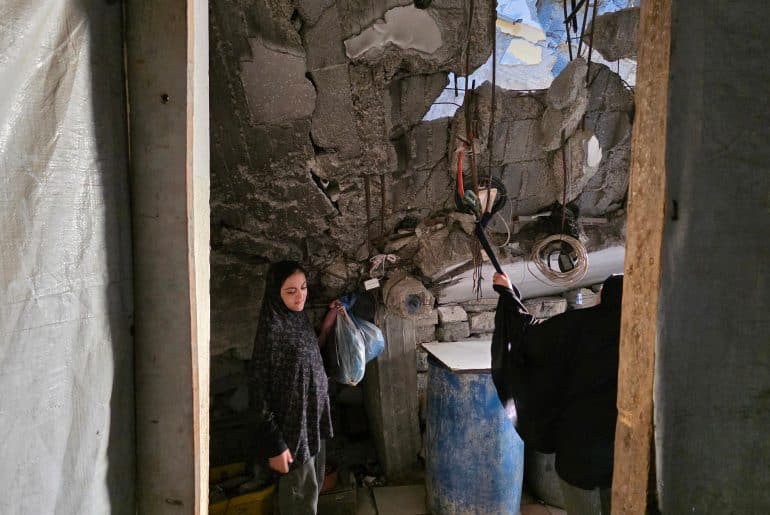
The region’s power brokers aren’t talking much about the Palestinians these days. Israel continues to restrict aid and keep up a patter of violence in a bomb-chewed and immiserated Gaza Strip, and Palestinians in the West Bank are still suffering daily repression at the hands of settlers and soldiers. But make no mistake: The unanswered demand for Palestinian sovereignty sits at the heart of all the regional upheaval, unacknowledged though it may be.
Opinion | An Aggressive Israel Is Shaking the Middle East – The New York Times
jrg and jon s you may have forgotten Albert Einstein was a university professor and Anti-Zionist when he wrote The God Letter Einstein bluntly stated that “The word God is for me nothing more than the expression and product of human weaknesses” and called the Bible a collection of “primitive legends”. Einstein did not exclude Judaism, saying he admired and loved his people, but that he did not believe they were chosen above others. “For me the Jewish religion like all other religions is an incarnation of the most childish superstition,” he wrote, adding “I cannot see anything ‘chosen’ about them.” There is no doubt he would take a very dim view of Trump, Hegseth, Huckabee, and MAGA lawmakers views on religion, race, and birthrights. Federal judge blocks Trump administration from deporting noncitizens for pro-Palestinian activity and ‘Stop people with Sharia ideology’: Witness REVEALS SHOCKING details of US immigration standards
*Mondoweiss has already addressed the irrelevance of claims that Zionist or Palestinians “were here first”: It’s ahistorical, but this line of thought indirectly legitimizes the original argument they are fighting against”.– Finders Keepers in the Holy Land: So who was there first? The Shia in Galilee and Lebanon were the lawful inhabitants and were victims of UK, French, and Zionist armed aggression and false 19th century racial theories.
In the past I’ve pointed out the 1st and 14th Amendment to the US Constitution prevents the establishment of a Jewish State here in the USA. Now we have Schumer and Raskin adopting statutes that even the authors admit are unconstitutional, but promise to remedy after the fact. One fact is that is already a felony. 18 U.S.C. § 227 prohibits members of Congress, legislative staff, or executive branch officials (including the President and Vice President) for wrongfully influencing a private entity’s employment decisions and appointing federal officials to conduct unconstitutional religious tests. Lawmakers and government officials have approved multimillion dollar out-of-court settlements that established illegal Zionist or Trump DOJ slush funds and appoint gatekeepers to label Anti-Zionism hate speech.
Reading this article, one would never guess that it was Hezbollah that initiated the clashes with Israel, and that many Lebanese, including Shi’ite Muslims, are fed up with them; instead the author deceives his readers by writing about “Israel’s assault on Lebanon.” Hezbollah exists specifically for the avowed purpose of destroying Israel, and for that matter, so does the “Islamic Republic.” All of his pompous prattle about a new security architecture for the Middle East ignores and tries to distract the reader from the concrete state of insecurity in which the people of northern Israel live, thanks to Hezbollah, which no doubt would do to them what Hamas did to the people of the Gaza Envelope, if they could.
Of course, many if not most of MW’s commenters and contributors would salivate at such a prospect. Behind all of their quasi-academic sermonizing is a thirst for Israeli Jewish blood.