Mohammed bin Salman rejected Benjamin Netanyahu’s offer to help fight Ansar Allah in Yemen, but the Crown Prince may soon run out of options as Israel seeks to exploit Saudi concerns to its advantage.


Mohammed bin Salman rejected Benjamin Netanyahu’s offer to help fight Ansar Allah in Yemen, but the Crown Prince may soon run out of options as Israel seeks to exploit Saudi concerns to its advantage.

Trump’s war on Iran is broadly unpopular among Americans, and it’s poised to sink the GOP in the upcoming midterms.
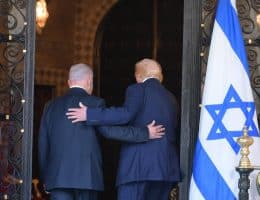
From Iraq to Iran, the Israel lobby has, for decades, pushed America towards wars in the Middle East. But with Trump’s wildly unpopular Iran war, the unshakeable power of the Israel lobby is finally being called into question.

The U.S. and Iran are trading strikes while carefully avoiding all-out war, and both sides are hiding the damage they’ve suffered. The difference is Iran has more reason to end the stalemate, and less patience for Washington’s forever-war strategy.

Vice President J.D. Vance has long been considered the leading contender for the 2028 Republican nomination, but will his role in the Trump administration’s unpopular war against Iran hurt his chances? Conservatives are divided.

Both Iran and Israel are gambling a great deal of their futures on what Trump will do next. Indeed, the fate of the world, in a very real sense, hangs in the balance.

Netanyahu has staked Israel’s economic future on becoming a Mediterranean trade hub to replace the Strait of Hormuz. The war on Iran was supposed to make that possible, but it consumed the fiscal space, U.S. backing, and Gulf capital needed for it.
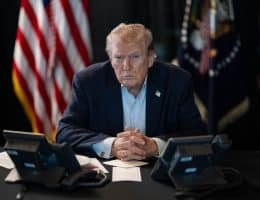
After months of war, the U.S. and Iran have signed a framework agreement that excludes every U.S. war aim. Mouin Rabbani breaks down why this is a decisive defeat for Washington and Israel.
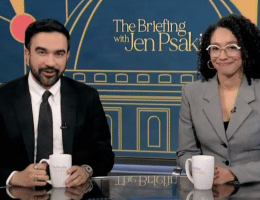
Israel is factoring into primaries across the United States, but perhaps nowhere more than New York.

The flare-up in violence between Iran and Israel on June 8 was less about the two countries’ immediate goals and more a reflection of Iran’s long-term efforts to reassert a united axis of resistance to U.S.-Israeli hegemony in the region.