The documentary film by Yuval Abraham and Rachel Szor follows the predictable script of the regretful soldier, but the subjects in NAZA express something darker: mourning the loss of power.


The documentary film by Yuval Abraham and Rachel Szor follows the predictable script of the regretful soldier, but the subjects in NAZA express something darker: mourning the loss of power.

Palestinians with Israeli citizenship are no longer asked to pledge allegiance, but to renounce their own history. Palestinian Knesset candidate Sami Abu Shehadeh did exactly that before Israel’s Supreme Court, and was pushed out anyway.

The American order that gave Israel stability now constrains Israel’s expansion. In response, Israel is dismantling U.S. hegemony in the region, turning allies Turkey and Egypt into enemies, and working to end the U.S.’s ability to restrain it.

Netanyahu has staked Israel’s economic future on becoming a Mediterranean trade hub to replace the Strait of Hormuz. The war on Iran was supposed to make that possible, but it consumed the fiscal space, U.S. backing, and Gulf capital needed for it.

The flare-up in violence between Iran and Israel on June 8 was less about the two countries’ immediate goals and more a reflection of Iran’s long-term efforts to reassert a united axis of resistance to U.S.-Israeli hegemony in the region.

Israel has long used the same playbook to recruit informants from enemy societies. Iran is now using it to recruit spies in Israel by exploiting new cracks in Israeli society.

Donald Trump’s naked threats to target Iran’s civilian infrastructure are the culmination of a strand of neoconservative thought that has defined U.S. war-making over three decades, from the Iraq war to Obama’s drone campaigns to the Gaza genocide.
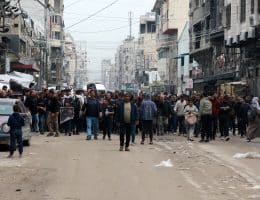
The passing of the recent Israeli death penalty law aimed at Palestinians formalizes what Israel and colonial powers have always done: creating new laws to legalize colonial violence.

The Gaza genocide, in its relentless accumulation of dead children, obliterated neighborhoods, and starved bodies, is an assault on the capacity of Palestinians to be horrified by everyday atrocities — or to be enchanted by the possibilities of liberation.
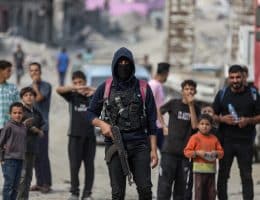
The Palestinian resistance faces a dilemma with Trump’s ‘Board of Peace’: reject it and risk annihilation, or engage and risk normalizing permanent occupation.