


When I was a student, I was taught that freedom of the press was essential to democracy, because it guaranteed the freedom of expression. I was also taught that freedom of the press was a feature of all recognized democracies, manifested through the existence of private media. The examples our teachers gave us were liberal democracies, especially in Europe and the U.S.
I was taught this in my first year of college at a Palestinian university, by Palestinian teachers. Despite the natural tendency of students to question and criticize, especially in a university environment, it took me years to acquire the tools to deconstruct these ideas and build a genuine critique of them. Other teachers helped my classmates and I make that progress, but the real shift came from observing a paradox I’d first felt as a young boy, many years earlier, when it awakened my passion for communication: the paradox of the abnormal, devastating reality lived in Palestine, and the absence of that reality from the coverage of the media — especially the private, mainstream media companies that covered Palestine from countries known for their much-vaunted freedom of the press.
Little by little, as my English got better, I began to notice another paradox: despite the seeming diversity of media outlets that covered Palestine, their coverage was strikingly similar. In fact, it was almost identical, always starting from the same place. They always described violence in the passive sense, without saying who exercised it and who suffered from it, or in what proportions. They always cast Palestinians in one of two roles: terrorist or passive victim. Either killing or being killed. But our life — our Palestinian life, its complexities, its daily struggles, its deceptions, its hopes, and the accumulated dreams of generations cut short — that life was always absent.
During the same years I was a university student, something else was happening in Palestine. Social media was spreading like wildfire, more and more Palestinians were becoming active online, and despite all the flaws of social media and its negative effects on offline social life — hardly a problem limited to Palestine — Palestinians were able, for the first time, to talk about their reality without the mediation of media outlets.
In almost no time, every village, every refugee camp, and sometimes even individual neighborhoods, had their own news pages. They weren’t professional, and the people running them hadn’t gone to journalism school and hadn’t learned about the freedom of the press and its role in guaranteeing a society’s democratic functioning. But they provided something that professional, private, supposedly free media outlets didn’t: windows — dozens, hundreds of windows — into the daily life of Palestinians.
They covered Israeli raids, arrests, settler attacks, demolitions, and the release of detainees in real time, but they also published news about why a street hadn’t been paved despite a year of construction, electricity cuts, hours of debate in municipal halls over the best date to start the olive harvest, and wishes of a happy Ramadan accompanied by emojis of flower bouquets. A lot of this could easily and understandably be considered irrelevant to international coverage, but at least nobody could claim that the life of Palestinians was out of reach.
With every interview I did, I realized that Palestinians gave answers to questions I hadn’t asked. I would ask, “How do you feel about the demolition of your home?” and they would answer, “We will not leave our land.” I would ask, “How does the loss of your son affect you?” and they would reply, “My son is no better than the rest of the youth in Palestine.” In fact, they were telling me something I was too slow to understand: “You are asking the wrong questions. You didn’t understand the real story.”
Later, when I began practicing journalism professionally, I relied heavily on these news accounts on social media for first-hand information when covering the very events that mainstream international outlets were supposedly looking for. During the 2008–09 Gaza war, Palestinian local news pages published information about Israeli airstrikes and the losses they caused, often with photos or footage taken by regular people from their windows or in their own streets hours before established news agencies even reported the strikes.
Sometimes mainstream media outlets, including mainstream Arabic-language ones, plagiarized material from local social media news pages, republishing photos and claiming they’d found them on Facebook or Twitter (now X). I continued to rely on these pages to reach local sources — authorities, families, eyewitnesses — for testimony, but not everyone saw this phenomenon positively. I often heard fellow journalists, foreign and local, complain that “everybody can claim to be a journalist nowadays,” without noticing that the same complaint could just as easily be made about many professional, degree-holding journalists at established media institutions.
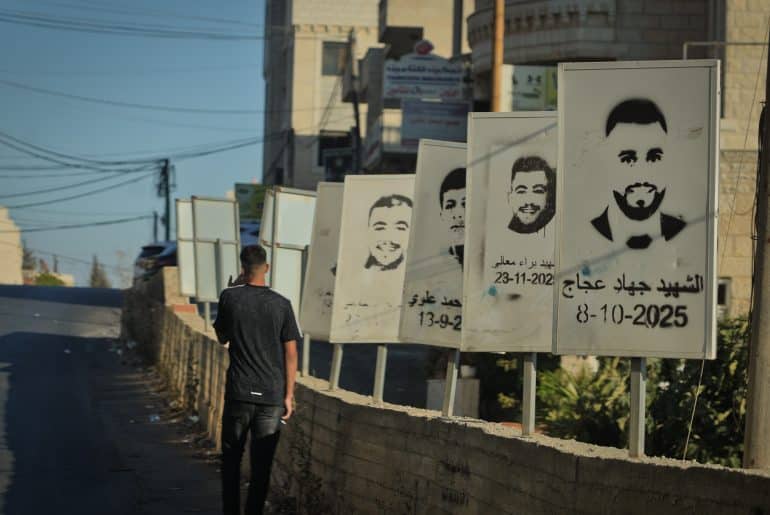
Today, especially since October 2023 and Israel’s systematic targeting of Palestinian journalists in Gaza, alongside its ban on international journalists entering the Strip, the critique of mainstream media’s treatment of Palestine no longer needs complicated argumentation. It has become self-evident, as is the importance and value of on-the-ground journalism done by regular people covering their own genocide. Yet the reality of Palestinian life continues to be omitted from mainstream coverage, which raises real questions: who decided that a multiplicity of private media outlets was a guarantee of a free press, let alone good journalism?
I asked myself these questions throughout the past three years every time I covered another death, another broken life in Palestine. I went back to when I was a student, learning communication theory in the classroom, watching the monolithic media coverage of Palestine, and witnessing the explosion of popular journalism on social media. I had reached an answer at the time, and it went something like this: a free media is built by committed, professional journalists who know how to frame and organize the communication of people who do it chaotically online. It took me years to undo that idea — through my own practice of journalism, and through communication with Palestinians on the ground.
With every interview I did, I realized that Palestinians gave answers to questions I hadn’t asked. I would ask, “How do you feel about the demolition of your home?” and they would answer, “We will not leave our land.” I would ask, “How does the loss of your son affect you?” and they would reply, “My son is no better than the rest of the youth in Palestine.” In fact, they were telling me something I was too slow to understand: “You are asking the wrong questions. You didn’t understand the real story.”
I had thought that professional, committed journalists — like the one I believed myself to be — were going to teach “ordinary” Palestinians how to communicate their reality. What was really happening is that they were teaching me — that the people whose lives I cover are the real tellers of their stories, that journalists need to listen far more than they talk, and that our profession is, in the end, the art of learning the language of human reality in order to capture it.
It was, and continues to be, a privilege to learn from them.
Qassam Muaddi
Qassam Muaddi is the Palestine Staff Writer for Mondoweiss. Follow him on Twitter/X at @QassaMMuaddi.
Exactly.