

Editor’s Note: This article was originally published on Cutting Through.
Iran’s decision on Saturday, June 20, to once again shut the Strait of Hormuz brings them, the United States, and Israel to a decisive moment, one which could be looked at in the future as a key turning point in international affairs.
This is not merely a case of Iran standing on principle and enforcing the terms of the Memorandum of Understanding (MOU). It is a moment that can define the relationship between the United States and Israel and could even have significant ramifications for the Palestinians.
Iran is demonstrating once again the power it has due to the geography of the Strait of Hormuz. They are making it clear that they do not trust the United States and are going to ensure compliance with any agreement using the leverage they have.
This is why neoconservatives, pro-Israel groups, and Iran hawks reacted with such hysteria when the exact terms of the MOU were released on June 17. It was not just about the favorable conditions for Iran—the commitment to ending sanctions, the promise to release frozen Iranian funds, and the absence of any mention of Iran’s missile program or its support of regional allies—it was about the implications for dealing with Iran in the future.
Iran now has the power to deter American and global sanctions, a power which they have always had due to geography, but which had been only theoretical before.
That leverage is limited, and the Iranians know it must not be used carelessly. If Iran threatens to close the Strait every time another country, be they ally or adversary, enacts a policy or takes a step that Tehran disapproves of, they will be considered a threat not only by the western countries that already hate them, but also very much by countries like China and even Russia.
Tehran must use its leverage judiciously in the future, but right now, they are still in the phase where they are asserting that leverage, making it clear to the world that they must take Iranian concerns seriously. Tehran will always have the power over the Strait, but their ability to leverage that power will never be greater than it is right now.
The pro-Israel panic
That is why Israel and its supporters in the United States and Europe are in an absolute panic over the MOU. It is why Israeli Prime Minister Benjamin Netanyahu is doubling down on what has thus far been a losing gamble in both the Persian Gulf and Lebanon.
Netanyahu is, in a sense, taking up the gauntlet Iran is throwing down.
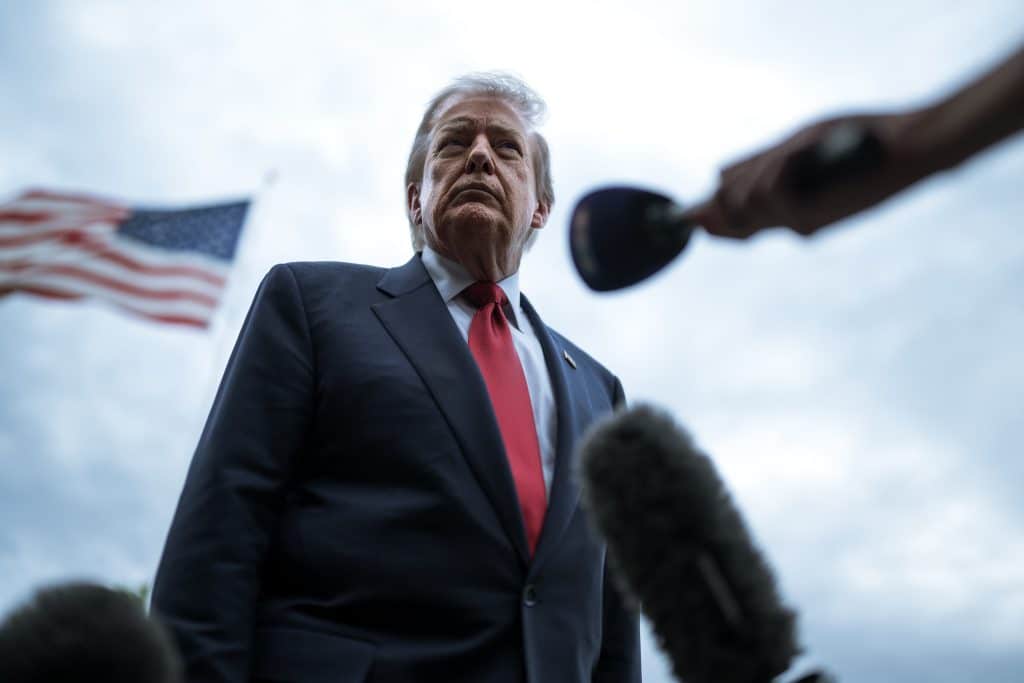
The decision by Iran first to postpone the beginning of talks about a permanent agreement with the United States and then to close the Strait of Hormuz is meant to force a difficult choice on Donald Trump. Is he willing to salvage ending the Iran war by forcing an Israeli withdrawal from Lebanon, or will he, once again, bow to political pressure and allow Israel to maintain its occupation of southern Lebanon, with the inevitable violations of the ceasefire that implies?
Netanyahu, and to a lesser extent, Hezbollah, have made it clear that a mere cessation of fire in southern Lebanon is impractical. The presence of Israeli troops on sovereign Lebanese soil, a blatant violation of international law, will lead to ongoing conflict. Indeed, Israel has shown that it wants exactly that outcome.
While the MOU does not specifically call for Israel to withdraw from Lebanon, the reality of occupation dictates that the ceasefire the MOU does call for in its very first clause—” The United States of America and the Islamic Republic of Iran and their allies in the current war by signing this MoU, declare the immediate and permanent termination of military operations on all fronts, including in Lebanon…”—inescapably means Israel must withdraw. But Israel said it would not do so even before the MOU was made public.
Although neither Israel nor Hezbollah has been a party to the negotiations between Iran and the U.S., Israel also said, prior to Iran’s latest closure of the Strait, that it would abide by the ceasefire as long as Hezbollah does.
But that is obviously an untrustworthy statement. Even before this war, there was a ceasefire that was agreed upon by Israel and Hezbollah, pausing the fighting between them that erupted at the beginning of Israel’s genocide in Gaza. Israel violated that ceasefire over 10,000 times in the year after it was agreed to in December 2024, by the count of the UN Interim Force in Lebanon (UNIFIL). Israel itself claims that Hezbollah violated it 1,900 times in that period, but the overwhelming majority of those “violations” were merely the movement of Hezbollah personnel and equipment from one location to another.
Iran has insisted from the beginning that a ceasefire must apply to Lebanon as well. The obvious reason for that is the protection of their ally, Hezbollah. But there is more to it.
Israel is incapable of sustaining a war on Iran without direct American involvement, but it is quite capable of sustaining an invasion of Lebanon indefinitely. The United States merely standing aside is not enough to stop Israel. There must be active, intense, sustained pressure on the Netanyahu government. And, given the current electoral danger and domestic criticism Netanyahu is facing, it would need to be unprecedented pressure.
In 1956, Dwight D. Eisenhower threatened to cut off all U.S. aid to Israel, impose UN sanctions on it, and even block shipments of oil to the state if it did not withdraw from the Suez region. That established a precedent, and subsequent American presidents could get by with lesser threats because of the fear in Israel that defiance would lead to much greater pressure.
Thus, in 1991, George H.W. Bush could get Israeli Prime Minister Yitzhak Shamir to relent merely by threatening to withhold American loan guarantees.
In a lesser-known incident, the younger Bush, George W., got Israel to change the route of the separation barrier (today often referred to as the “apartheid wall”) also by threatening to withhold loan guarantees.
Such meager threats won’t work this time. Netanyahu knows what’s at stake.
If Trump can be pressured by the closure of the Strait to force an Israeli withdrawal from Lebanon, might Iran not also use that same threat to force an Israeli withdrawal from the Gaza Strip? There is a slippery slope here that cannot but terrify not only the Israeli far right but Israelis across the Zionist spectrum. It might even eventually lead to pressure to establish a Palestinian state, or to granting Palestinians throughout the West Bank and Gaza both human and civil rights (which would include voting).
That’s why even a withdrawal from Lebanon will require pressure much closer to that of Eisenhower than to that of the Bushes.
Iranian strategy
Iran understands this as well as Netanyahu does. Both are putting a lot behind a bet that they can force Trump to do what they each hope he will.
For Iran, there is an immediate need to capitalize on the moment. Hardliners in Iran have opposed the MOU because they believe Tehran can do better, that the Americans cannot be trusted, and that only continued struggle until the west is completely exhausted can win Iran all it is owed.
Iran’s Supreme Leader Mojtaba Khamenei took a middle ground position, distancing himself from the MOU, about which he expressed skepticism, but authorizing Iranian President Masoud Pezeshkian to pursue negotiations based on it.
Pezeshkian knows that to keep Iran in the deal, he will have to ensure that the letter and the spirit of the MOU are fulfilled. That’s going to be exceedingly difficult even without Israeli interference.
Bipartisan objections in the United States are not exclusively based on concern about Israel’s interests. Few indeed are the Americans, in or out of public office, who see the merits in allowing Iran to rebuild its economy, which the MOU promises to do. And, while many of the MOU’s provisions are within Trump’s purview, Congress, with a strong enough majority, can prevent him from lifting sanctions.
Trump’s moment of truth
Trump has been forced, by both Iran and Israel, into the position of making a dramatic choice, and either option will have enormous ramifications.
If Trump decides he doesn’t want to incur further wrath from his Republican base, and some of the mega-donors (especially Miriam Adelson) who support Israel, he will back away from pressing Netanyahu too hard on Lebanon.
That will mean he will call on Netanyahu to stop shooting but will not press him to withdraw from southern Lebanon. The result will inevitably be that Israel will continue its occupation there, perhaps even begin some preliminary steps toward setting up a permanent presence and laying the foundations for annexation in the future.
There will, in that case, be ongoing, mid- to high-level conflict with Hezbollah, conflict which will spill over at least occasionally beyond the areas of current Israeli occupation and into the area of Beirut. Iran will see all of this as proof of the unreliability of the United States and will likely maintain the closure of the Strait of Hormuz.
That in turn, will mean a road back to war. The Strait’s closure will lead to an unprecedented global crisis, far worse than what we’ve seen to date. Trump will not be able to sit idly by and will start attacking Iran again. That course is what Israel hopes for, but it’s also a dead end.
Because if the U.S. resumes the war, closure will eventually spread beyond the Strait of Hormuz to the Bab-al-Mandab, further disrupting supply lines. Worse, attacking Iran again will lead to even more devastating attacks on Gulf Arab infrastructure. All of that will mean a crisis so extreme that the rest of the world cannot just stand back and wait for it to play out, as it has so far.
Trump’s other option is to lay down the law with Netanyahu. He can threaten a complete cutoff of arms and other political support. While it would be too much to hope for that any U.S. president would call for international sanctions on Israel, as Eisenhower threatened to do, increased American criticism would open the potential for the U.S. and other states to begin scrapping trade deals with Israel, spreading arms embargoes, and even ending normal relations with the self-proclaimed “Jewish state.”
It sounds far-fetched, but we are talking about a scenario in which Israel’s obstinacy and insistence on its unique right to invade its neighbors as long as it yells about its “security needs” would be leading to a global depression unseen for at least a century.
Both Iran and Israel are gambling a great deal of their futures on what Trump will do next. Indeed, the fate of the world, in a very real sense, hangs in the balance.
That’s not what anyone would hope for with a competent man in the White House, let alone while Trump is there. But if Trump makes the right decision here, it means choosing what is best for the U.S. and the entire world over what Israel wants (and I would argue what Israel wants is not even what is really best for the people of Israel).
If he does choose the right path, it opens the door for a major reset in the way the U.S. and the entire world deal with Israel. That reset is a long time coming and couldn’t be more welcome.

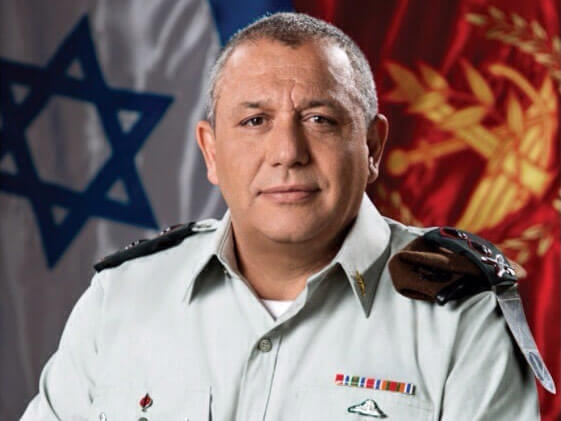
The best analysis I’ve seen so far on Iran and Hezbollah comes from Ha’aretz. Iran’s military has been degraded and its economy is a mess, but what both parties have achieved is a seat at the table.
When Iran presents this “deconfliction cell” as a step toward its integration into regional security frameworks, particularly those concerning Lebanon, it’s signaling a historic shift: a transition from being the force behind the “Axis of Resistance” to standing center stage in regional arrangements….This is the crux of Iran’s achievement. Not only has Tehran succeeded in re-entering the Lebanese arena through diplomatic channels, but it has done so from a position of one who sets up the rules…Iran is no longer portraying itself merely as Hezbollah’s patron, but as a state capable of contributing to regional stability. In return, it has sought and received recognition, shifting from the status of a permanent suspect to that of a stakeholder….
How Iran is using Lebanon to engineer its major Mideast comeback
Off topic:
Israel targeted Gaza children resulting in genocide, UN inquiry says…… Israeli authorities and security forces deliberately targeted Palestinian children, resulting in genocide, crimes against humanity and war crimes in Gaza, and war crimes in the occupied West Bank, an independent U.N. inquiry said on Tuesday….The report by the U.N. Independent International Commission of Inquiry on the Occupied Palestinian Territory, including East Jerusalem, and Israel examined violations against Palestinian children since the start of the war between Israel and Hamas on October 7, 2023.
Israel targeted Gaza children resulting in genocide, UN inquiry says | Reuters
“ There must be active, intense, sustained pressure on the Netanyahu government…Indeed, the fate of the world, in a very real sense, hangs in the balance.”
_____________________________________________________________
The absence of political ideas on how to co-exist is a danger to humanity.