I’m going back to Gaza

The night before my group departed from Gaza in June 2009, I talked about not being ready to leave. And I wasn't.

It took me another two months after I got back to pull out of my "Gaza Haze" and begin to function again. I met with my Congressman's Director of Outreach, and he advised me to talk, talk, talk about my experience in Gaza. A year ago I put together a presentation and began speaking before groups.

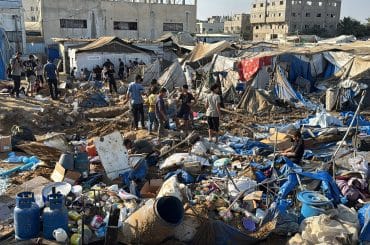
I thought about Gaza numerous times throughout the day, and still do. The devastation in Gaza was a shock. I wasn't prepared for how total the destruction was. I continue to wonder how the people of Gaza manage with so much loss: jobs, homes, farms, schools, hospitals, fire stations, police stations, play grounds, stores...and most difficult loss of all, people-- family, friends, neighbors.

In this way, Gaza changed my life. The Susan who went to Gaza in May 2009 was not the Susan who returned to Doylestown in June. It's a good thing; I like the new Susan.

I began talking about returning as soon as I boarded the plane bound for JFK. First it was going to be September 2009, then January 2010, then May 2010. Well now it seems I really am returning. I will leave on August 24 and return October 6.

Six weeks is a long time. I'm aware family and friends are not thrilled or convinced this is something I should be doing. I don't expect them to be.

They are entitled to their own opinion about my journey, I'm not trying to convince anyone they should understand or agree with my plans. I want support, I need support; but if they can't give it to me or it's given conditionally....with strings attached ... then I will do without. I understand their concerns, worries, etc. but this is something I have to do and I accept the risks. So I'm energized but peaceful about my decision. I feel no need to explain or defend this to others. I suppose that sounds selfish; it isn't meant to be.

Before 2004 I knew little about Palestine. I became involved in such an amazing way...if I believed in divine intervention this would be the #1 example. Traveling to the West Bank woke me up; kindled my interest in the Israel/Palestine conflict and Gaza.

Why do I want to return? I wish I could answer that clearly. One afternoon in Gaza I was terribly overloaded... emotionally spent, unable to process another story. We were headed into a tent city with many people and many stories. I was on the verge of tears when I noticed a group of children making kites. I edged myself away from our group and towards the children and watched as they created amazing kites from scraps, aluminum foil, newspaper, yarn, cloth, you name it. One child brought his kite to me, encouraging me to fly it. After many lessons and much laughter...the kite was in the sky, sailing along. For the first time in my life I was able to fly a kite!

As we were leaving the tent city a child tapped me on the arm, motioning for me to follow him, which I did. He took me to a beaming young couple who led me to their tent, opened the flap and there on the ground on top of a small oriental carpet was a tiny baby wrapped in a blanket...sound asleep. His parents were so proud, so full of love and hope for their child. I used hands motions, thanking them for sharing their beautiful baby with me. .......and the three of them are surrounded by chaos, destruction, fear....I hope they are safe. Those encounters accompanied me for the remainder of the trip...they are with me still...

If I close my eyes I can replay the scenes perfectly. And so, this silver-haired Gram returns to Gaza with plans to volunteer at Afaq Jadeeda Association (New Horizons) in the N Refugee Camp and The Qattan Center for the Child in Gaza City. I'll be involved with conversational English Groups, arts and crafts, psychological support activities, student English Clubs...that's for starters. Hopefully the children will enjoy teaching me Arabic. These new experiences with the Gaza's children offers an opportunity for fun, laughter, understanding...and by getting to know each other, even for a short time, they'll have an American to remember, and I hope those memories are positive in many ways.
About Susan Johnson

I became involved in the issue of Israel's occupation of Palestinian in 2004 when I was invited to visit the West Bank with Women of a Certain Age. The experience turned me into an activist for Palestinian rights. In May 2009 I visited Gaza with a delegation of 13 people, Philip Weiss being one of them. That brought me to mondoweiss. The trip raised my outrage and passion to tell anyone who will listen (and some who'd rather not) about what I saw...which was devastation and an attempt to destroy the people of Gaza through the siege, constant harassment by the IDF and the Dec.-Jan. invasion and bombardment.
Posted in Gaza, Israel/Palestine

{ 51 comments... read them below or add one }

  1. rmokhtar says:

    Have a safe trip. I wish I could go. Wish we had more people like you, Susan.

    link to mondoweiss.net
    link to mondoweiss.net
    link to mondoweiss.net

  2. Wow, your post tugged at my heart. It reminded me of my own precious memories from my 2 days in Gaza last December. How I long to return…you are very lucky and I wish you the very best

  3. Chu says:

    thanks for the kite story. Kids are great in a situation like that. I really envisioned the tent city at that moment you mentioned.
    Not knowing a great detail about Gaza also, only the last decade, what caused you to go and visit? You say if I believed in divine intervention this would be the #1 example, but were there other triggers?

  4. annie says:

    good for you susan, i’m jealous. tell them i love them and am in solidarity.

  5. JLWarner says:

    What do you mean by “Total destruction”? I was in Gaza in July 2009, a month after you. I was more impressed with how well Gaza society was functing after 3-years of siege and the 2008-09 bombardment just 6-months earlier. Sure there were demolished homes, but there were many regions that were functioning quite well. According to the U.S., before the bombardment, there were 164,635 housing units in Gaza. Of those, 4,247 (2.5%) were completely destroyed, 6,261 (4%) suffered major damage, and 8,501 (5%) suffered medium damage. Even taken together that suggests that 88.5% of the Gaza housing stock had no damage or minor damage (like broken windows).

    There are lots of problem in Gaza – the siege continues with no travel for education, family, medical care, or business; no exports so Gaza’s economy cannot rebound and the people are facing continued very high unemployment, and severe restrictions on import of construction materials meaning there will be a long time before the damaged housing can be repaired or replaced – and the prospects for a negotiated agreement with the Israels is dim. We should focus on those problems.

    • “According to the U.S., before the bombardment, there were 164,635 ……..”

      Who in the US precisely? And why am I a bit sceptical when it comes to the American version of Mideast events? I returned from Gaza yesterday. According to the Chris Gunness from the UN Relief and Works Agency (UNRWA) “at least 60,000 buildings and structures were damaged or destroyed by the Israelis during Cast Lead”.

      While at Shifa Hospital in Gaza city several months ago I noticed windows taped over with plastic because only very limited numbers of plate glass have been allowed in. The little bit of reconstruction material allowed in has been primarily for UNRWA and not for other NGOs or the locals.

      While in northern Gaza I saw many families living precariously in the remains of bombed homes or tents with no electricity. What is also very important is the deliberate damage caused to vital infrastructure such as the power grid which effects the ability of hospitals to perform emergency surgery. The little fuel allowed in (this has not improved since the alleged easing of the siege) compromises the back-up generators which kick-in when the electricity cuts which it continues to do on a daily basis for hours.

      The millions of dollars of deliberate destruction wreaked on factories – which not only offered employment to thousands but boosted Gaza’s economy – and their inability to rebuild or import machinery or vital spare parts is also a huge problem. While the number of building destroyed and damaged may not seem so high to some, the specific targets chosen have caused damage way beyond the numbers of buildings bombed.

  6. jonah says:

    When you go back to Gaza, try to persuade the people who rule the Strip not to launch anymore their “flying petards” against Israeli southern towns which can cause casualties among the civilian population and rekindle the conflict.
    link to haaretz.com

    Such actions are indiscriminate terrorist attacks and to be considered a war crime. For the sake of the people in Gaza AND in Israel, speak to the Gazans when you are there and make clear to them that the real enemy is not Israel and her population, but this extremism which leads to violence and aims to perpetuate the conflict.

  7. Schwartzman says:

    Maybe you can hit the mall, or help fire some Grad missiles into Israel.

    • Citizen says:

      And don’t forget to learn from your betters and have your little daughters write love notes on those Grad missiles.

    • Thanks for showing the small man you are, Shortman..

    • “or help fire some Grad missiles into Israel.”

      Did you mean into Sderot? ..Now try to connect the dots, big boy…

      Sderot which is built on the ruins of the Palestinian city Najd..

      “Israeli land thieves built Sderot on the ashes of an ethnically cleansed and defaced Palestinian village called Najd.

      Sderot was settled by Jews in 1951. In All That Remains, Walid Khalidi says that Sderot, along with the settlement of Or ha-Ner, founded in 1957, were established on the village lands of Najd, which means “elevated plain” in Arabic.

      According to Umkhalil, Najd’s Palestinian villagers, approximately 620 in 1945, were expelled on 13 May 1948, before Israel was declared a state and before any Arab armies entered Palestine. UN Resolution 194 and also the Universal Declaration of Human Rights, Article 13, Section 2, stipulate that the villagers of Najd have a right to return home to their personal property and to their native village.

      Najd is 14 kilometres from Gaza. Palestinian Arabs own 12,669 dunums in Najd, although Israel refuses to honour their rights to their personal property, and refuses them their inalienable right to return home. In 1945 Jews owned 495 dunums of land in Najd and public lands consisted of 412 dunums.
      link to redress.cc

      • I love it when your unscrupulous talking points, like old tires, are deflated with a pshhhhheeeeet..

        • jonah says:

          I dare not even think about what would have happen if the Arab
          Palestinians and their brethren had won the war waged against the Jews in Palestine in 1947-48:

          “We are now at war, a war in which no quarter will be asked and none will be given. It will be a battle of life and death and woe to the vanquished.” (Dr Izzat Tannous, the Palestinian Arab representative to the UN – Februar 20, 1947)

          “This will be a war of extermination and a momentous massacre which will be spoken of like the Mongolian massacres and the Crusades”. (Abdul Rahman Hassan, Azzam, first secretary-general of the Arab League – May 14, 1948)

        • Shmuel says:

          Jonah,

          So you prefer actual historical ethnic cleansing to hypothetical ethnic cleansing, as long as your group is not the target. Fair enough. I’m sure most Palestinians would have preferred it the other way around. You’re missing a crucial point however, and that is that the Zionist movement was the colonialist aggressor – claiming not only the right to settle in Palestine but the right to exclusive sovereignty, and expressing the desire to rid Palestine of as many non-Jews as possible (as stated explicitly by Zionist leaders and ideologues such as Herzl, Ben Gurion, Zangwill, Tahon, Rupin, and others – see Tom Segev, One Palestine Complete).

          Who knows what would have happened to Palestinian Jews had the Zionist aggressor been vanquished. What is certain is that the victory of the aggressor resulted in a terrible human tragedy.

        • And off goes another pshheeeeeeet for jonah. Maybe we should appoint Shmuel the deflator in chief around here…..

        • “I dare not even think about what would have happen if the Arab
          Palestinians and their brethren had won the war ”

          You mean you had no choice, it was “us or them”? And you came all the way from Poland to tell this to the locals?

        • jonah says:

          Shmuel,

          you are misrepresenting the facts in accordance with the prevailing anti-Zionist interpretation of history. True, the Zionists came to Palestine with the clear intention of building an independent Jewish state, but not as aggressors, as you and your friends love to paint. The attacks were instead primarily by Arabs, who even then, as now, refused in no uncertain terms a priori any organized Jewish presence in Palestine. The xenophobic attitude toward Jewish immigrants, who often came to Palestine to escape persecution in Europe, was in fact soon proved by the repeated pogrom-like assaults by the Arabs against the Jewish communities (in 1921, in 1929, in 1933 and between 1936 and 1939), not just against those that were formed through immigration, but also against the same indigenous Jews living in the land for generations. Moreover, did not the same Arab notarians and politicians sold land to Jews, expecting handsome profits, and then accuse them of invading their country? Who plays dishonest, has the reward it deserves.

          Also your accusation that the Jews demanded the right to exclusive sovereignty is at least misleading, since the Arabs in primis and repeatedly rejected any partition of land, how bad it was for the Zionists and favorable to the Arabs. For example, the Peel Commission proposal of 1937, which also clearly denied the accusation of land shortage due to immigrants decried by the Arabs, provided a small Jewish state (15 percent of the total) and a large one for Palestinian Arabs (link to en.wikipedia.org), the Arabs rejected it without hesitation, while the Zionists found themselves divided over what to do but open to further negotiations.
          This rejectionist attitude of the Arabs was rooted in a deep xenophobic mistrust towards the Jews, fueled in particular by the demagogic policies of the Grand Mufti, Haj Amin al Husseini, an outspoken anti-Semite who later, during the Second World War, was member of the Nazi SS, seeking Hitler’s help to transfer the ‘final solution’ in the Middle East.

          So please Shmuel, do not mention only Israeli historians and researchers from the left or far left spectrum, whose flagship has become anti-Zionism (in the sense of exasperated criticism against their own country). The intellectuals should rightly be critical of the official policy, but you should not believe that everything they write is true or complete. They too are not immune from historical distortions or omissions, indeed! Tom Segev, to take your source, in his book “One Palestine, Complete: Jews and Arabs Under the British Mandate”, commits numerous mistakes due to his own preconceived anti-Zionist attitude. This is particularly evident in his treatment of Arab attacks on Jews. To take only the first, at Tel Hai on March 1, 1920, Segev concludes, without any evidence, that the Jews may have opened fire, and w/o provocation. He then starts referring to the “myth” of Tel Hai, as if the shootings were a figment of Zionist imagination. (He meanwhile accepts uncritically the myth of “the Arab Revolt” during WW I, discredited for decades.). Segev’s treatment of subsequent violence is even more distorted. The role of the Grand Mufti, Haj Amin al Husseini, is suppressed and, in the case of the Arab Rebellion of 1936-8, the focus is almost entirely on British countermeasures rather than the terror that inspired them.

          Lastly, as for the “terrible human tragedy” – the displacement of the Palestinian Arabs – which you are you referring to, I believe that it is equivalent to that of the Jews expelled, ethnically cleansed from Arab countries during the same period and over the years to follow. Or maybe do you attribute to the suffering of the Palestinians higher value than to that of the Jews expelled from Arab countries? How would you react if I would say the opposite? Expulsions of Jews were accompanied by pogroms and extensive confiscation of land and Jewish property. Approximately one million Jews fled. Jewish losses are estimated at $6 billion amount to twice Arab losses. Heskel Haddad of the World Organisation of Jews from Arab Countries suggests that Jews lost deeded land equivalent to 4 -5 times the size of Israel.
          Who does today live in their homes? Who are the owners of their lands, their possessions? Jewish communities throughout the Arab Middle East are now reduced to some small enclaves of a few thousand people. Here the main reasons why the Jews had to leave their Arab homeland. Read if you are interested.
          link to meforum.org.

          So the two events, both tragic, are the consequence of a war for territory between two and more people – as it sadly has continuously happened during the violent history of mankind. I do not see a greater moral justice by the Palestinian Arabs.
          Maintain a healthy equidistance between the parties can help end this conflict.

        • Chaos4700 says:

          “Prevailing anti-Zionist interpretation of history?” Yeah, that’s right up there with “liberal media,” “liberal activist judges” and “compassionate conservatism.”

          Why don’t you try writing about something that’s real? Mythology is obviously not making out to be your strong suit.

        • Shmuel says:

          Jonah,

          Was it not the declared goal of the Zionists to create a national home for the Jews in Palestine? Did they concern themselves with the will of the non-Jewish population of Palestine (Ahad Ha’am was very disturbed by the fact that they did not -a view he expressed following his visit to Palestine in 1881)? Did the founders of Zionism not concern themselves with questions of demography and the need for a large and consistent Jewish majority in Palestine, and the ways of achieving it – to the detriment of the non-Jewish population of Palestine? Were they not concerned with obtaining and preserving Jewish ownership of the land? Did they not promote the idea of “Hebrew labour” (to the exclusion of Arab labourers) from the very outset (the days of the “Bilu’im”)? Would it have been unreasonable to view such behaviour as hostile? Yet it was not until the 1920s (40-odd years after Zionist colonisation first began) that any violent action was taken by Palestinian Arabs.

          Had it not been for the Zionist project and the establishment of the State of Israel, would Arab Jews have suffered as they did? So what was the ultimate cause of this other human tragedy (without condoning it in any way)? A priori Arab aggression or Zionism?

          As for Segev and the other “New Historians”, they are not above criticism, but they have done Israeli scholarship and society a great service by attempting to approach the history of Israel, Zionism and the Holocaust without the blinders of “national responsibility”.

        • jonah says:

          So, Shmuel, do you think that the Arab Palestinians attacked and killed repeatedly the Jews since the early twenties because some Zionist leaders EXPRESSED their beliefs? And do you think that they were right to act violently against the Jews? Do I undertstand you right that you justify Arab early terrorism because of the VIEWS of the founders of Zionism? Maybe this?
          link to meforum.org

          Or: Can you possibly provide some founded evidence that the early Zionists (before the anti-Jewish riots in the twenties) were implementing concrete plans to expell the Arab inhabitants of the area?

        • Shmuel says:

          Jonah,

          Do you think that violence by Arabs against Jews, beginning in the 20s was detached from the declared (and acted upon) intentions of Zionism to establish a Jewish state in Palestine, under the auspices of the British – regardless of the will of Palestine’s majority non-Jewish population? Do you believe that mass Jewish immigration (well-underway by the 1920s) with the intention of creating a Jewish-majority homeland should have been of no concern to non-Jews in Palestine? Do you believe that the appointment of an avowed Zionist as British High Commissioner for Palestine (and the granting of effective control over immigration to Zionist leaders) should not have aroused legitimate fears among Palestinian Arabs?

          As I’m sure you are aware, pointing out who the aggressors were, in no way implies justifying the killing of innocent civilians – a practice embraced, btw, by various Zionist factions in Palestine.

          Prior to the 20s, the “demographic battle” was fought primarily through Jewish immigration and laying the groundwork for a sovereign Jewish state in Palestine. Contrary to the Zionist mythology I was taught at school, the British were extremely forthcoming and actively pro-Zionist – certainly in the early years of the Mandate. Whether there were concrete plans at the time to expel non-Jews from Palestine is immaterial, as the goal of transforming Palestine into a Jewish homeland in which non-Jews would at best be tolerated (or assimilated, according to Borochov and others) was eminently clear, and would have provided sufficient cause for resistance (exclusively non-violent at first, and later violent as well). The views expressed by Zionist leaders on the subject of “transfer” may or may not have been known to or affected Arab-Palestinian responses, but they were certainly indicative of the nature of the Zionist project, clearly reflected in Zionist attitudes, policies and actions.

        • Mooser says:

          “you are misrepresenting the facts in accordance with the prevailing anti-Zionist interpretation of history. “

          Oh, you mean what is called in Yiddish, “The Facts“?

          ROTFL! You never disappoint!

        • jonah says:

          The goal of a Jewish homeland in Palestine was indeed clear expressed by the early Zionists, but not necessarily against the Arab population. On the other hand, the Palestinian Arabs were angered by the acceptance of the Balfour Declaration, and soon became hostile to the Jewish immigration to their land. The conflict was however ignited by the local Arab nationalists which exacerbated the relationships between the two communities by spreading among the population xenophobic fears of a overflowing by Jewish immigrants (yet demographics of the Arab population tell us another story). The subsequent anti-Jewish riots and uncompromising attitude of the arab nationalists did precipitate the situation. This rejectionist Arab-Palestinian attitude towards a Jewish presence as state in ME, is my opinion still today the main cause that prevents a solution of the conflict.

        • jonah says:

          Mooser, you are a meshugge!

          (of course, like all עריקים ובוגדים).

        • rubbish, all rubbish, jonah.
          the PHOTOGRAPHS and British documents recite a quite different version of events –

          in the fact-based version, Irgun killed and terrorized, then massacred and frightened off, and ultimately drove Arabs from their homes and, quite literally, into the sea.

          Those People in Gaza: Where Did They Come From?

        • jonah says:

          “in the fact-based version”

          your “fact-based version” is the same as that of Mooser-man, this means: biased. The Irgun was until april 1936 in the first place involved in operations of protection and defence of Jewish communities exposed to arab terror. It ended its restraint and started the attacks only as retaliation for the continuous killings of Jews by the Arabs.

          Your belief is rather based on a ideological prejudice.

        • Shmuel says:

          The goal of a Jewish homeland in Palestine was indeed clear expressed by the early Zionists, but not necessarily against the Arab population.

          How could the creation of a Jewish homeland in Palestine – defined and dominated by Jews possibly not be “against the Arab population”? It reminds me of Meir Kahane’s assertion that he didn’t hate Arabs; he just loved Jews.

          the Palestinian Arabs were angered by the acceptance of the Balfour Declaration

          Unreasonable sods.

          spreading among the population xenophobic fears of a overflowing by Jewish immigrants

          I wonder where they got that from? Good thing that never happened.

          This rejectionist Arab-Palestinian attitude towards a Jewish presence as state in ME, is my opinion still today the main cause that prevents a solution of the conflict.

          Or perhaps it is the insistence of Zionists on maintaining an ethno-religious state in which non-Jews (and especially Arabs) are, at best, second class citizens; at worst, denied the most basic human rights.

        • Shmuel says:

          C’mon Jonah, be a man. Why not call Mooser a deserter and a traitor in a language everyone here understands? In the end that’s what it all boils down to, isn’t it. It’s not about facts or objective research or even common sense. It’s about group-loyalty. Segev is a traitor and Yiftachel is a traitor and Phil Weiss is a traitor and Mooser is a traitor. So all the ostensibly reasonable hasbara is just smoke and mirrors, in the name of the ethno-religious cause. Now please tell us how Zionism is not racism.

        • jonah says:

          Shmuel,
          Every form of nationalism bears the seeds of racism, not only radical Zionism. Arab racism towards Jews was and is still well and alive. But you assert without clear evidence that Arab racism depends on and is to be justified from an alleged Jewish-Zionist racism. Arguing in this way, not only you put on trial the intentions of the founding Zionists, but you also diminish or deny the racism inherent to Arab nationalism in Palestine which, within a few decades, led to serious attacks against life and property of Jews, even those natives for generations (see Hebron massacre). How explain this different parameter? Maybe – double standards?
          The violent reaction – as consequence of close-minded hostility – by the Arab Palestinians against Jewish immigration was clearly motivated by xenophobia and irrational fears. The Jews were seen as potential thiefs and aggressors (they were not, as the Peel Commission determined in 1937). This reminds me of the slogan “Das Boot ist voll” coined by the Swiss authorities during WWII to explain their racist policies in rejecting along the border the Jews fleeing the Nazis, thus condemning them to certain death in the gas chambers. These xenophobic policies based on fear of an invasion of “aliens”, were certainly not limited to Swiss only, they characterized the decisions of the vast majority of nations and peoples toward the Jews, considered both foreign body and pariah. It did not except the Arabs of Palestine – since the early nineteenth century.

        • jonah says:

          Chill out Shmuel, delete without hesitation “deserter and traitor” (I admit it was below the bell, but it fits somehow to Moosers anti-Zionist slang).

          Read only “meshugge”.

        • Shmuel says:

          No, Jonah, I was not justifying Arab racism or violence against innocents, but rather Arab fears and legitimate resistance. Your claim that Zionism meant them no harm and could only have been opposed for irrational and racist reasons is patently false and illogical. Your comparison to Switzerland is also ridiculous, both because the danger itself was imminent and the Jews who sought asylum clearly had no intention of creating a Jewish homeland in Switzerland, demanding free immigration and naturalisation for every Jew in the world – but you get extra points for creating a Holocaust association when talking about Jewish immigration to Palestine prior to the 20s.

        • Shmuel says:

          Your half-hearted apology is touching, but I still believe your “slip” to be indicative of your entire approach to I/P, and your attitude to anti-Zionism.

        • jonah says:

          “I was not justifying Arab racism or violence against innocents, but rather Arab fears and legitimate resistance. ”

          But what you don’t want to acknowledge is the fact that those fears and that resistance against the Zionists in Palestine were the product of xenophobic tendencies within the Palestinian society itself. The discontent of the Arab population determined by the general liberalization of agricultural markets, which affected adversely the Arab tenants, was deliberately exploited in nationalist and xenophobic terms by populistic leaders such as Izz al-Din al-Qassam and the Grand Mufti Amin al-Husaini. The Jews in Palestine became, as so often in Europe, the scapegoat for social and economic problems that the Zionist immigration only definitively laid bare but certainly not caused. A total of 27 million dunams, the Jews purchased between 1878 and 1936 not more than 687.000 dunams (corresponding to 67.000 hectares). In 1945, the size will be little more than double, or equal to a maximum of ’8% of the total territory. The crisis of the feudal system in Palestine between the wars and beyond poured into Palestinian nationalism opposed to Jewish Zionism – an Islamic nationalism that appealed to xenophobic sentiments to incite the Arab masses against the “foreign body”, the Jewish communities. More than the comparison with Switzerland, in fact, fits the Great Depression in Germany between the wars which then allowed the rise of nationalistic and racist movements. In both cases, although in different forms, the Jews (and not only immigrants) were blamed for domestic ills.
          This does not mean that early Zionism was only pink flowers – it was an nationalist movement committed to the establishment of a Jewish homeland in Eretz Israel, opposed to the Arab Palestinian political aspirations. But there is a fundamental difference between seeing the historical reality in its entirety and instead interpret it according to the own ideological anti-Zionist agenda.

        • Mooser says:

          “C’mon Jonah, be a man.”

          Shmuel, the only thing you can possibly accomplish by defending me against jonah is to insult me by implying that I need defending, or anything he blurts reaches me.
          And I assure you, if there is one language in this world I have no intention of understanding, it’s modern Hebrew.

        • Mooser says:

          Jonah, you are a punk. And a liar. What is anti-Zionist slang, BTW?

        • “the same as that of Mooser-man.”

          wow.

          that’s the most flattering thing anyone has ever said to this psychopathic god.

          I only hope Mooser-man is not offended or harmed by the association.

          I can understand that Mooser does not respect PG; most of the time I don’t either.
          But I respect Mooser.

        • jonah says:

          ؟ Mooser ، فقدت الطريق الصحيح

        • potsherd says:

          It is certainly good to have a complete understanding of the historical factors behind events. But it still boils down to the fact that the fears of the Palestinians regarding zionist immigration were justified.

          And blaming the Palestinians themselves for their fate, casting it as the consequence of “xenophobic tendencies” is nothing but victim-blaming. Even xenophobes have a right to their own country.

        • jonah says:

          “Jonah, you are a punk. And a liar.”

          Explain me why.

        • potsherd says:

          The expulsion of Jews from Arab states was a direct consequence of Israel’s expulsion of Palestinians. It is the founders of the state of Israel who are ultimately responsible.

          As it is even today, the Zionists care nothing for the fate of other Jews outside the Israeli state and frequently act to place them in danger from retaliation for the crimes of Israel.

        • potsherd says:

          spreading among the population xenophobic fears of a overflowing by Jewish immigrants

          A perfectly reasonable fear, given the insistance of the Zionists on pressing for unrestricted immigration of Jews.

        • jonah says:

          postherd

          Let me undertstand. According to your position, the fears of the Arabs regarding Zionist immigration are for you sufficient ground for riots and killings against the Jews, regardless of whether they are natives, immigrants or who else?

          And why is trying to see historical or current facts for what they are victim-blaming? The Palestinian Arabs were not the “victims”, not before they lost the war in 1948. They wanted that war together with their Arab brethrens. But they were ill-prepared and lost. That’s why the appellation “victims” doesn’t fit really well with them, althought convenient for their cause.

        • Shmuel says:

          But what you don’t want to acknowledge is the fact that those fears and that resistance against the Zionists in Palestine were the product of xenophobic tendencies within the Palestinian society itself.

          As a poster in a friend’s kitchen once read: “Just because you’re paranoid doesn’t mean they’re not really out to get you.”

        • Shmuel says:

          the only thing you can possibly accomplish by defending me against jonah is to insult me by implying that I need defending, or anything he blurts reaches me.

          Far be it from me to try to defend North America’s largest ungulate. It was the telling sleaziness of the attack that grabbed my attention. I don’t envy anyone on the receiving end of those antlers.

  8. Pamela Olson says:

    How I wish I wasn’t tied up with writing and trying to publish a book about Palestine, so that I could go back to Palestine. Your stories remind me of so many that bring me to tears — even more tears of hope than of pain. And there were a lot of tears of pain.

    Oh Palestine… how tragic that no one can really understand it unless they see it for themselves. I was speaking with an Irishman in Amman one time about our experiences in Palestine, and he said in amazement, “They’re just so… civilized. I don’t even know what the right word is, but it’s the complete opposite of what people think.”

    We both felt helpless, because we knew such a statement made absolutely no sense to Westerners unless they had seen it for themselves, at which point no words were necessary.

    If only those who had been to Palestine could just mind-meld with the rest.

  9. yourstruly says:

    Gaza And The Warsaw Ghetto

    same place

    different time

    while the world stood by

    genocide

    live

  10. yourstruly says:

    Dreamless Adrift The Undertow

    so much suffering

    it is said that one cannot change the world

    yet one must try

    relentlessly

    fearlessly