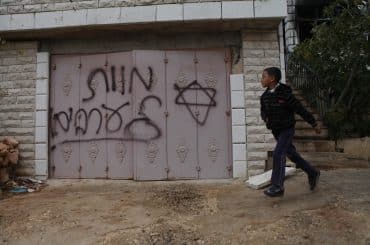
Palestinians commemorated Nakba Day on Sunday, protesting as part of the official start of the “Third Intifada.” Massive nonviolent protests took place in Lebanon, Syria, Jordan and Egypt, West Bank, Gaza and even inside Israel. Indeed, these protests were unprecedented and undoubtedly influenced by the Arab brethren of the Palestinians who have recently risen up in Tunisia, Egypt, Yemen, Libya, Bahrain and Syria.
But this isn’t the first time Palestinians have used nonviolence. Palestinians, long before the Arab Spring, have been practicing nonviolent resistance and civil disobedience. It made up the core of the First Intifada, before it was violently suppressed by Israel. The Second Intifada, on the other hand, was characterized by violent resistance. But once again, it was met with brutal violence. So for the past few years, Palestinians have reinvigorated the nonviolent struggle, more powerful than ever before.
Peaceful demonstrations, hunger strikes and sit-ins have been taking place weekly across Palestinian towns and villages like Bi’lin, Silwan, Shiekh Jarrah, Budrus and Beit Omar in recent years.
The Third Intifada is indeed similar to the First, encompassing nonviolent resistance once again. But this time around, it’s not just the Palestinians. International activists are standing up for Palestinian rights, both abroad and within the occupied territories.
If you go to West Bank or Gaza, you’ll find tons of people from all over the world. People just like Rachel Corrie and Vittorio Arrigoni. They work and volunteer in Palestine to organize and help build up Palestinian society while participating in creative nonviolent resistance against Israeli policies. Many Israelis even risk arrest by crossing borders and coming to stand in solidarity with Palestinians. Moreover, hundreds of internationals have risked their lives to deliver humanitarian aid to Gaza through the Viva Palestina convoy and the Freedom Flotilla. It has become clear that this is no longer just a Palestinian issue; it is fundamentally a human issue.
It can be argued that the Boycott, Divestment and Sanctions movement has been the catalyst in changing the Palestinian struggle into a struggle that people can engage in globally. In 2005, Palestinian civil society initiated a call for BDS from Israeli institutions, companies and academia. Today, the call has become an international movement, reigniting activism worldwide, especially on college campuses. Many campuses have divested from companies that support Israel, Hampshire being the first.
BDS campaigns come in many different forms. This week, there has been media buzz about Students for Justice in Palestine’s (SJP) campaign to replace Sabra hummus at DePaul University in Chicago, which I helped to launch. A campaign against hummus may seem harmless, but it was dubbed as one of the most “serious” cases of BDS in the US.
Why target Sabra? Sabra is co-owned by the Strauss Group, which sends financial support and supplies to two units of the Israeli military, the Givati and Golani brigades. Although the Israeli military itself has a history of violating international law, the Golani and Givati Brigades are notorious for their severe human rights violations against Palestinian civilians for over sixty-three years. The brigades most recently attracted attention for their actions in Gaza during Operation Cast Lead. In one instance, members of the Golani brigade endangered Palestinian children by reportedly forcing them to serve as human shields. In another instance, a Givati brigade soldier shot and killed a Palestinian mother and daughter both carrying white flags. In yet another instance, a Givati brigade commander authorized the use ofwhite phosphorus chemical weapons to attack a UN compound in Gaza that sheltered approximately 700 displaced civilians.
Last week, at the request of SJP, DePaul’s Student Government Association agreed to place a referendum on the election ballot asking students if they would be in favor of replacing Sabra with an alternative brand of hummus. This was the first referendum approved on the ballot in over ten years. Students have until 9:00am on Friday, May 20 to vote on the online ballot. If 1,500 students vote, and the majority votes in favor of the historic referendum, it will pass.
SJP and other students supportive of the referendum have been grassroots campaigning to educate the campus on Israel’s human rights abuses and motivate people to take action against it. There are now deep conversations and intense debates on campus about Israel and Palestine that I have not seen since Finkelstein was on campus.
Next week, SJP is also hosting an event called The Global Struggle for Palestinian Rights: The Boycott Movement against Israeli Occupation featuring renowned journalist Ali Abunimah and spoken word artist, Remi Kanazi. This event, as well as the boycott Sabra movement at DePaul will certainly help raise awareness and spark conversation and action, not only at the University but across the nation.
The Third Intifada is not just contained in the Middle East; it’s happening all over the world. While Palestinians are protesting for their human rights, civil rights and equality on the front lines, activists everywhere are doing important work in raising awareness and campaigning our institutions to stop doing business with Israeli companies until Israel changes its policies.
Together, people around the world are taking part in the Third Intifada by working in solidarity to pressure Israel to comply with international law and end its occupation, discrimination and human rights violations of the Palestinian people.
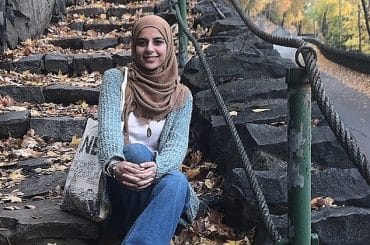
Shirien D. is a Palestinian activist and blogger for Yansoon. She recently received her MA in Sociology at DePaul University, where she is peer advisor for Students for Justice in Palestine (SJP). Shirien is also co-founder of the Chicago chapter of the American Association for Palestinian Equal Rights (AAPER) and currently works as an Apprentice for the American Friends Service Committee’s (AFSC) Middle East program.