
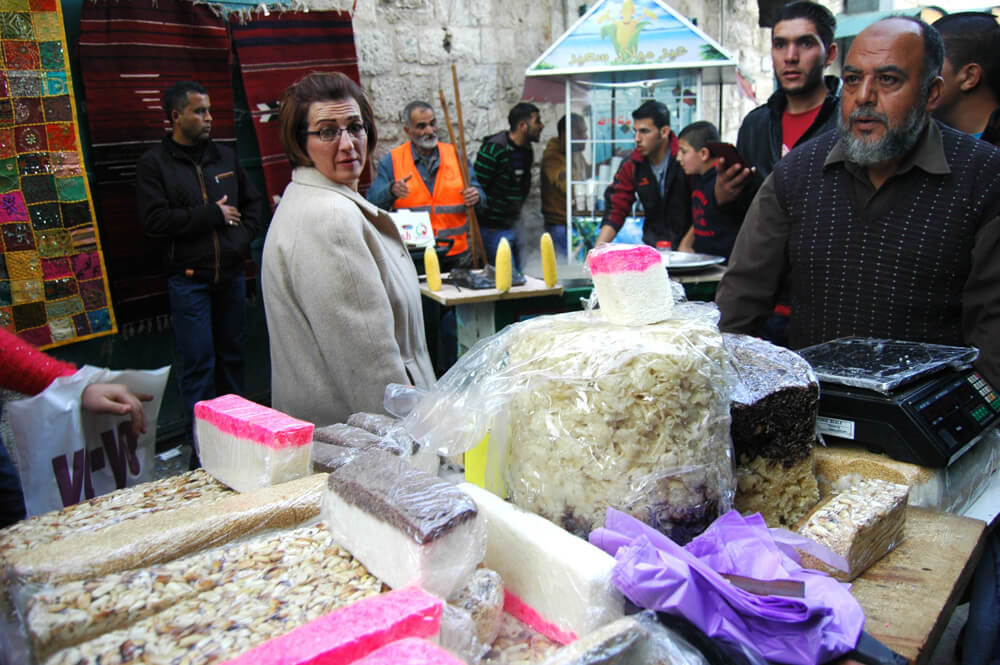
By mid-afternoon on Christmas Eve crowds had thinned from the limestone plaza that is Manger Square, buffering Bethlehem’s Church of the Nativity and its winding old city. International tourists lingered, but the bulk of the celebrators were Palestinians, Christian and Muslim alike. A handful of costumed children under ten years old sold candies for 25 cents.
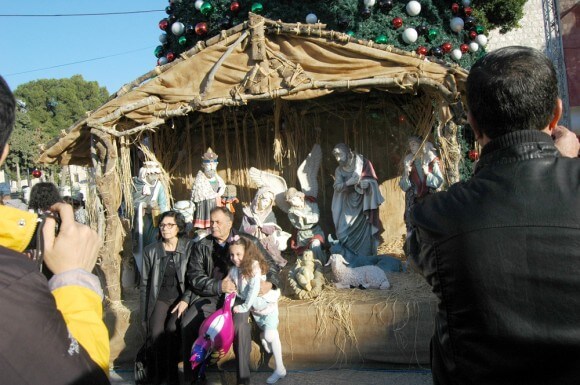
Inside Manger Square was the beloved Christmas tree. Even though it is a fake, it is a gem. Hoops of wire were mounted into a cone, which was then draped with a plastic tarp plastered with something that looks like evergreen branches. Except for the loose straw stuffing spilling from its base, it looked authentic.
Conifers are not indigenous to this part of the Middle East, and so all of the Palestinian Christmas trees are fakes. Similarly, in Ramallah, the seat of the Palestinian Authority, the municipal Christmas tree that fills a busy traffic circle leaves much to be desired. It is strung with circles of red lights and there are bulbs too, although the lowest among them were said to be have been ripped off, stolen by locals.
In the past there was an international effort to bring a real live tree to Bethlehem. Yet under the occupation, even the donation of a Christmas tree turned out to be a project that had to be triangulated with the Israeli authorities. During the Oslo Accords era when excitement was high that a Palestinian state would emerge through negotiations, Norway wanted to donate a tree to the occupied Palestinian territories as a symbol of peace to come. The Israeli authorities said no, citing the possible transfer of disease inside of the European wood, according to a New York Times report in 1993. Now, over 2 decades later, as statehood is again being debated, and European parliaments have recognized Palestine in droves over recent weeks, Bethlehem is at its frailest.
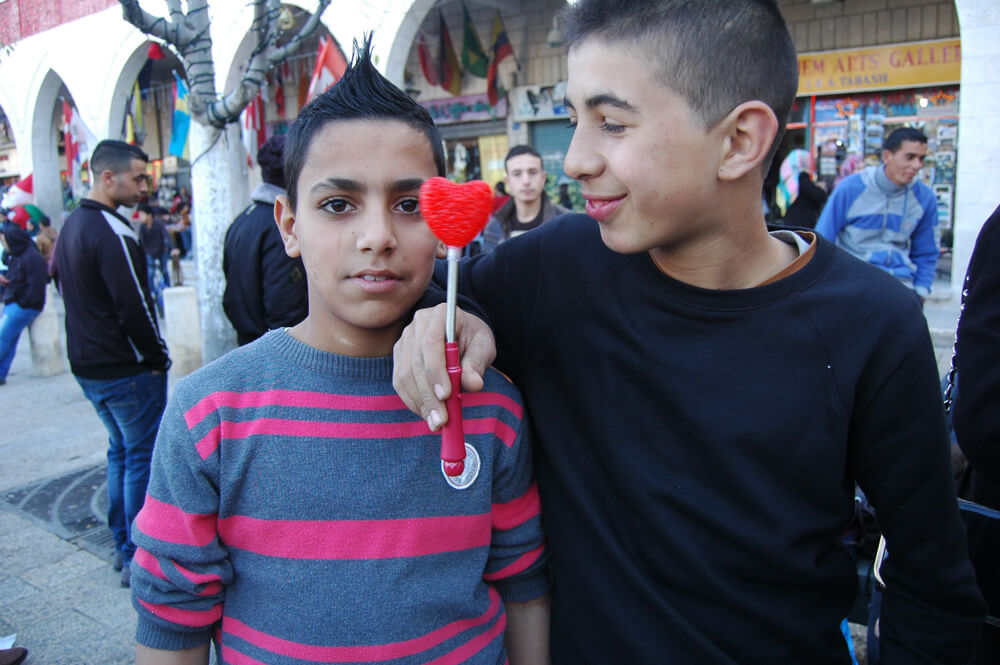


But none of the pilgrims seemed to notice the fake trees or lack of scheduled events. There were guitar sing-a-longs as the crowds filled the time before midnight mass, to be attended by Palestinian Authority President Mahmoud Abbas. Bordering Manger Square, an advertisement hung from Bethlehem Peace Center, boasting of low-cost attractions: free wifi and “selfies with Santa.”
Next to the Christmas tree sat a life-size nativity scene where pilgrims and locals waited their turn to have a picture taken standing next to wise men or the Virgin Mary.
The highlight of Christmas Eve afternoon was greeting the Latin Patriarch at Manger Square. The scene quickly turned into a scuffle between police and local Palestinians including uniformed marching band performers. The cause of the brawl: the crowds had pushed into the police lines that guarded the church official.
 In years past Palestinian Christians would walk from Bethlehem to one of the region’s oldest monasteries, Mar Elias, situated between Jerusalem and Bethlehem. Today that walk is impossible due to settler roads. Instead, the church elder is driven into Bethlehem and Mar Elias is made accessible to tourists via a free bus provided by Israel. Passing it on my way to Bethlehem, an Israeli border police Jeep was parked in the front, with an Israeli flag mounted to the roof.
Indeed, the day before Christmas was muted compared to past festivals. Tourism is down in the West Bank and Israel, and at a crippling low in Bethlehem.
City officials had decided a more subdued chorus of events would be appropriate following a rough year of Gaza’s 50-day summer war and a wave of violent attacks in Jerusalem in the late fall. More broadly, Christians are suffering across the region. Ten years ago there were over 2 million Christians in Syria and Iraq. Now that number has been reduced to a quarter of its former size and is shrinking every day. For Bethlehem a majority of the original Palestinian Christian residents have left the West Bank. While before 1948 they amounted to 20 percent of the overall Palestinian population, now only two percent of full time West Bank residents are Palestinian Christians. Their exile and waves of emigration is felt through the desolate streets of Bethlehem and its pew benches.
Father Ibrahim Faltas said his congregation at the Church of the Nativity is disappearing. “Without Christians in the holy land all this church will be is a museum,” he told Al Jazeera.
Bethlehem remains a major destination for tourists from around the world.

“In Bethlehem this is where it all started. Just like any visitor to Rome will still stop at the Vatican, even if you are not a Christian,” said Fadi Kattan, 37, a travel expert who spoke while seated at a café just off of Manger Square. Kattan’s background is in the private sector, but now he consults with the Palestinian government. A native to the Bethlehem area, he aspires to build up the West Bank tourism industry, the only market he sees that has major potential growth while Israel’s occupation remains intact.
Well over half of all visitors to Israel and the West Bank are Christian and of them, 86% visit Bethlehem, according to the Israeli Ministry of Tourism. But Bethlehem has not been able to benefit from the growing Christian tourism market to its own city, in part because Israel built and controls the market.
The Palestinian economy is not able to capture most of the financial benefit flowing from the 2.5 million Christian visitors to Israeli ports each year. The tourists parachute in and out of Bethlehem, staying at hotels in Jerusalem and traveling with Israeli or international tourist agencies. Around 80% of Bethlehem travelers come in organized groups, according to the Israeli Ministry of Tourism. Despite the numbers, their presence is only felt inside of Manger Square and the few city blocks beyond it. Otherwise, in the Christmas season Bethlehem is a ghost town. Even so, “2013 was our best year in ten years,” said Kattan.
Palestinians have tried to ramp up their tourism industry, but they cannot compete against Israeli companies that can offer trips to both Israel and Christian sites in the West Bank. While Palestinians need special permits to enter Jerusalem and Israel, Kattan said, Israeli tour guides do not need permission to bring groups into the occupied territory.
During the Oslo Accords an arrangement was outlined for reciprocity in travel for Palestinian and Israeli guides so long as they passed a general licensing test. However, the Israelis only issued 42 permits for Palestinian guides even though 200 have passed the exam. Kattan said the Israelis haven’t offered an explanation as to why the stopped issuing entry permits for Palestinian guides, but he did say when two guides pasted away a few years ago the Israelis issued two more licenses.
And this year Israel ran 24-hour free shuttle buses between Jerusalem and Bethlehem. This means, while the foreign travelers do come to Bethlehem, they are not there for long and they are not opening their purses inside of the Palestinian territories. Moreover, Bethlehem is not easy to get to. Pilgrims must pass through Israeli checkpoints and navigation is always an issue once inside the district. “There are 21 Israeli settlements accommodating nearly 105,000 Israeli settlers on Palestinian lands in the Bethlehem Governorate,” said the Palestinian Liberation Organization’s Negotiations Affairs Department in a Christmas statement. As well, Israel’s separation wall spans more than 80 kilometers inside of the Bethlehem district.
Yet Bethlehem needs worshipers to come during the Christmas season to stay afloat. Businesses rely in the Christmas tourists to clear the red each year. The local economy is not able to self-sustain. There are three refugee camps inside of Bethlehem. Unemployment is at 19.4%, the highest in the West Bank, according to the Palestinian Central Bureau of Statistics.
At Manger Square Hotel, occupancy is down. The clientele reflects both the drop in tourism this year and the difficulties Palestinian businesses have in courting international customers. On Christmas even hotel manager Luay Tawil, 34, from nearby Beit Sahour said occupancy was at 99%. Yet most of his overnight stays are from Palestinian citizens who live inside of Israel.
“This is the greatest location,” said Tawil, who explained his hotel is the closest one to the Church of Nativity and his model for keeping it filled is “to give good customer service” in hopes of attracting repeat visitors. It seems to have worked. While we spoke Palestinian families from Israel who are regular guests stopped to greet Tawil. But even with repeat visitors, Manger Square Hotel has a slim margin of profit and has not tapped into the influx of international tourists. “To break even we need about 35-percent occupancy,” he said, reflecting the year would close at a dismal 50% occupancy.
I’m glad I was able to visit and stay there years ago… doesn’t Israel know that Christians have a right to be in the Holy Land?
Israel desecrates and ruins everything that is indigenous to Palestine/ the Palestinians.
Your article is superb and ever so sad.
(I guess JNF couldn’t be bothered to donate one of their tree thingys~ they’re too busy uprooting/stealing/burning indigenous Palestinian olive trees with their buddies)
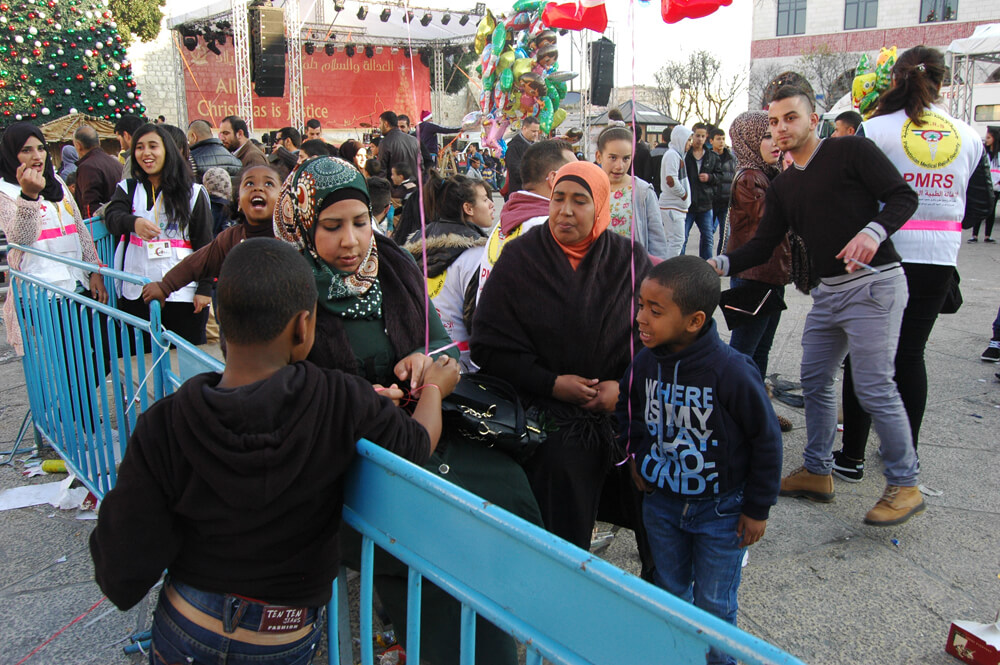
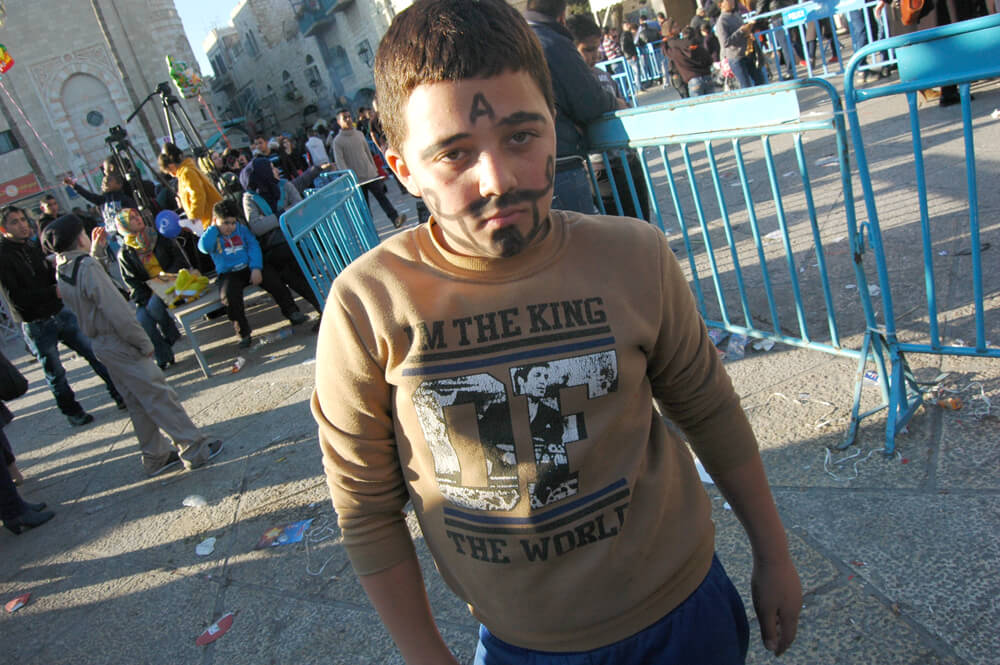
Picture 5, little boy’s sweatshirt: Where is my playground?
A reminder of Israel’s wanton destruction of children’s play areas and equipment. Whatever it is, whoever it belongs to (except, of course, Jewish Israelis!), unless it serves the interests of the zionist state it will be vulnerable to destruction!
1) BBC Grossly Misrepresents Facts Regarding Israel’s Almost Daily Violations Of Gaza Ceasefire [even Santa is down]
yet
2) The BBC’s director of television Danny Cohen said “I’ve never felt so uncomfortable being a Jew”.
No, not in London, but at the Jerusalem Cinematheque,
My advice to DC; do your aliyah to Israel and f*** off [given the fact that you don’t give a rat’s ass about all the killing and destruction the Apartheid State is doing in ‘your’ name].. Oh, and see the above nr. 1.
Note to editor,
Q: The Israeli authorities said no, citing the possible transfer of disease inside of the European wood, according to a New York Times report in 1993. Now, over a decade later,
R: That should be …’over 2 decades later.’ [1993 -2014]
In a nutshell, over a million Christians spend hundreds of millions annually visiting the Holy Land but Israel arranges it so 90% of their tourist dollars are spent in Israel. Israeli checkpoint delays are avoided by the free shuttle busses between Jerusalem and Bethlehem and tourist are whisked away out of Bethlehem and back to Israel as soon as the Church of the Nativity is visited by not allowing them the extra time to visit and buy souvenirs from local shops.
To add insult to injury, Israel is itself spending millions in expanding Chritian- tourist attractions such as visits to the banks of the Jordan where it’s said Jesus was baptized or the hiking and biking “Gospel Trail” in the Galilee to attract Christians to walk where Jesus walked. The Israeli Tourism Ministry that has a special religious affairs department to focus on the lucrative Christian tourist trade has launched Christian-themed websites and a YouTube channel where visitors share their spiritual experiences. The government also provides free trips for government officials and religious leaders from Latin America, Africa and Europe to help generate interest by word of mouth.
The Tourism Ministry also promotes a Christmas Eve alternative to Bethlehem by inviting pilgrims and foreign diplomats to the Israeli city of Nazareth to enjoy a Christmas market, parade, fireworks display and jolly Santa Claus for the kids. On average, Christian tourists spend 40% than non-Christians ones on their trips to Israel.
And Israel keeps sucking the life out of the Christians while spreading the hasbara on how Muslims are chasing them out of Palestine.