

A new poll out today from Public Policy Polling shows Americans overwhelmingly in favor of the Iran deal, and there’s no downside for pols who support it.
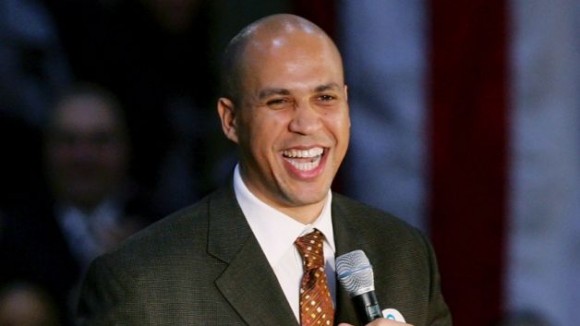
Here are the numbers. By 54 percent to 38 percent, Americans are for the deal. Democrats split 75 to 17. Hear that, Kirsten Gillibrand and Chuck Schumer and Cory Booker?
But Republican oppose it 54 to 36.
The poll says that there are “basically no potential repercussions politically” for Congress persons who vote for the deal. The poll means, from voters. Voters want the agreement and the country to move forward, according to the survey, and just 36 percent of overall voters say they’ll be less likely down the line to vote for a member who supports the Iran agreement. (Here’s one problem with the poll: Sheldon Adelson and Haim Saban are merely 2 citizens, united, in this reckoning. But they actually are controlling some of the politics of the matter).
“The message is clear: voters think the Iran deal is a good one for the country, they want Congress to move it along, and if anything they’ll reward elected officials in the future who throw their support behind the agreement. It’s a winner politically.”
Poll was of 730 voters between July 23 and 24.
Polling data reveals the soft underbelly in the numbers. 35 percent of all voters strongly support the deal. But 32 percent strongly oppose it. It’s the somewhat’s who swing the numbers wildly in favor.

Yet the NY Times owners feel free to attack J Street for supporting the Iran deal.
http://www.huffingtonpost.com/robert-naiman/why-is-the-new-york-times-swiftboating-j-street_b_7876026.html
The American people, especially the Liberals, aren’t so stupid as some on this blog assume. The whole point of an educated populace and free press is that the crowd gets smart, over time, and can eventually rectify even deeply established corruption. This is why the Likud pivot to a partisan right-wing strategy in the US is so fundamentally short-sided and dangerous for Israel. It ain’t going to work, those who support Israel in this effort are going to be painted with all the other unrealistic and dangerous things Netanyahu will do, and since he holds even American Jews in contempt, let alone American right-wingers, in the end he will be universally despised here.
How long will Israel empower him to lead them to catastrophe?
RE: (Here’s one problem with the poll: Sheldon Adelson and Haim Saban are merely 2 citizens, united, in this reckoning. But they actually are controlling some of the politics of the matter) ~ Weiss
MY COMMENT: No s#it, Sherlock! ! !
SEE: “Haim Saban”, by Matthew Yglesias, The Atlantic, June 10, 2007
SOURCE – http://www.theatlantic.com/politics/archive/2007/06/haim-saban/40714/
How can this be? Caroline Glick just told us, with lots of spittle & jutted chin, that she knows Americans and they overwhelmingly support Israel and are totally against the Iran Deal?
Let us begin by noting that the Iranian nuclear issue is but a pretext for achieving strategic objectives. The US wants Iran controlled, whereas, Israel wants Iran destroyed. Over at CounterPunch, Ismael Hussein-Zadeh analyzes the deal from a strategic perspective with interesting conclusions. He feels that the empire more or less achieved its objectives with Iran subject to snap-back sanctions at the US discretion. Interestingly, this result was a victory for the Iranian elites who favor neoliberalism and their own wealth and power versus those who wanted to develop Iranian autonomy which would jeopardize current elite status. This, of course, has implications for Russia where there is also between the Atlanticist globalists and those favoring national autonomy. It will be interesting to see how this plays out. Below is a somewhat long quote from the article followed by the link. I am going to make an exploratory attempt to italicize the quote with HTML symbols.
“The question is why did the Iranian ruling circles, represented by the Rouhani administration, accept such an unsavory deal?
In the face of the brutal economic sanctions, threatening an economic collapse and potentially a popular uprising that would threaten the power and property of the ruling elites, these elites faced (and, indeed, extensively debated) two alternatives to solve Iran’s economic problems and preserve their rule: “resistance” economics vs. austerity economics.
According to resistance economics, suggested by Ayatollah Khamenei and supported by radical segments of opposition voices to neoliberal policies of the Rouhani administration, Iran should view economic sanctions as an opportunity to become self-reliant: to utilize domestic talents and resources in order to become self-sufficient by producing as many of the consumer goods and other industrial products as possible. Indeed, by following, more or less, this philosophy of resistance economics prior to the rise of Mr. Rouhani to presidency, Iran made considerable progress in scientific research, technological know-how and manufacturing industries. Proponents of this alternative also advocate relatively strong social safety net programs to protect the financially disadvantaged segments of citizens.
The other alternative, advocated by the Rouhani administration and its allies, calls for the adoption of supply-side, neoliberal or austerity economics. According to this doctrine, solutions to economic stagnation, poverty and under-development lie in unhindered market mechanism and unreserved integration into world capitalist system. Recessions, joblessness and economic hardship in many less-developed countries are not so much due to economic mismanagement or the nature of global capitalism as they are because of government intervention and/or exclusion from world capitalist markets.
As most of the former leaders of the 1979 revolution have aged, their earlier revolutionary appetite for radical economic alternatives also seems to have faded. By the same token, they seem to have acquired an avid appetite for the accumulation of power and property. Accordingly, the revolutionaries-turned-oligarchs, both in and outside the Rouhani administration, have shunned “resistance” economics in favor of the U.S.-style austerity economics as remedy to Iran’s economic ills and, therefore, to the salvation of their rule. (Ismael Hossein-Zadeh) http://www.counterpunch.org/2015/07/24/making-sense-of-the-iran-nuclear-deal-geopolitical-implications/