

In early January 2026 I’m in southwest Iran to see my grandparents for Sizdah Rajab, the birthday of Imam Ali — our Father’s Day. There have been countrywide protests over the economy for the past two weeks. I’m worried that they might turn deadly — an infiltration is likelier now after the June onslaught than it has ever been. A former American official wished “a happy new year” to the “Mossad agents” walking next to Iranian protestors.
But there’s enough calm to keep us bound to our community: aunts, uncles, and cousins, those of us who have left for life in Tehran, are all home. We cook dinner together, sleep on mats in the living room, and wake to pray and buy water buffalo rice pudding from the kitchen next door. At noon, I go to mausoleums I grew up visiting as a child.
I stop at the flower shop for narcissus flowers. The air smells of orange blossoms as the flower seller asks about my grandfather’s health. Bricks outside have begun to grow patterns of fairy-green moss, the first earthy textures I learned to trace in my homeland.
I arrive at Sabzeh Qaba, the Shrine of the Green Cloaked One. The sunlight is like the blankets we sleep beneath on cool evenings on the rooftop, crisp and warm. I pray on the light-blue Persian carpet next to the engraved silver enclosure — the zarih — around the tomb.
In that night and the nights that followed, the country went up in a coordinated burn.
Sabzeh Qaba holds the grave of a brother of Imam Reza, said to have passed here in the eighth century. The shrine stitches Khuzestan into a Shia geography that extends from Mashhad, eastern Iran, to Iraq and Syria (al-Sham). This is Iran’s resistance backbone, a martyrs’ place, where catastrophe is endured for the nation. The US-proxy war — routinely called the Iran-Iraq War (1980-88) but which we know as the First Imposed War — was fought on these grounds. Soldiers of that era rose as commanders who continued to serve as pillars of Iran’s sovereignty, like Sardar Gholam Ali Rashid, who is buried here now.
I head to his grave by the door. I scatter the white and yellow petals over the stone marking Rashid and his son, a seminary student. They were murdered in June 2025, during the U.S.-Israeli decapitation strikes that came after Iran’s scientists and commanders. Targets were hunted down across their many addresses — apartments, relatives’ homes, workplaces — leaving more than a thousand dead in twelve days. I put my hand on the cold marble and recite from the Quran, Surat al-Fatiha and Surat al-Ikhlas, calling on divine justice. We ask by the right of those we have buried — Rashid and the martyrs who endured a brutality as borderless as “Israel.”

‘There came a different crowd’
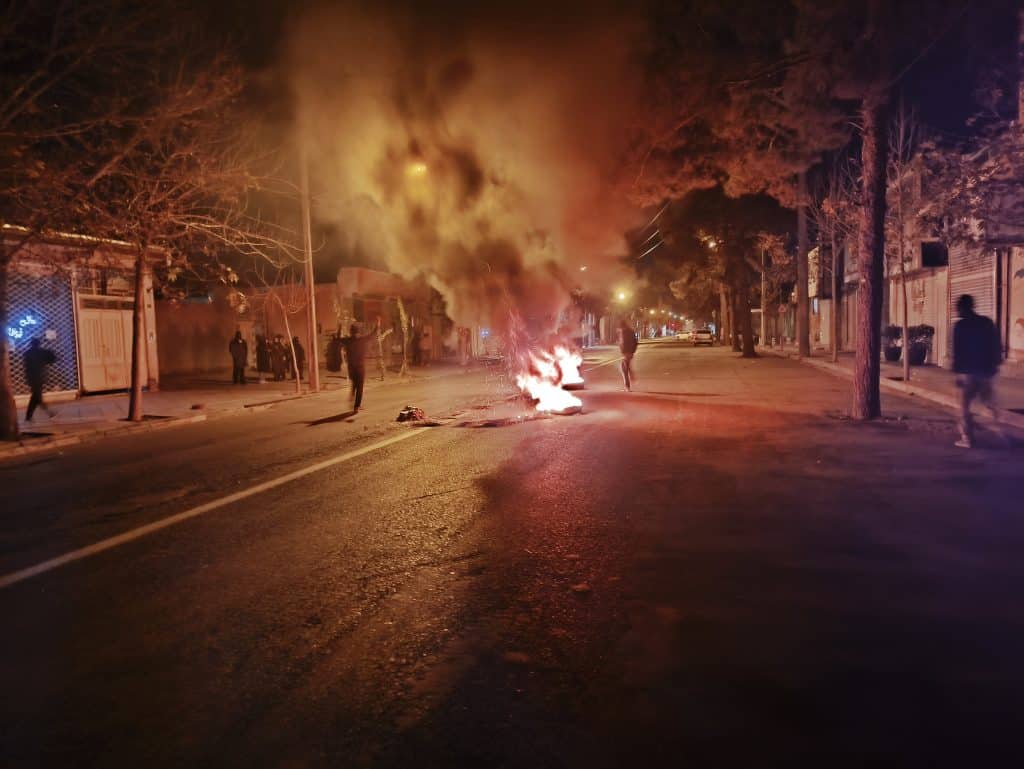
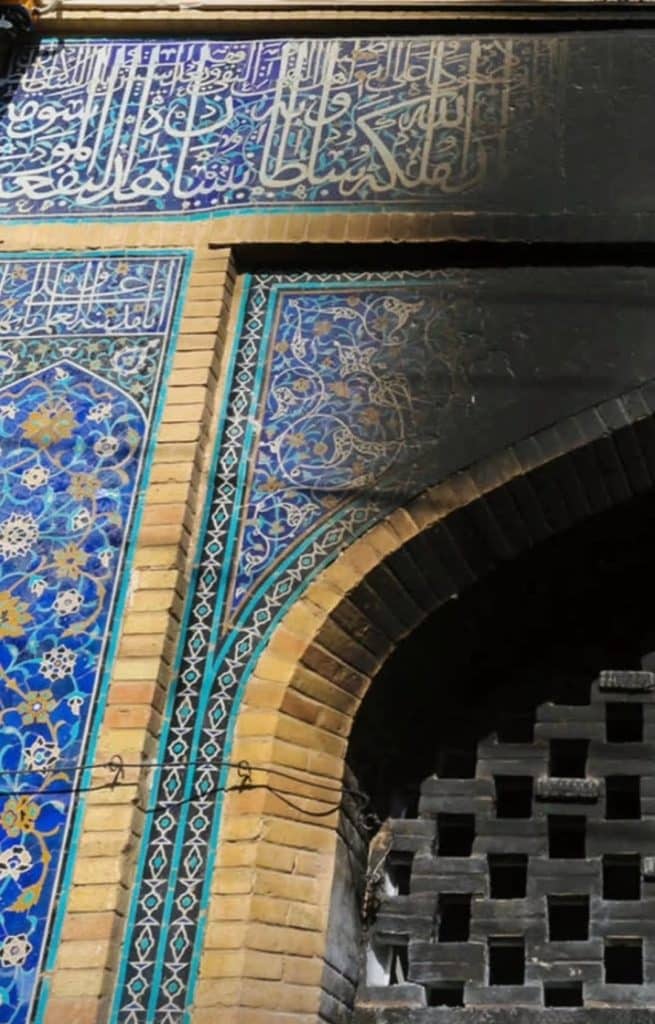
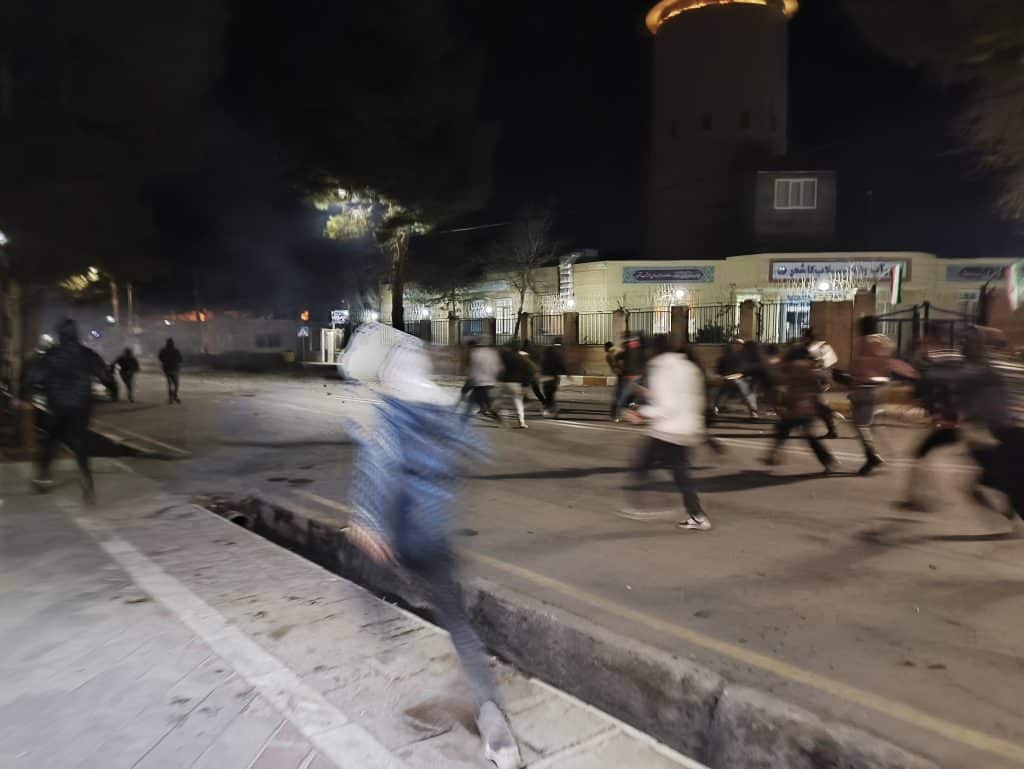
Days after my visit to Sabzeh Qaba, on the night of January 8, 2026, armed attackers struck the shrine. The next morning, smoke still drifted across the street. Rashid’s grave, like the zarih, had been torched.
Mr. Sahhafzadeh, a relative, told me that on January 8, “there came a different crowd, armed and trained.” He urged people to stay home, then set out with some others to make sure agitators came nowhere near their neighborhood. “We saw armed, masked men directing crowds toward Sabzeh Qaba,” he says. What followed was, in his words, “an attempt to blow up the city.”
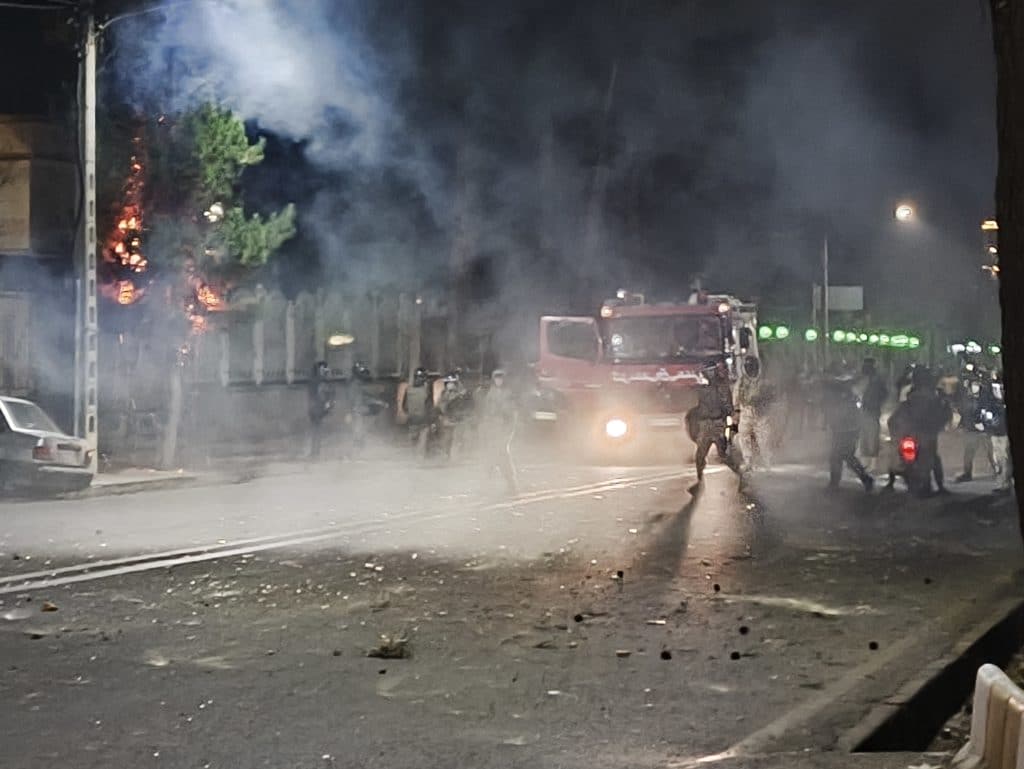
In that night and the nights that followed, the country went up in a coordinated burn: 50 libraries and 300 mosques were reduced to ash. Two hundred and twenty-two ambulances were vandalized. Death climbed to the thousands: protestors, police, and basij (a volunteer mobilization force), even a district attorney — burned, shot, lynched, and run over. A fourteenth-century mausoleum was firebombed in Isfahan. The bank I passed by, like Sabzeh Qaba, was left with a gaping black wound. The extent of the breakdown foretold a much larger campaign joining it from the outside.
Sardar Gholam Ali Rashid’s grave was a target, as Sardar Qassem Soleimani’s funeral procession had been in the years before: these men are the face of Iran’s defiance against a U.S.-backed regional order determined to maintain Israel’s military primacy. Our war commanders built Iran’s defense capabilities and formed alliances with other movements in the region willing to oppose American expansionism. Qassem Soleimani became the emblem not just of Iran but of our regional resistance — what kept us intact.
That world was formally brought to an end when the United States assassinated Sardar Soleimani and Abu Mahdi al-Muhandis, the leader of the Iraqi Resistance Front, in 2020 at the Baghdad International Airport. A new (dis)order was being established, and negotiation corridors were now kill zones. The siege on Iran would be intensified. Normalization — the Abraham Accords — was being pushed through to isolate Iran and erase Palestine as a live question.
Then came “Operation al-Aqsa Flood” on October 7, rupturing the schemes of normalization. The idea of Israel as inevitable — as normal — came undone.
“October 7 collapsed the Israeli army’s boastful self-myth it had maintained throughout its seventy-year existence,” explained Sardar Rashid months after the operation, adding, “Israel is not a government. It is a military base, like a dental implant the West has driven into the region.”
America’s wager was to restore Israel’s aura of dominance by burning through whatever legitimacy it had amassed under the postwar order. In the process, exposing Israel as the base our elders had said it was, “the germ of corruption implanted [by imperialism] in the heart of the Muslim world.”
But the genocide in Gaza, and all that extends from it to sever our resistance communities, will not remain costless for the perpetrators. The lines crossed in this region will have consequences for all of humanity. Western leaders cry about the end of multilateral institutions while they bomb hospitals, embassies, and nuclear facilities monitored by the IAEA. Their constituents see a deep rot surface — ties binding them to Israel in ways they did not imagine so bluntly.
It is unclear how long Iran can save itself from the cycle of decimation. We must maintain our sovereignty while our enemies are quick to target the very pillars that held us through the last strike — and come again. The June onslaught failed, though it took Rashid and a trove of Iran’s defense capacity. Now there is another attack, this time from within ourselves.
The darkness was not the ‘blackout’
January 8–9, 2026, felt like the onset of an urban war that didn’t fully erupt. Tehran practiced routine during the day. Sunlit downtown streets could at times trick me into thinking nothing had happened, until I reached for my phone to send a text message. The internet was dakheli, internal, but news sources outside the country called it a “blackout.” We got on the metro. Online payment systems worked for groceries and cabs. Domestic variations of YouTube and Maps were available. But we did not have access to text messaging or the global internet.
Hamed is a distant cousin, a documentary filmmaker in Tehran who has been out on the streets during protests for the past 15 years. On the night of January 8, he saw “something I had never seen before.”
“Men in black, heavily armed from head to toe, pushing people around violently and attacking those not in line,” he said. “They were definitely not from within.” He fled and did not return.
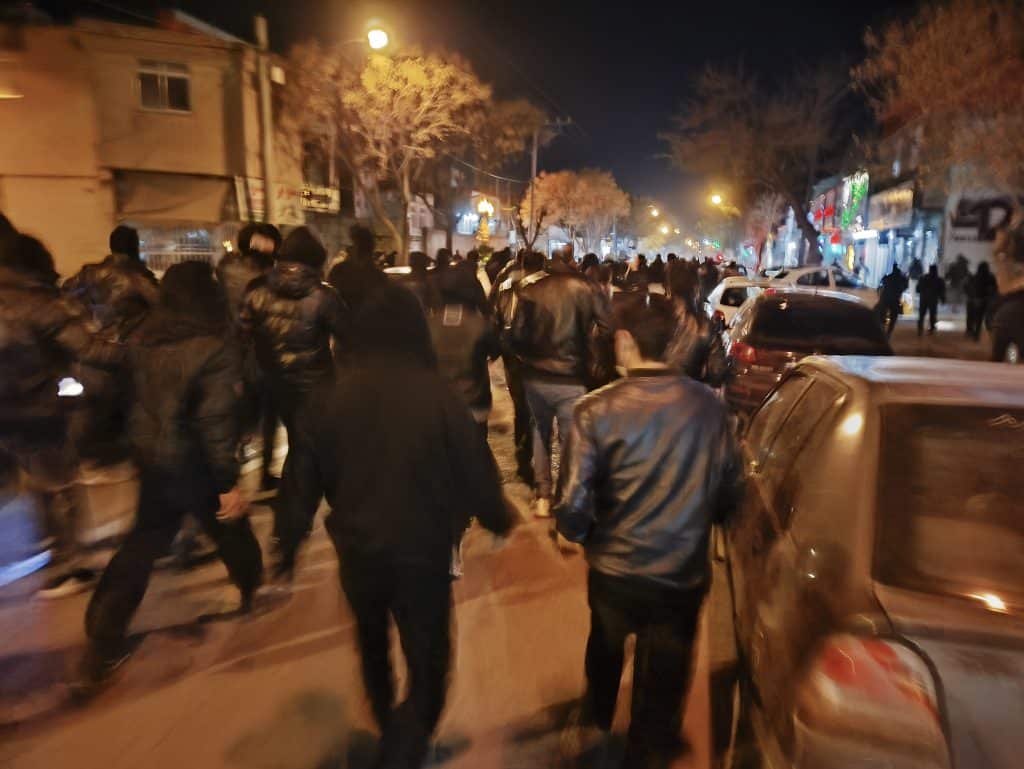
Come nightfall, the city wanted to jump out of itself. People huddled on the back of pickup trucks to get home before dark. Streets were deserted. Even grocery stores, usually open past midnight, pulled down their shutters after 6 p.m. Our neighbors who had been vocally supportive of the hijab protests in 2022, shouting “death to the dictator” from their windows, refrained.
“The orange clown made it messy,” Ms. G explains, a not-so-subtle reference to Trump. There were cries from faraway windows that sounded like distant clanging bells.
The darkness was spent in spikes of fear and dread. We heard shooting in the distance. We’d see smoke from the windows. The next day, the stench of burning wires would hit the nose. We heard reports of the dead and injured at hospitals. News came of unarmed youth being killed, not as militants, but as desperate birds trying to flee a cage. How would we name the perpetrator to those planning our implosion on the outside? With relatives and friends, we wondered if we would see Iran come together before the next wave of American airstrikes.

The dead of Dey
Mahdi Kharratiyan, a Tehran-based security-policy analyst, remarked, “In the catastrophe of 18 and 19 Dey [January 8–9, 2026], separatist groups took us to the brink of total collapse.” Cities, he said, could have fallen. Kurdish separatist groups like the PJAK, Komala, as well as an exiled militant sect known as MEK, “have bluntly admitted their roles,” he added. In an interview, Kharratiyan reminded listeners that the Tehran Bazaar first saw unrest the day Netanyahu went to Washington (December 29, 2025). He described what he saw as an external plan to induce a currency shock — “to lead to blood being spilled in Iran that would justify military aggression,” turning Pirouzi in Tehran “into Texas.”
Later, the U.S. Treasury Secretary would boast of fueling protests by “creating a dollar shortage.” The siege was giving our enemies new weapons.
When death came to our streets, Israeli outlets — among others, Channel 12 and 14, the Jerusalem Post, and Mossad-linked pages on X — detailed Israeli infiltration of the protests. Persian-language Israeli television broadcast into Iran by satellite, urged people to join riots carrying firearms. A self-styled “crown prince,” marketed by Israelis for regime change, issued a call to uprising that Donald Trump vowed to back with military force.
This country is too immense to destroy at once. They will come, and come again to fracture it — from within and without.
Israel orchestrated the mayhem and openly confessed to sowing chaos and death, but it was carried out by Iranian hands. Even Iran’s security forces had committed grave crimes.
This opened a deeper wound than the summertime when we faced direct enemy fire. The nation would convulse over what had transpired, who was responsible and what should be done in the aftermath — the numbers themselves thrown into dispute to normalize large-scale slaughter. All of this as the U.S.S. Abraham Lincoln carrier strike group moved toward us.
The conclusion of a crisis is determined by the surrenders a city refuses. Our streets put themselves back together. Tehran is not a place that has given up. The U.S. still calculates the cost of direct confrontation; it prefers to wring concessions without a fight. Iran’s June response forced Israel and the U.S. to temporarily pause. Now, Trump has amassed an unprecedented military buildup around Iran as reports and analysts indicate that a large-scale war is imminent.
But this country is too immense to destroy at once. They will come, and come again to fracture it — from within and without. We persist but are not released. Amou Ali, a veteran of the Imposed War who once fought alongside Sardar Rashid, summarizes our predicament:
“Iranian missiles are fired from a unity they’re trying to break. They’ve gotten us to kill each other. Absorbing the rage, closing our wounds, fighting the next battle — that becomes our perpetual challenge, what we call movaghemat. Resistance.”

Threads and faultlines
It is January 11. I’m waiting at the salon to get my eyebrows threaded. They’ve grown wayward, and I’ve learned from women in my family that in wartime weapons must be honed — brows kept in line to frame the eyes. The usual lively chatter is hushed and subdued. Iranian businesses have been devastated by the internet blackout and city disruptions. Talk is of income loss and anger at the ruling class. “May they go and let us breathe,” I hear from nearby.
In the chair closest to mine is Samin*, in her thirties, painting her toenails purple. Her jewelry and watch place her wealth above everyone else. “I’m sorry it has come to this,” she declares, “but Trump has to kill some of us to save us.” Leili*, doing her pedicure, agrees. Samin has let it be known that her flight to Dubai has been canceled for the past two days. She laughs bitterly when she says she can’t wait to “flee this hellhole.”
Manijeh* from the cleaning staff walks in. Her fierce black eyes are soft. I’ve been thinking about her teenage sons.
Samin calls out, “Did you go last night?”
From their exchange, I understand that Manijeh has been going out to watch the neighborhood youth scuffle with government security forces, throwing things and shouting curses. “I got tear-gassed,” she says, “but I went.” Her eyes are still burning.
“Make sure not to go to a doctor,” Samin advises. “They’re regime agents.” She loudly praises Manijeh’s bravery and presses a hundred-thousand-toman bill into her hand.
I’m grateful that Manijeh’s sons are safe, but I have watched her grow more impoverished over the past decade. Where are we collectively headed, and can we save ourselves?
Mourning martyrs past and future
I walk on Enghelab (Revolution) Street to the main roundabout. It is the 22 Dey — January 12. The last procession here was to bury the martyrs of June. Now we mourn the dead of Dey.
Funerals have started across the country. Bodies will be wrapped in shrouds and laid into the earth for days and weeks once more, as they were in the summer. But this time, it is cold, and there will be three to four times as many graves. Organizers have gathered charred carcasses of buses and ambulances, burned on the nights of 18 and 19 Dey, and placed them on our path. A great catastrophe has befallen us. I am here as a mourner, seeking an escape from the many darknesses.
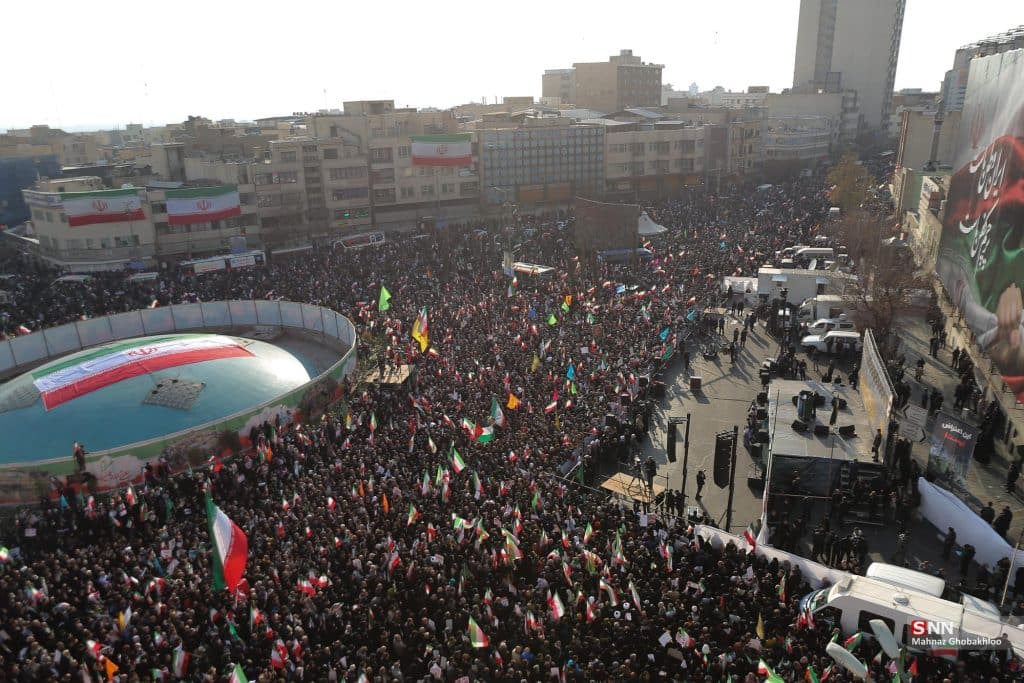
I have memories of tiptoeing as a toddler on this street, the women’s soft chadors brushing my cheeks. My family and I walked to Aunt Mahin’s house after Friday prayers. Only later did I learn that on those blissful days, worshipers had been threatened with airstrikes. The defiant call to life against the terror, the gathering that grew weaker but never ceased at Enghelab, was the city’s answer to the vow of annihilation. The pine and mulberry trees here — streams still running beneath them — would receive everyone, even rebellious youth who arrived wanting no part of the old burdens. Enghelab would see us fight, then circle its devotional murals like worshipers, having made our peace within days. I’ve learned to step here carrying the same intention with which I enter the shrine: righteous continuity.
A woman wrapped in a navy chador is sitting on a low rock in front of a bookstore. She repeats a prayer as she turns brown stone beads between her fingers. I get closer and see her and nearby faces weeping. I stop brushing the tears from my eyes. A tall young man passes, his expression grave but steady, holding an image of Sardar Soleimani the way a standard is borne for Sayyed al-Shuhada, the Lord of Martyrs.
I recall a Safavid miniature of an attendant bearing a golden lamp into the dark. I ask him where he got the portrait. He hands it to me like a sacred object, bows his head toward it, and walks away. I raise the image above me, thinking of all the young people who have been massacred — and of him, whose body was blown to pieces not as a soldier on a battlefield but as our envoy. Soleimani and Sayyed Hassan Nasrallah and Rashid, the martyrs, kept empire’s worst instincts from us, now laid bare by the genocide and its revelations.
But if the right path exists, and I have walked upon it, then there must be an overcoming. If the seeker can endure enough of the blast, she will get permission to pass. That is what I have learned among the martyrs’ people.
* Not her real name
Nargol Aran
Nargol Aran writes from Tehran, Iran.

* MIT Prof Ted Postol: IRAN: WHAT it CAN & CANNOT DO – YouTube
* Deep Intel on America’s Imminent War with Iran – YouTube
* “Bad Things” to Happen if U.S. Strikes IRAN /Lt Col Daniel Davis & Jeremy Scahill – YouTube
During the time of the Civil Rights movement in the South, segregationists used to claim that race relations there were sound and that any trouble was caused by “outside agitators.” This despicable article is in that tradition of evasion and denial.