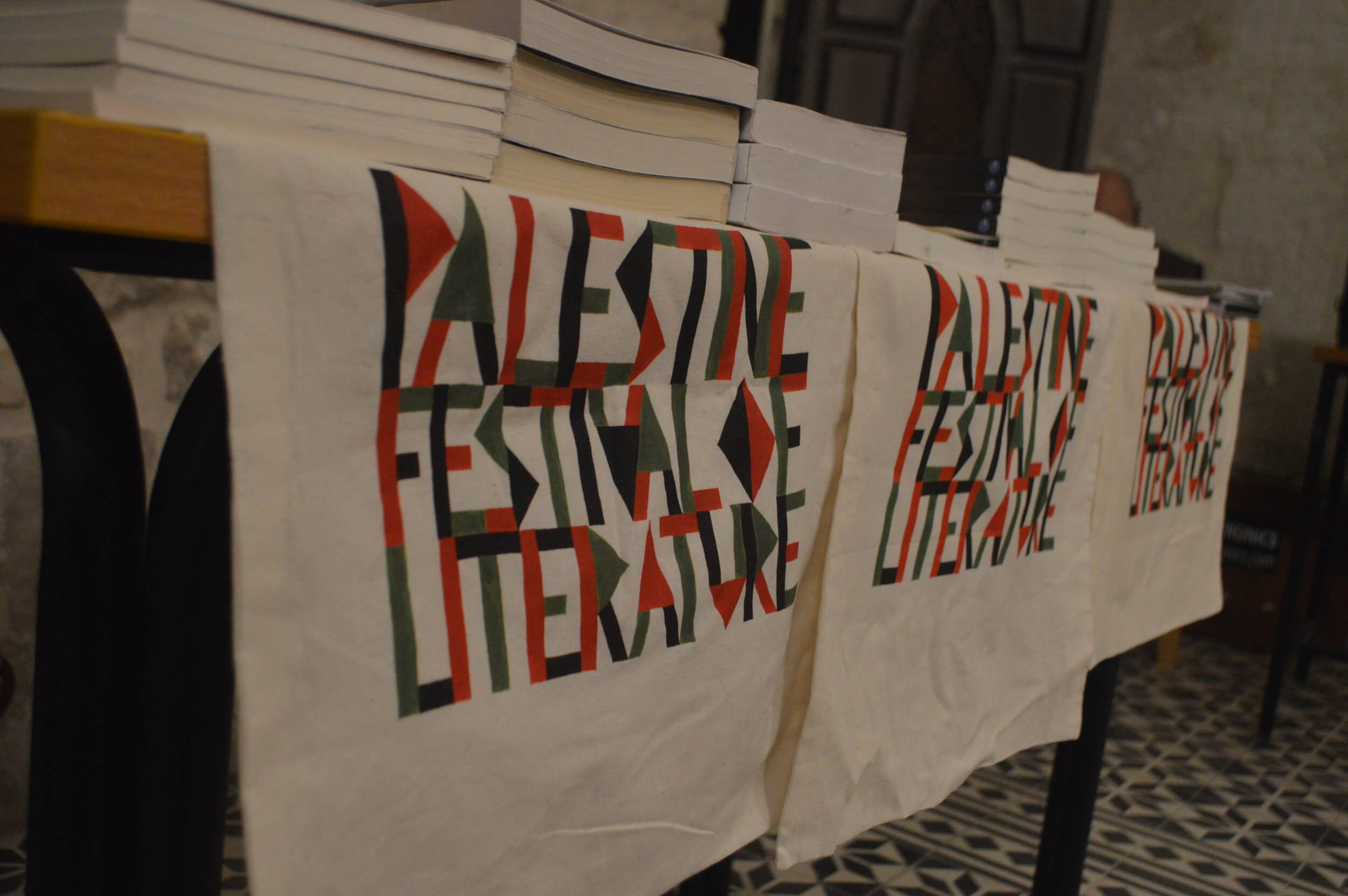
The Palestinian Festival of Literature celebrated its 10th year in 2017. With a slew of respected artists and writers on its program, the festival met in cities across the occupied West Bank and Israel. From Haifa, to Ramallah, to Nablus and Jerusalem, the festival once again brought people from across the world to the stage.
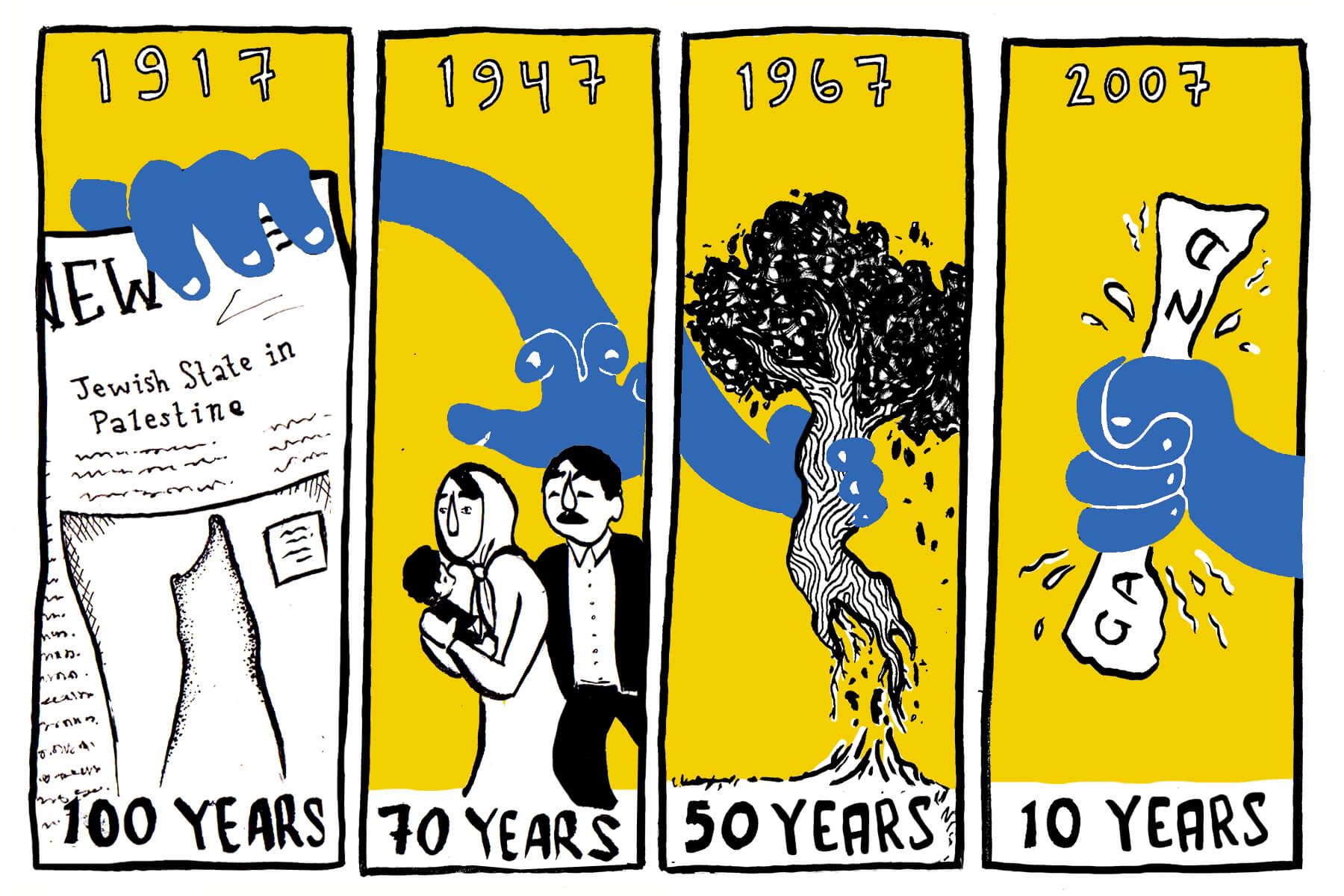
There has been much talk about 2017 as the 50th anniversary since Israel occupied the Palestinian Gaza Strip and West Bank, including East Jerusalem. But the 50th anniversary can only be understood within a broader context of other key anniversaries this year. 2017 marks: 100 years since the Nov. 2, 1917 Balfour Declaration; 70 years since the UN’s Nov. 29, 1947 partition allotting 54% of historic Palestine for a Jewish state; 50 years since Israel occupied all remaining Palestinian lands June 5-10, 1967; and 10 years since Israel made permanent a crippling blockade of the Gaza Strip on June 15, 2007, creating an open-air prison subject to monstrous bombing to further Israel’s containment and ethnic cleansing of the Palestinian people.
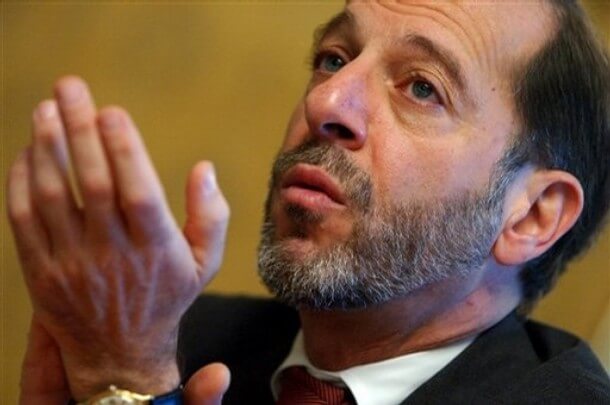
How much does the Israel lobby explain why negotiations have failed to bear fruit for the past 25 years? Rashid Khalidi says it’s beyond the lobby: Israeli and American politicians get funding from the same people. Important industries, like high tech and defense, are integrated in the U.S. and in Israel at the highest levels. As a result the U.S. and American political systems are on the same page, to the point that it is more accurate to think of them as one integrated political system than in terms of allies, he explains.
Tikva Honig-Parnass discovers a letter she wrote to her family in October 1948, inked on letterhead she found in a gas station that had belonged to a Palestinians who was likely expelled by her unit. Looking back Honig-Parnass reflects how it came to be that she never considered who owned the gas station, and what happened to him, a skill she developed as a youngster in Israel’s 48 Generation: “This complete ignoring of the personhood of the “enemy,” the serenity lacking in all feeling-without gloating or hatred were characteristic of the remote stance, the apparent lack of affect, of the 48 Generation towards the Palestinian Arabs. This stance was congruent with the perception of the latter as an “environmental nuisance” which should be dealt with in a rational manner, and without hatred, and when necessary-as in the case of the stationary–to make use of the spoils left behind after their removal. By then I was already experienced in the mental acrobatics involved in ignoring the ‘nuisance.'”

As Trump flies to the Middle East, he should consider: We’ve been at war there for 16 years. Israel may see that as a happy outcome, but we need to disentangle ourselves from Israel’s oppressive policies toward Palestinians if we seek a peaceful future.
After Israeli Culture Minister Miri Regev wore a dress celebrating Israel’s conquest of Jerusalem at Cannes yesterday, social media lit up with parodies. The redesigns include an added separation wall into the Old City scene, air strikes over Gaza, soldiers raiding a Palestinian home, and a tribute to leading hunger striking prisoner Marwan Barghouti.
“The solidarity between Black and Palestinian people internationally is rooted in a profound historical framework, one of shared struggles and collective identities that push us to challenge notions of international solidarity,” writes activist and writer Devyn Springer.
In 1953, Joel Kovel had an epiphany as a Yale freshman that would ultimately determine his life’s course, against the US war machine and Zionism. He was tempted to return to Yale for his 60th reunion but thought better of it in light of the ordeal of Rev. Bruce Shipman.
A diplomatic storm arises over the fact that American consulate diplomats in Jerusalem have stated that the Western Wall is in the West Bank. Nikki Haley walks that back in a hurry, and says the U.S. should move the Embassy to Jerusalem.