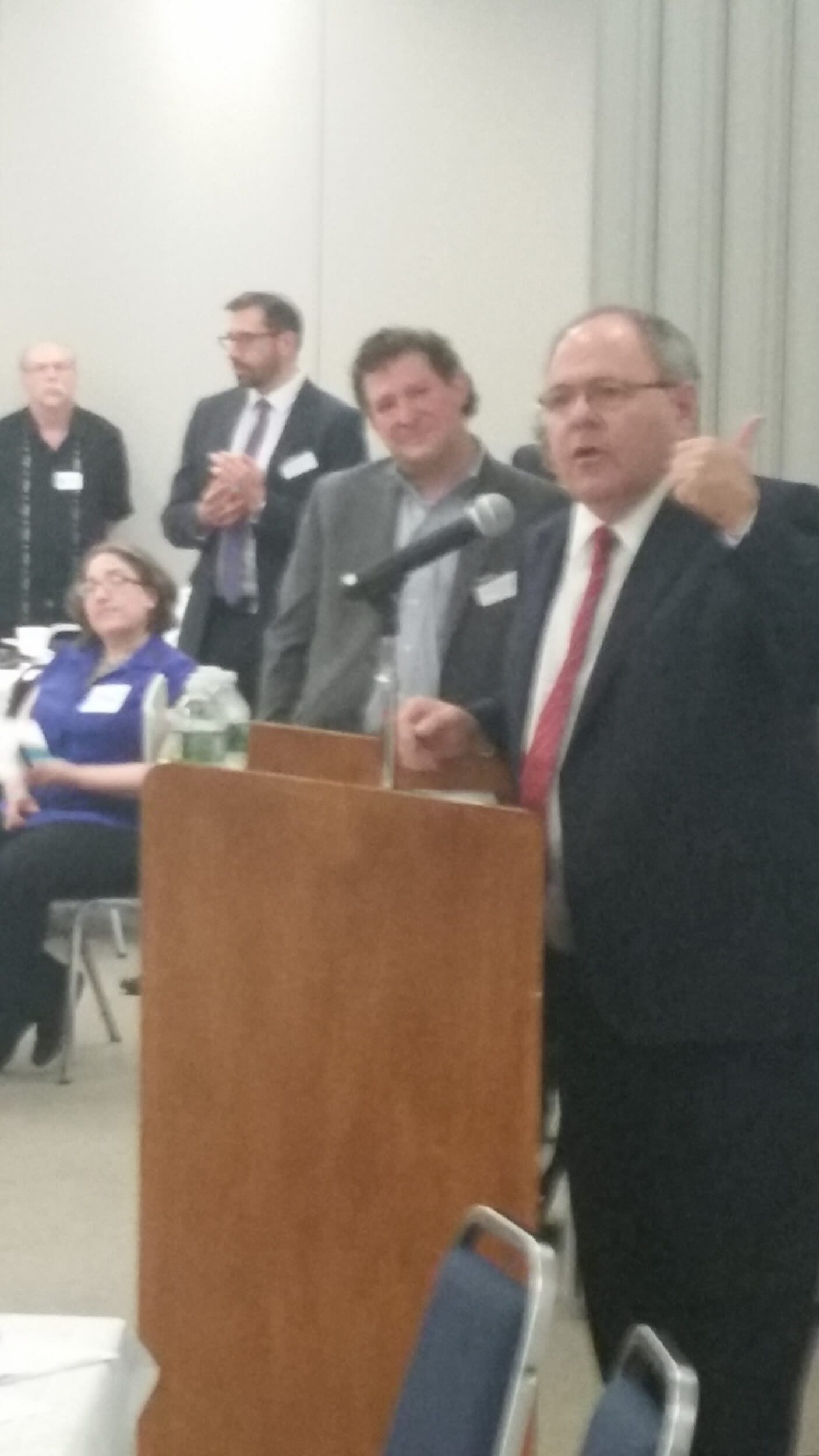
“I have enormous respect for the Palestinian national movement,” says Israeli ambassador and settler, Dani Dayan. “I admire in some sense a movement that keeps its refugees for five generations in squalid camps in order to keep the flame alive. In some senses I envy that movement.”
Israeli soldiers, stationed on military towers across the border fence from Gaza, fired dozens of live rounds and gas bombs at protesters, who were marching near the border fence. One Palestinian was killed, Aa‘ed Khamis Jom‘a, and ten were injured. The army also used drones.
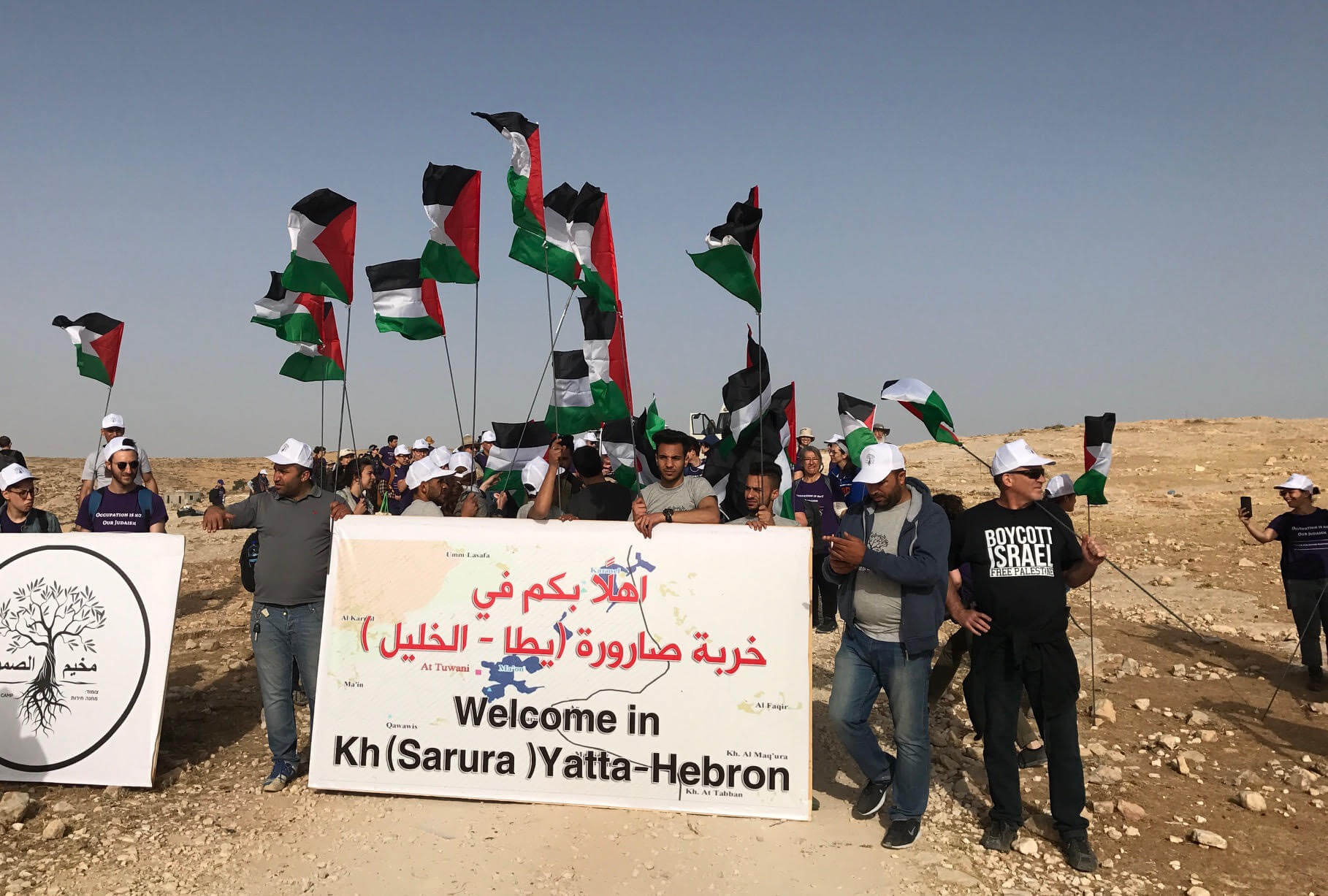
Charlie Zimmerman recaps his trip to the West Bank with a delegation of 130 from the Center for Jewish Nonviolence, “If you spend a few hours in H2, you don’t need any guides or speeches to tell you that it is a tense and surreal place where violence can break out at any moment. Issa calls Hebron a “ghost town” and YAS has published a pamphlet about the city with that title. But “ghost town” is an understatement and a misnomer, since people do live there—it’s just that everyday life activity is actively and brutally suppressed. I and another delegation member agree that a more accurate characterization would be “The Most Fucked Up Place on Earth.”
Jaime Omar Yassin’s questions the celebration of Gal Gadot, not as Wonder Woman, but as a feminist radical icon, “Don’t get me wrong, I’m uncomfortable even suggesting that women—and especially Black women and men—should have to interrogate their heroes in those rare moments when a Black or female superhero makes it on to screen. I am not trying to establish a checklist that has to be satisfied before you can enjoy a race or gender champion brought to the silver screen. But I think a larger question centers around Zionism’s compatibility with both feminism and Black empowerment. This is a question that is, unfortunately, much more frequently brought up by Zionists who also identify as leftists, who seek to marginalize Pro-Palestinian positions as the square peg in a discourse of liberation.”

Westchester County board of legislators prepares bipartisan resolution that condemns BDS in alarmist terms: “we loudly and forcefully reject a movement that seeks to undermine Israel and malign the Jewish people.” Jewish Voice for Peace members are organizing against the measure.
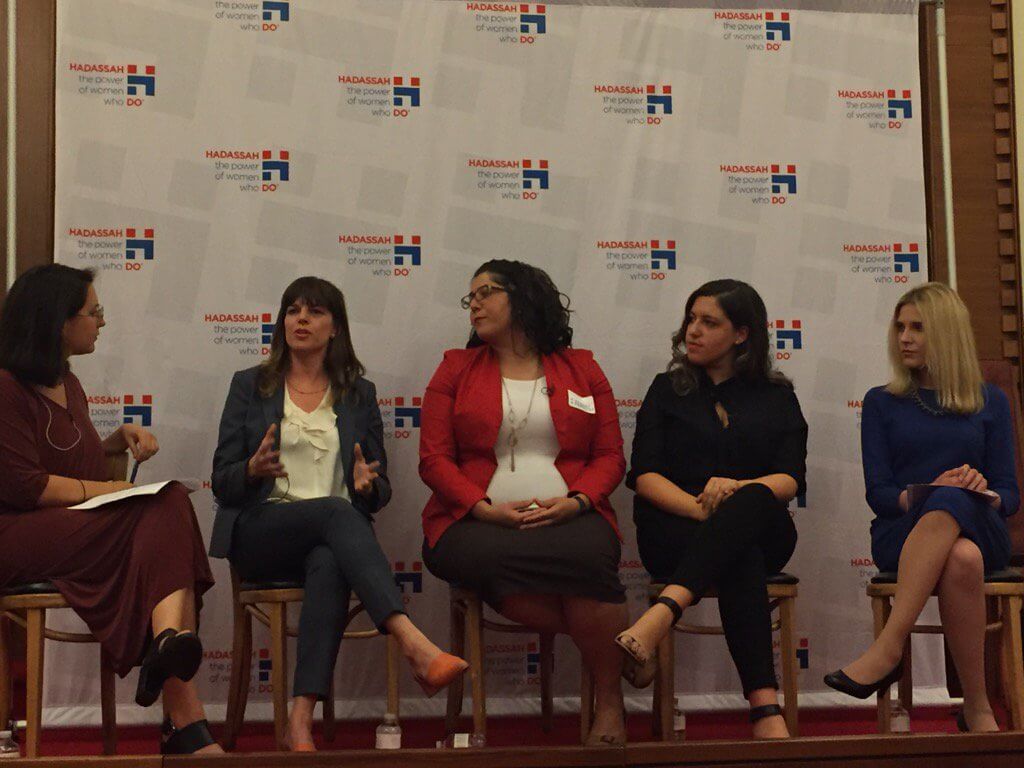
On Thursday, June 8, Hadassah hosted a discussion panel called “Feminism and Zionism: Exploring Recent Tensions,” which, in typical Zionist fashion, did not feature an anti-Zionist (Jew or non-Jew), and certainly no Palestinian speaker. Nada Elia says one takeaway of the event is that “even as the situation on the ground in Palestine remains dire Palestine rights activists can celebrate one significant accomplishment: the discursive change that has slowly but surely eroded the credibility of the Zionist narrative over the past few years.”
Amith Gupta examines why Governor Andrew Cuomo rebuked the Puerto Rican Day Parade while attending the Israel Day Parade in New York City: “This tale of two parades is remarkable in that it is very much a microcosm of politics in a state that is often reduced to little more than a bastion of liberalism.”
Hadassah panel on tension between Zionism and feminism shows that Zionism is now a dirty word on the left, and with good reason, as an all-Zionist panel led by a NYT editor indulges orientalist critiques of occupied Palestinian culture.
Stephen Shenfield writes Palestinian refugee from Syria and filmmaker Hala Gabriel is nearly finished with her documentary “On the Road to Tantura.” But she needs one last fundraising push: “The basic work on the documentary has now been done. Hala Gabriel and her producer Talal Jabari have a solid 70-minute “rough cut” of the film. However, there remains significant work to be done in order to complete the project in the near future at the same high standard of professionalism as they have maintained since the start of the project. They aim to release the film by the 70th anniversary of the Nakba and in time for the 2018 film festival circuit.
The commemoration of the Six-Day War that resulted in the fifty-year occupation is a solemn moment to reflect on the magnitude of the dispossession of the Palestinian people, the multitude of daily indignities of life under occupation, and the relentless violence of Israel’s military against a defenseless imprisoned people. But to some liberal Zionists, like Israeli historian Gershom Gorenberg, the focus only seems to be about how “the occupation” hurts Israel.