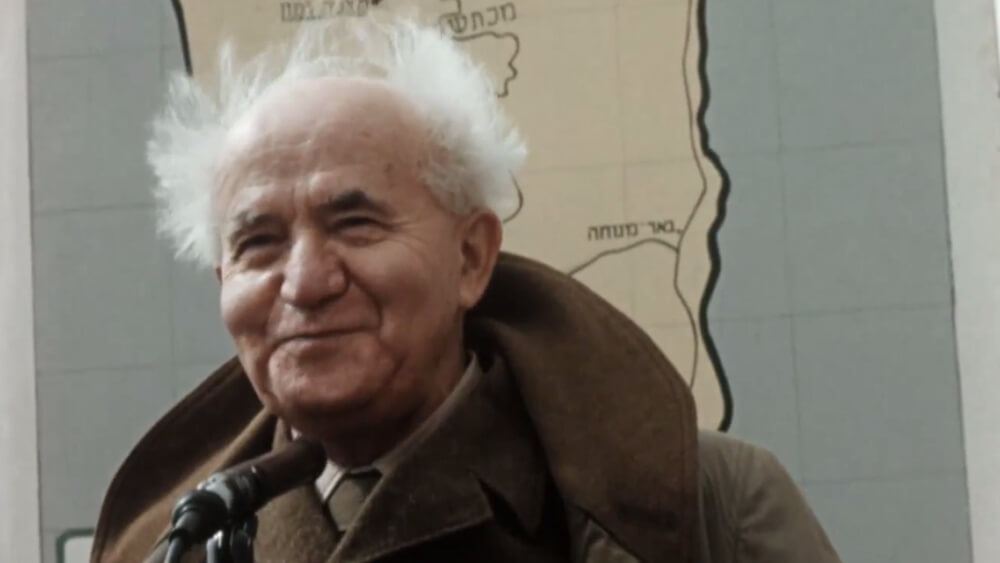
Memoirs by American Jews reveal that the 1967 war revolutionized Jewish life: even leftwingers like Joel Kovel were initially swept up in the fear for Israel and excitement over its victory, but those fears helped produce the most powerful force in American Jewish life since: the neoconservatives who, inflamed by memories of the Holocaust, vowed to support Israel in the face of an indifferent world.
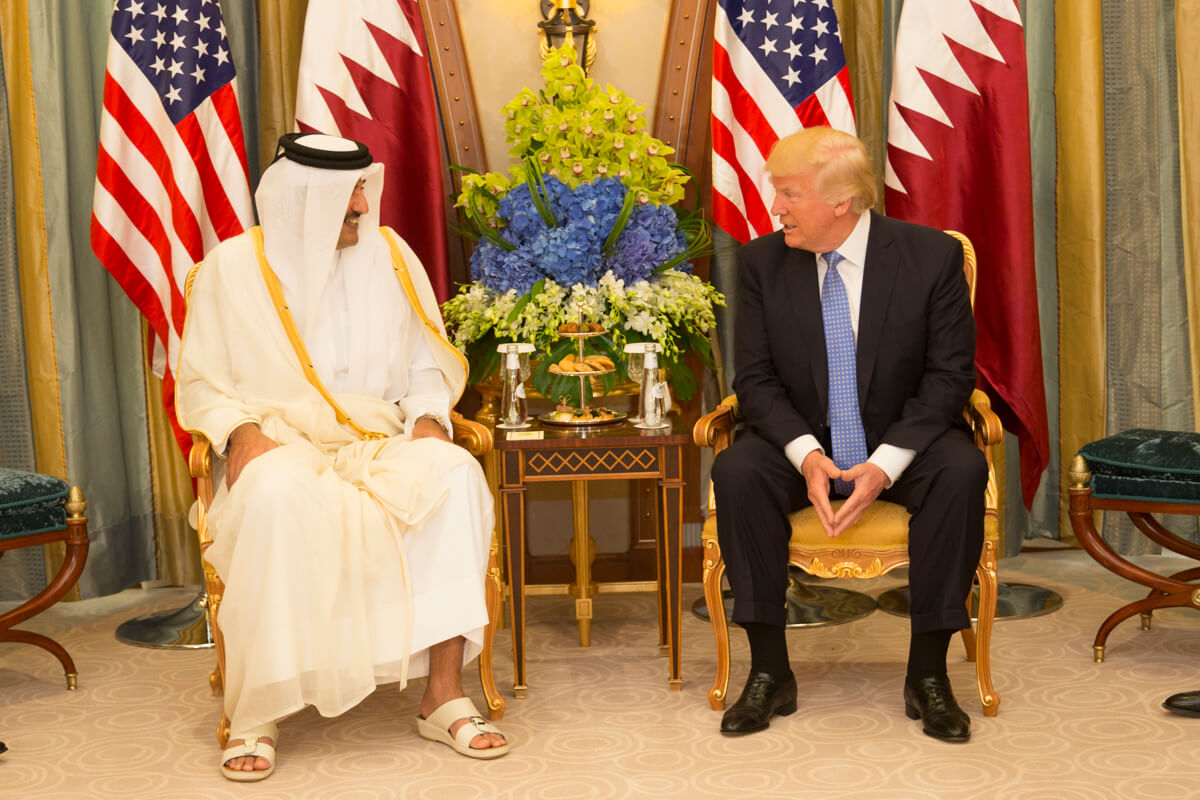
The abrupt announcement that Saudi Arabia, Egypt, Bahrain, UAE, Yemen, the Maldive Islands, and the eastern government in divided Libya have broken all economic and political ties with Qatar has given rise to a tsunami of conjecture, wild speculation, and most of all, to wishful thinking and doomsday worries. Richard Falk untangles the threads of the story so far what it could mean for U.S. foreign policy in the region.
Aida Qasim remembers the start of the Six-Day War, as a small child seeing her mother watch reports of the war broadcast over television, “My mother stood wailing near the television screen as though intent on entering the box and rearranging the scenes. The defeat of the Arab armies of the Six-Day War and ensuing occupation of her beloved Jerusalem unraveled her like a forgotten sweater that had not been mothballed. My three-year-old self looked on, frightened and yet mesmerized by the histrionics of this strange woman who up until then had been my anchor.”
Israel’s 1967 occupation is often focused upon as a root cause of the Israeli-Palestinian conflict. But it is part of a greater plan – the Zionist conquest of the whole of Palestine.
Iris Keltz relates: “Forced to wait three days for a visa allowing me to cross the U.N. checkpoint into Jerusalem, Israel–– gave me the chance to meet a handsome young Palestinian poet, musician, and world traveler. After a whirlwind courtship of less than three weeks, we married and were planning a honeymoon when war broke out. The day Israeli soldiers barged into a basement apartment in Ramallah where were hiding, I was afraid––afraid for my life, afraid the soldiers would not recognize me as Jewish, and surprised these Jewish soldiers invoked such terror. I meant to cry out, “I’m Jewish, American, and these are my friends.” But I spoke no Hebrew, and they spoke no English, so I remained silent. My silence that day inspired me to write this book.” Her memoir, “Unexpected Bride: In the Promised Land” was published earlier this year.

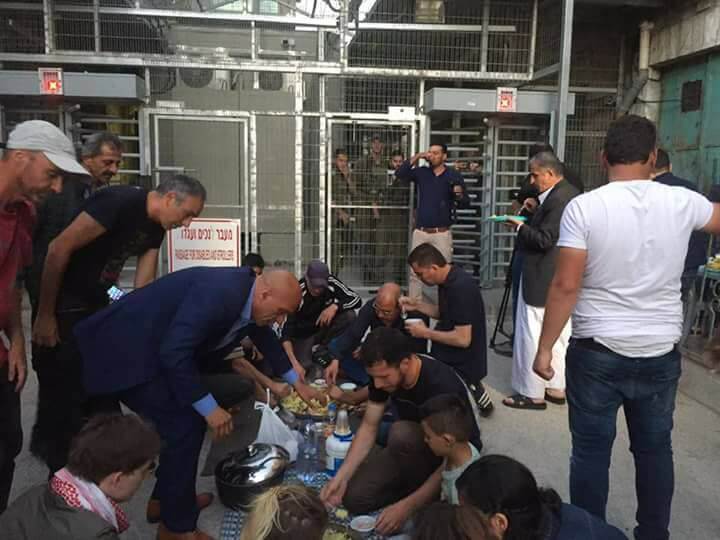
Badia Dwaik, the Palestinian coordinator of Human Rights Defenders Group along with several others from the Hebron-based Palestinian organization Dismantle the Ghetto, were invited to the home of Mufeed Sharabati for the first meal after sundown during the Ramadan month. In typical iftar fashion, a full spread was packed up by Dwaik and company including a large maqloube, a Palestinian meal of rice, vegetables, and chicken that is flipped upside down from a cooking pot when it’s ready to serve—maqloube literally means “upside down” in Arabic.
Yet the iftar dinner among friends grew complicated when Dwaik and the others were denied entry through the Hebron checkpoint that divides the city in two—the maqloube was also not allowed through the checkpoint.
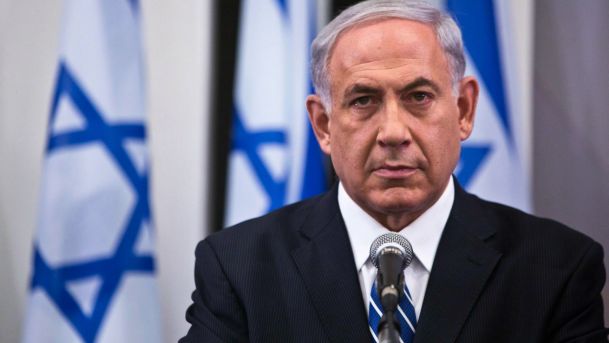
Ynet News reports Israeli Prime Minister Benjamin Netanyahu pledged robust support to the settler movement at a Knesset event commemorating the 1967 war, “Speaking at a ceremony Tuesday commemorating the Six Day War and settlement in the West Bank, Netanyahu referred to the two most pressing issues for settlers—the building taking place today and the possibility that they could be evacuated from their homes as part of an agreement with the Palestinians. “No one will be uprooted from their home, I’m doing everything to protect the settlement enterprise,” said Netanyahu, adding, “We decided to build in all parts of Judea and Samaria and we are building both inside and outside the settlements.”
Eamon Murphy reviews Nathan Thrall’s new book The Only Language They Understand: Forcing Compromise in Israel and Palestine: “Just what should be done remains vague, in Thrall’s book and in discussion generally, in large part because the U.S. role is exempted from realistic analysis. If, as Thrall contends, only force—understood to include popular pressure and economic sanctions, as well as violence—has a record of drawing concessions from the parties, then the question is, who will force the U.S. to stop perpetuating the conflict, its policy for the last 50 years? Until some tectonic shift in global power, the only possible answer is us. But writing too polite to name the enemy, or too enmeshed in the establishment to recognize it, seems unlikely to bring about the necessary change in consciousness.”
Fifth Avenue in Manhattan was awash in blue and white flags on Sunday, June 4 as the Celebrate Israel parade kicked off for its 52nd year. This year’s theme according to organizers was “Celebrate Israel All Together,” though the 50th year of Jerusalem’s “reunification” took center stage. But for Palestinians, the so-called reunification of Jerusalem marks the beginning of Israel’s 50-year military occupation of the West Bank including East Jerusalem. With this in mind, multiple anti-occupation protests halted the parade along its route, resulting in 7 arrests by the NYPD.
“We had both written plays about Israel and Palestine that were deemed too political, biased, left wing, angry, anti-Israel, and even anti-Semitic. Artistic directors said they would lose half their boards if they produced our shows and to be fair they probably would.” –Ismail Khalidi and David Zellnik announce a new project for theater pieces on Palestine.